
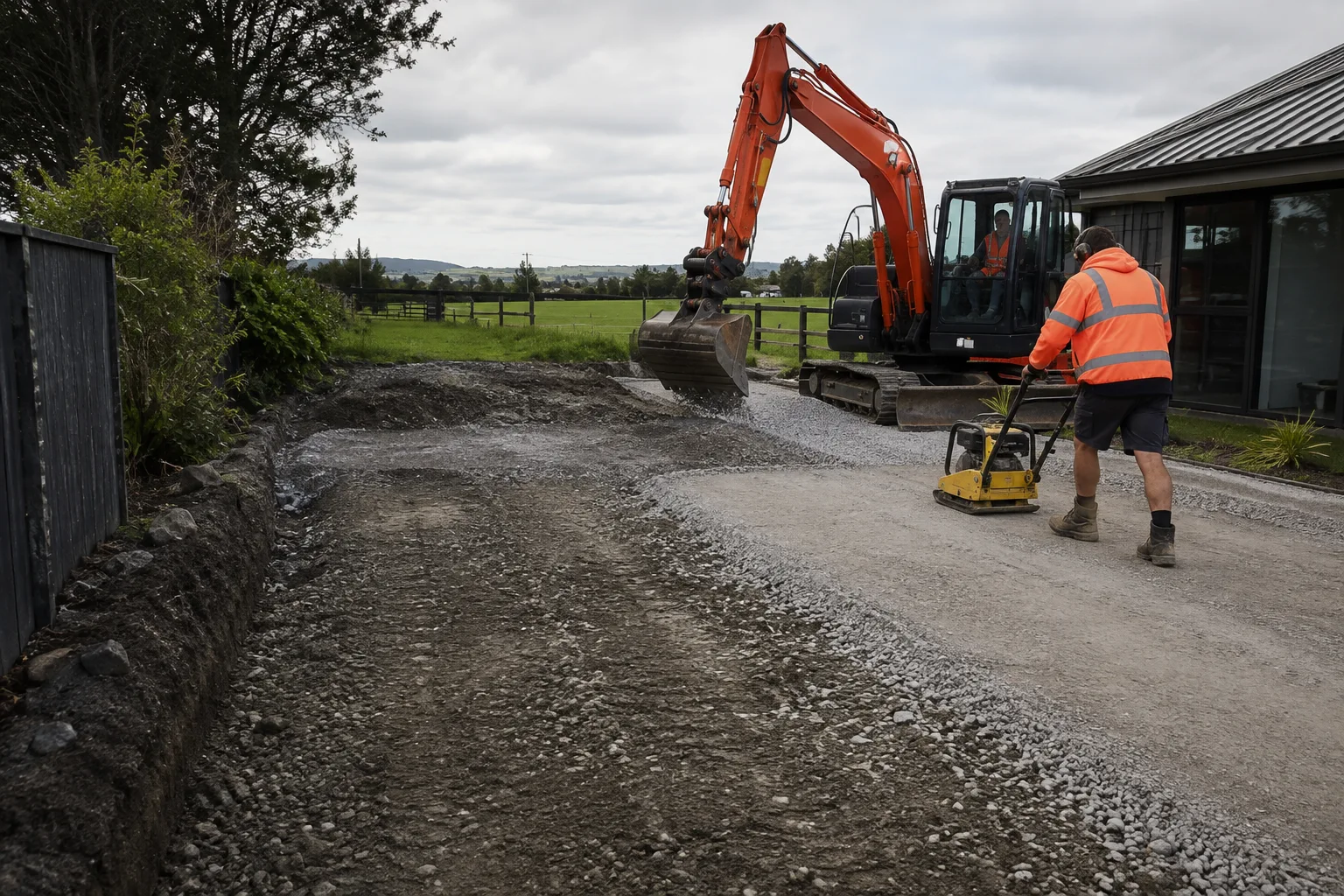
Driveway Excavation
Excavation and sub-base preparation for new or replacement driveways, shaped and compacted to the finished levels the surface needs — as a standalone job or as the first stage of a full install.
View serviceDriveways, Access & Civil Groundworks
Ground preparation for kerb lines and vehicle crossings across Christchurch, excavated and graded to match road levels ahead of concrete placement.
03 661 7200Your site. A clear next step.
Christchurch Kerbing covers ground preparation for kerb lines and vehicle crossings, excavated and graded to match road levels ahead of concrete placement.
Tell us what you want to achieve, where your site is and when you would like to start. Include any plans, access constraints or measurements that will help us understand the work.
Recognise your project
Define the work
Where existing kerb or channel obstructs the planned layout, it is saw-cut cleanly and the required sections removed. Cutting rather than breaking limits damage to the surfaces that are staying.
The line is excavated to the formation level the new kerb, channel or crossing requires, allowing for the concrete profile and base depth. Depth is set from the specification, not from the existing surface.
Aggregate sub-base is placed and compacted beneath the kerb line. Kerb and channel that settles unevenly cracks at the joints, and the base is what determines whether that happens.
Grades and falls are set to tie in with the existing road and channel levels. A crossing or kerb that does not match the road it meets creates a lip, a scrape point or a place water sits.
Berm and verge areas disturbed by the works are reinstated once the concrete work is complete. The area between the kerb and the boundary is usually council land, and it is expected to be left tidy.
We work to the council's vehicle crossing requirements for gradient, width and materials. Those requirements vary between Christchurch City, Selwyn and Waimakariri, and getting them wrong means doing it twice.
Where a concrete kerb and channel contractor is doing the pour, we prepare to their levels and hand over cleanly. Both crews working from the same set of levels is what avoids rework on the day.
Where the work sits in the road corridor, we liaise on traffic management and the permits that go with it. That approval process takes time, so it is started before a date is committed to.
From site assessment to completion
We confirm what the council or project specification requires for gradient, width and materials before work starts.
Any existing kerb, channel or crossing that needs replacing is saw-cut and removed.
Ground is excavated to the formation level needed for the new kerb and channel.
Levels are set so the new work ties in cleanly with the existing road, channel and driveway.
Aggregate sub-base is placed and compacted to support the concrete kerb and channel.
The prepared ground is handed to the concrete contractor at the correct level, ready for kerb and channel to be poured.
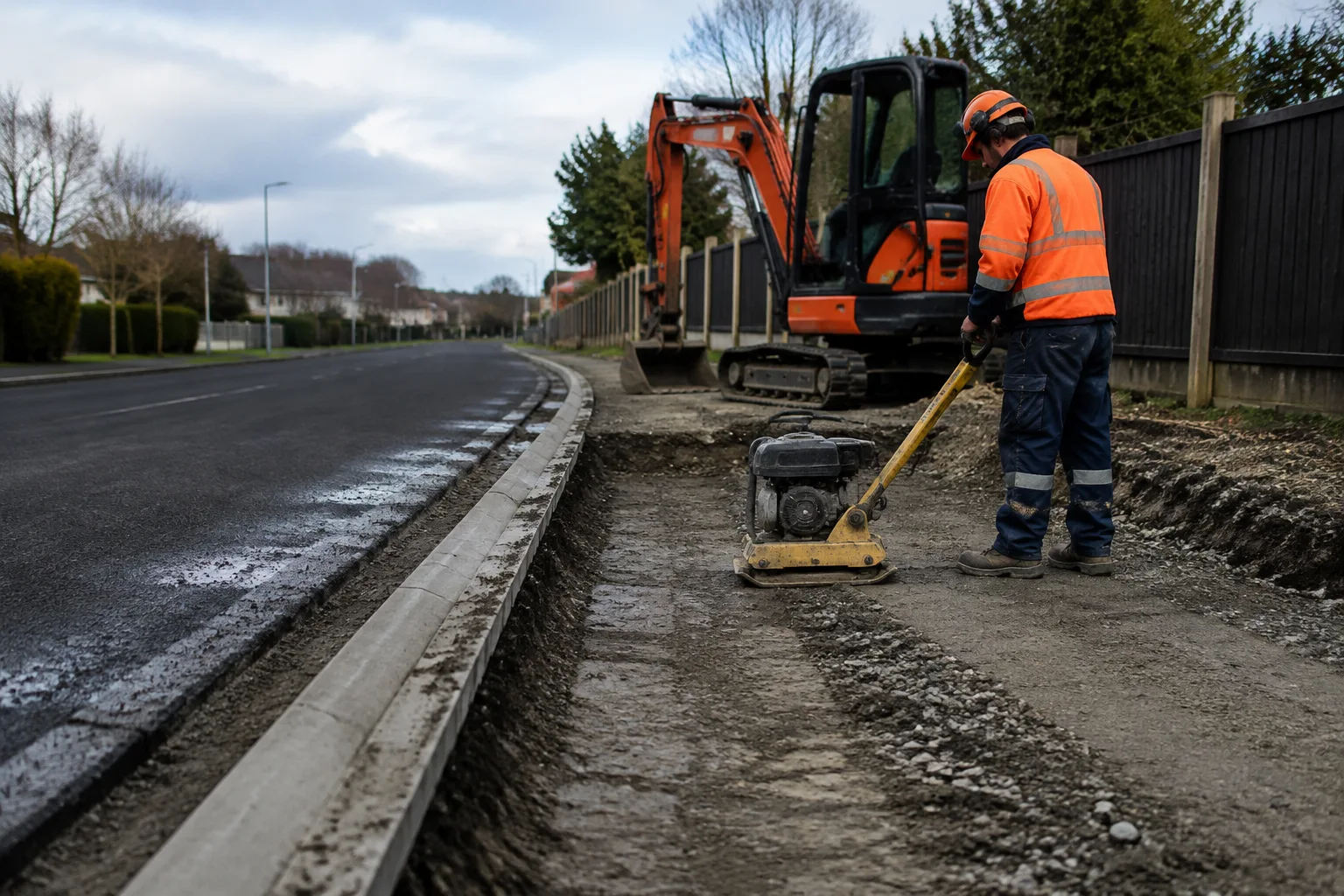
Working conditions
We use excavation and compaction equipment suited to working in and around road corridors and berm areas, including smaller machinery where access is tight. Plant is selected on a job-by-job basis depending on the scope and location of the crossing or roading works.
Work within the road corridor may require a traffic management plan or council permit, which we recommend confirming before a start date is set. Expect noise from saw-cutting and excavation, temporary loss of on-street parking or footpath access near the site, and a short curing period once concrete is poured before the crossing can be used.
Get the detail right
Kerb and channel sits at the boundary between private property and council infrastructure, so levels and falls have to be right for water to drain as intended. Getting the gradient wrong on a vehicle crossing can mean a costly redo, and road corridor works often carry permit and traffic management obligations that are easy to overlook.
We don't hold or issue council approvals ourselves, but we can help confirm what's required for your site and work in with whatever conditions the council sets.
No, we prepare the ground, set levels and handle excavation and sub-base work. The concrete kerb and channel itself is placed by a concrete contractor once we've handed the site over.
It depends on where the work sits. Anything within the road corridor may need a traffic management plan, and we recommend this is confirmed with the council before work begins.
We survey and set levels against the existing kerb, channel and road surface so the new section ties in without a step or reverse fall.
Yes, kerb and channel preparation is often carried out alongside driveway excavation or subdivision roading works so levels are coordinated across the whole site.
A single residential crossing is usually a short job, while subdivision-scale kerb and channel works are staged over a longer programme depending on the length of roading involved.
The next part of your project
Excavation and sub-base preparation for new or replacement driveways, shaped and compacted to the finished levels the surface needs — as a standalone job or as the first stage of a full install.
View service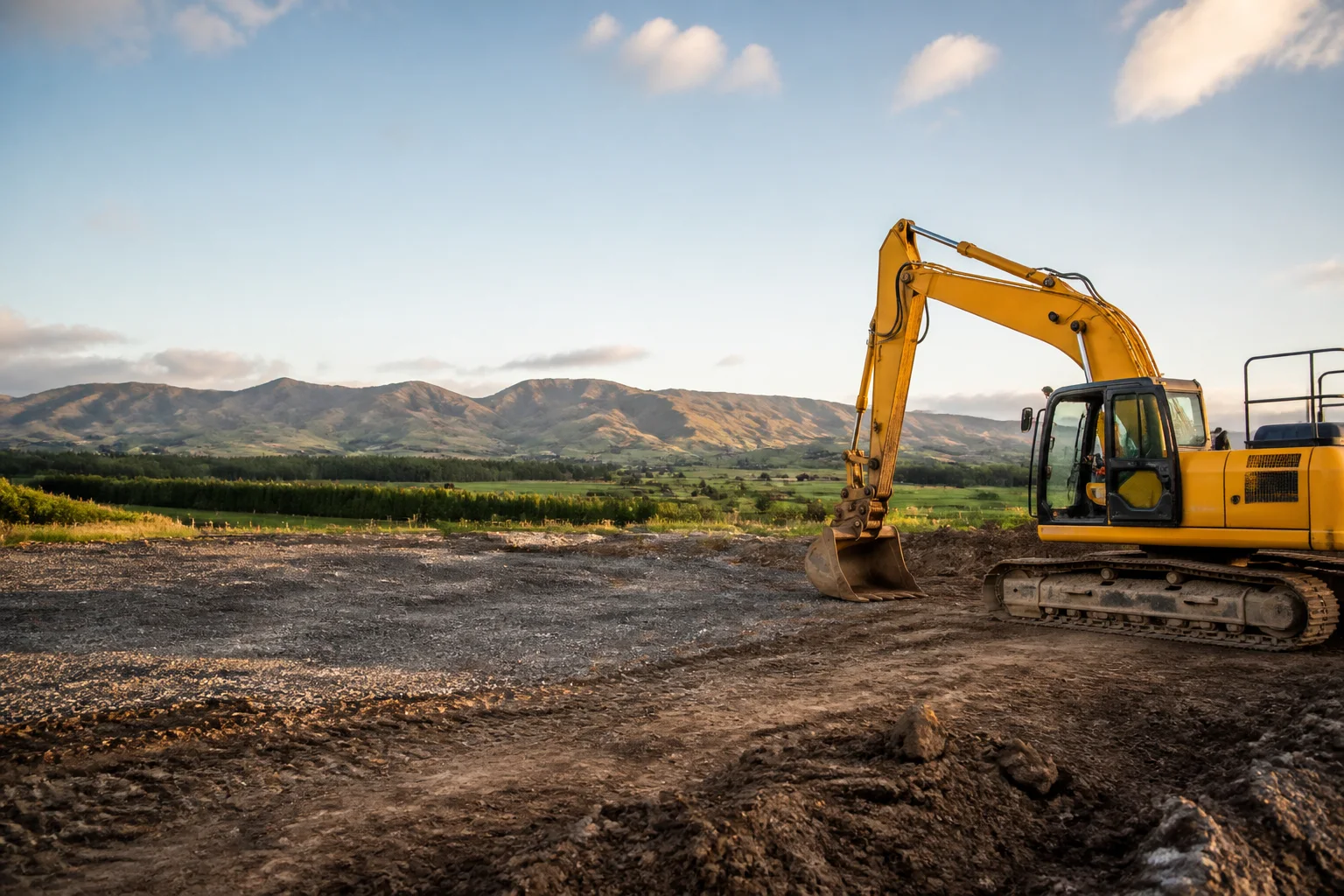
Excavation, set-out and base preparation for concrete channels — dish channels beside a kerb, spoon drains across a driveway, and channels alongside paths and yards.
View service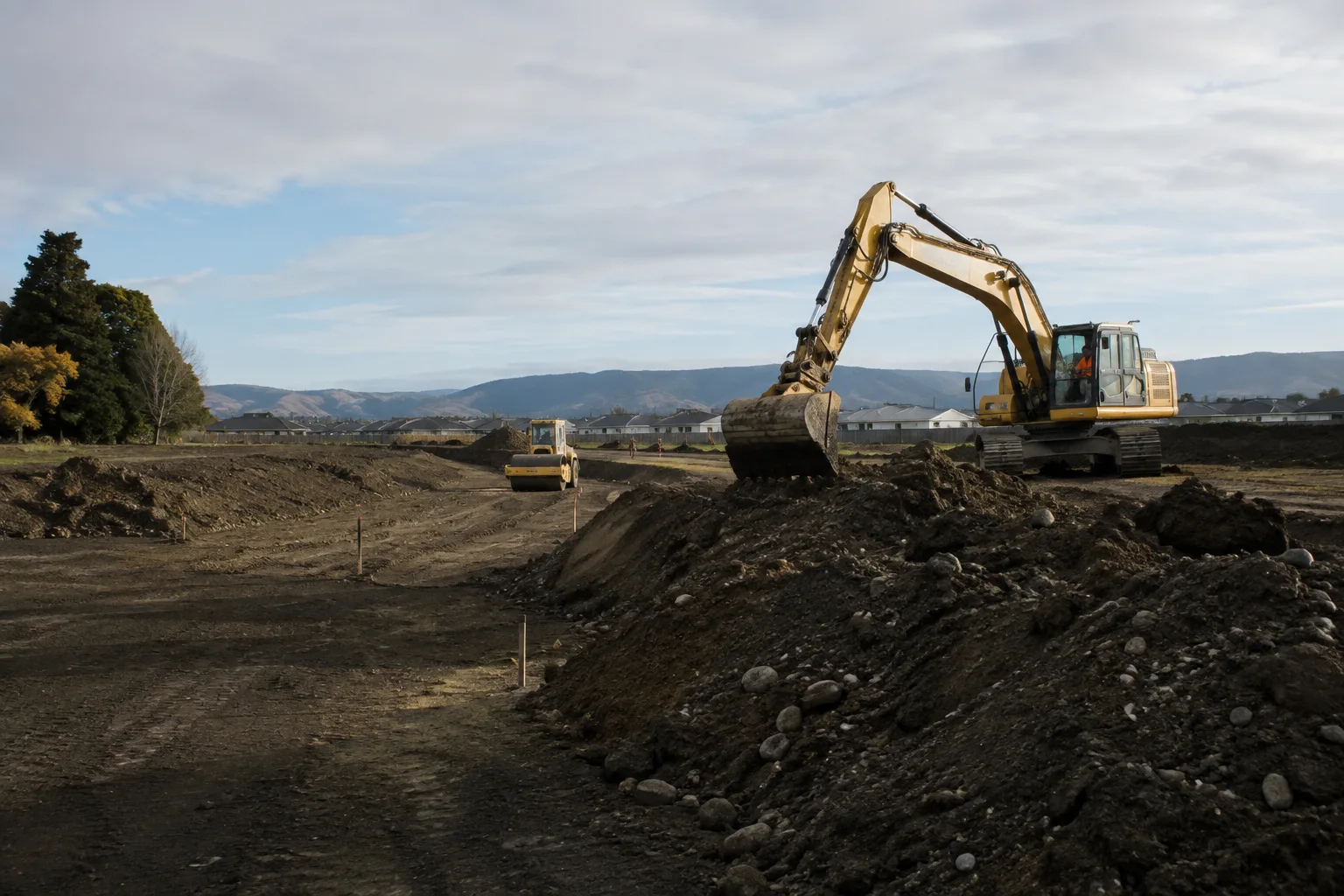
Bulk earthworks, roading and services groundworks for subdivision developments, carried out to the project engineer's design and staging.
View service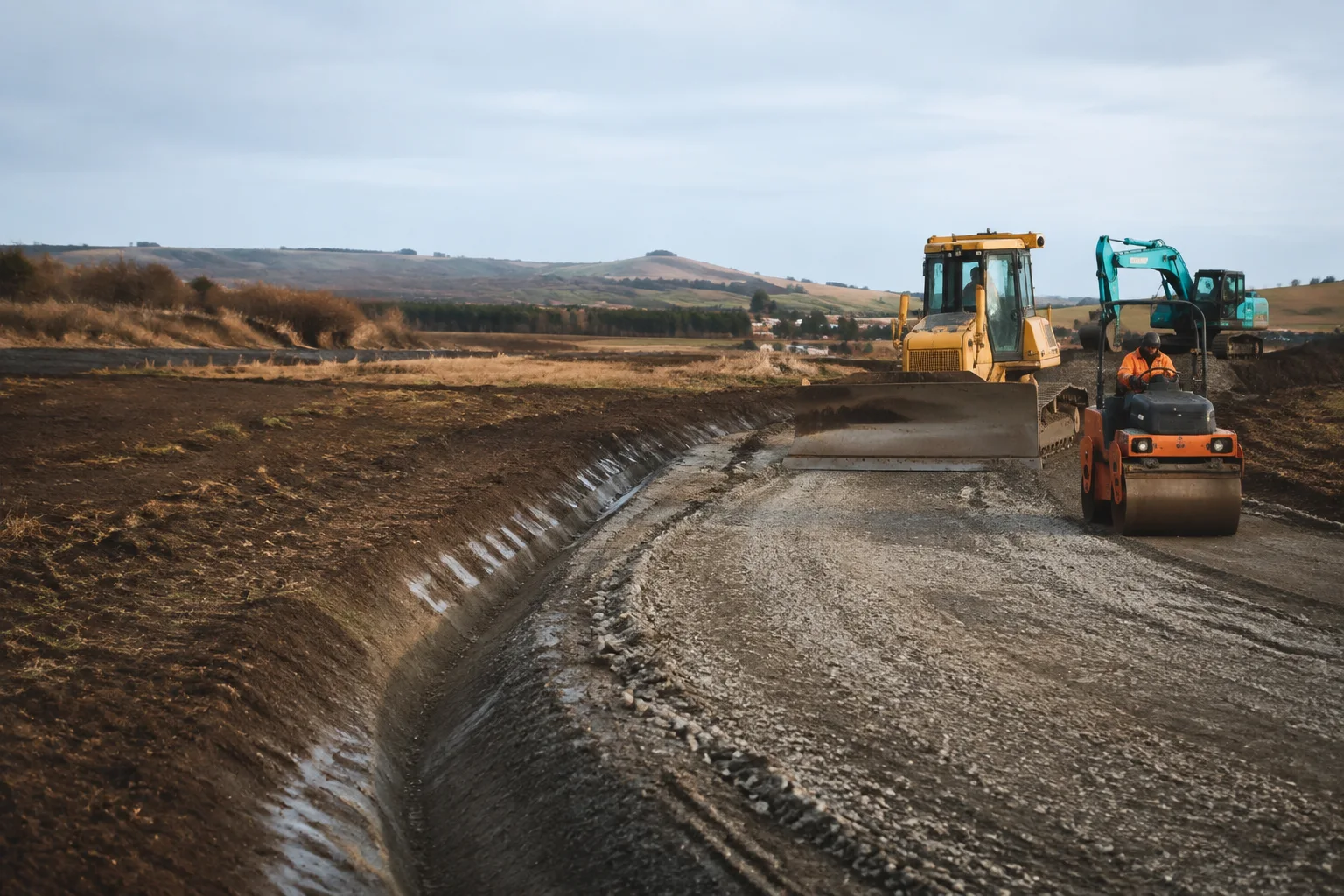
Formation, drainage and sub-base earthworks for private roads and access tracks on rural, lifestyle and small development sites.
View serviceTell us about your project and we will come back with clear next steps — no pressure, no jargon.
YOUR SITE. THE NEXT CHAPTER.
Start with your suburb, a few site details and what you want to build.
Plan your project