

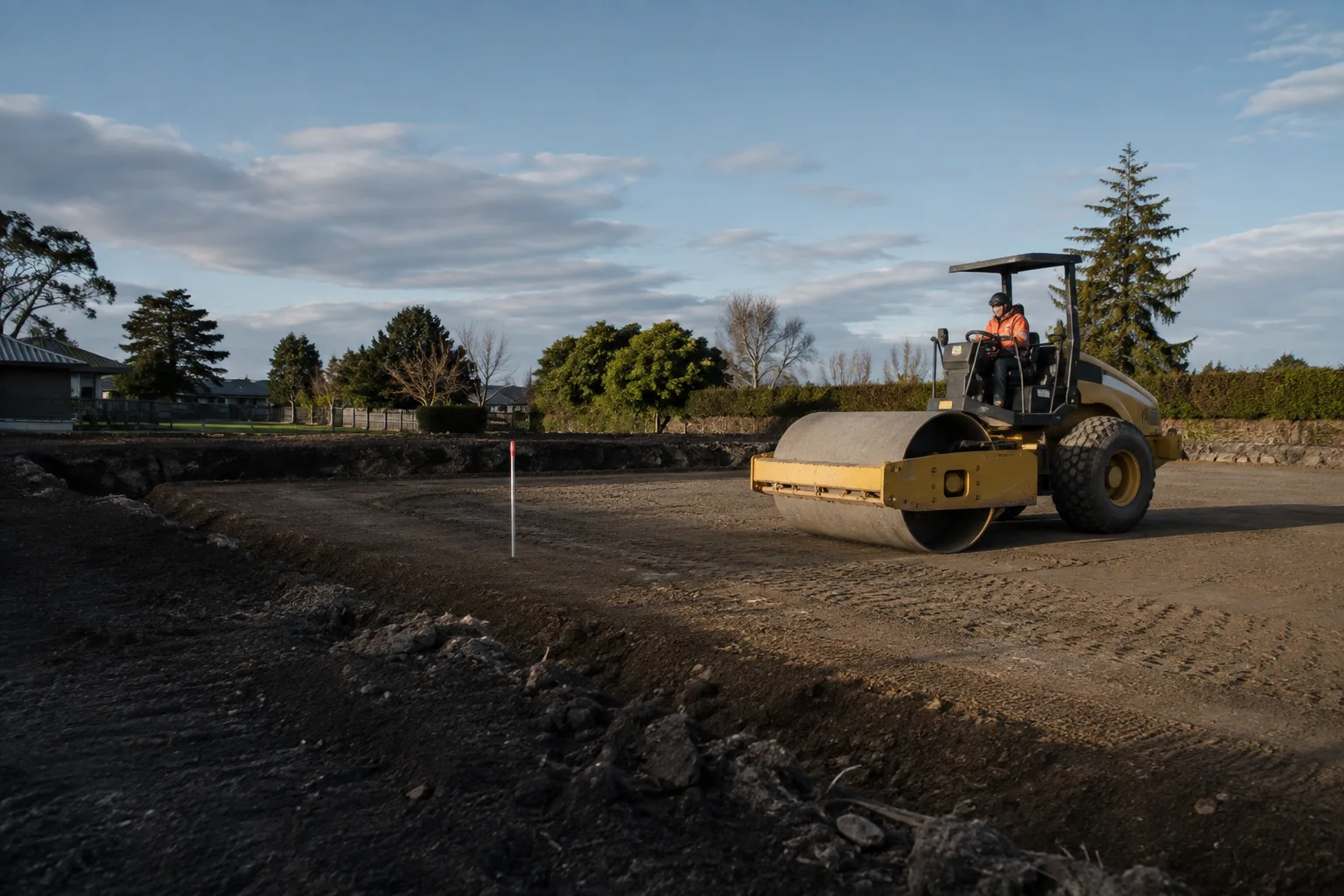
House Site & Building Platform Preparation
Excavating and compacting a level, engineered building platform ready for foundation work, to your designer's specification.
View serviceRural & lifestyle
From farm tracks to septic field preparation, rural Canterbury properties have earthworks needs that differ from a standard town section.
03 661 7200Your site. A clear next step.
Christchurch Earthworks for Lifestyle Blocks and Rural Properties in Canterbury covers everything from farm tracks to septic field preparation, since rural Canterbury properties have earthworks needs that differ from a standard town section.
Tell us what you want to achieve, where your site is and when you would like to start. Include any plans, access constraints or measurements that will help us understand the work.
Rural & lifestyle
Updated 2026-09-06
Lifestyle blocks and larger rural properties across Selwyn, Waimakariri and Banks Peninsula tend to involve bigger scale, more varied terrain and longer distances from town services than a standard residential section. Reticulated infrastructure is often limited or absent, which means more reliance on on-site systems for water, wastewater and access. Weather and ground conditions can also have a much bigger impact on rural work simply because there's more exposed ground and more distance to travel across it.
Planning a rural earthworks project usually benefits from thinking about the whole property and how different elements, such as access tracks, building platforms and water supply, connect with each other rather than treating each as an isolated job.
Rural & lifestyle
A well-built farm track needs proper cut-and-fill shaping, a camber that sheds water off to the sides rather than letting it pool and soften the surface, and cut-off drains positioned to intercept water before it can erode the track. Aggregate surfacing suited to the loads the track will carry, whether that's farm vehicles, stock trucks or general household traffic, makes a real difference to how well the track holds up over time. Where a track needs to cross a swale, gully or waterway, a culvert sized correctly for the expected flow keeps water moving through rather than backing up and undermining the track above it.
Preparing a building platform on a rural property typically starts with clearing vegetation and any existing debris, then shaping the site through cut and fill to reach the levels needed. Compaction needs to suit the structure going on top, whether that's a large shed, a barn or a home, since the loading and footing requirements differ considerably. Open rural sites also bring orientation considerations into play, such as positioning a platform with an eye to prevailing wind and sun exposure, and it's worth allowing for where future services, like power or water, will need to connect in before the platform is finished.
Rural & lifestyle
Many rural properties rely on an on-site wastewater system rather than a reticulated sewer connection. Christchurch Earthworks excavates for septic tanks and effluent disposal fields to the specification provided by a wastewater designer, rather than designing these systems ourselves. Correct separation distances from bores, waterways and property boundaries are set by council and regional rules, and these need to be factored into the design before excavation starts.
Because soil type has a big influence on how an effluent field performs, the design brief usually reflects site-specific testing rather than a generic layout, and our job is to excavate accurately to that brief.
Fencing across a rural property, whether for boundaries or internal paddock divisions, generally calls for a large number of post holes bored to a consistent depth and spacing. Mechanical augering is far more efficient than manual digging over any significant length of fence line, but how straightforward the boring is depends heavily on the ground being worked. Rocky or gravelly ground, common in parts of Selwyn and Waimakariri, is more demanding to bore through than silt loam, and this can affect how a fencing project is scheduled and priced.
Knowing the general ground conditions on a property ahead of time helps set realistic expectations for a boring job.
Rural & lifestyle
Large water tanks, whether for household supply, stock water or fire-fighting reserves, need a level and well-compacted pad to sit on. A tank that looks stable when empty can place enormous point loads on uneven or poorly compacted ground once it's full, so pad preparation needs to account for the tank's filled weight, not just its footprint. Getting the base right at the outset avoids the tank settling unevenly later, which can stress fittings and connections and shorten the tank's working life.
Canterbury's plains bring a distinct seasonal pattern to rural earthworks. Wet, cold winters can leave paddock ground soft and easily rutted, making machinery access difficult and increasing the risk of long-term compaction damage to productive land if work goes ahead in unsuitable conditions. Strong nor'west winds and dry summer ground bring different challenges, including dust management and the effect of very dry, hard ground on achieving proper compaction.
Many rural projects are best planned around the drier shoulder seasons, and it's also worth coordinating timing with the farming calendar, since access needs during lambing or harvest can shape when earthworks can practically go ahead.
Keep these points in mind
Rural earthworks often involve larger scale, longer access distances and greater exposure to weather than a typical town section.
Farm track drainage, camber and culverts are what keep a track usable through wet Canterbury winters.
Effluent and septic field excavation follows a wastewater designer's specification, with separation distances set by council and regional rules.
Post-hole boring efficiency depends heavily on the ground type, with rocky or gravelly soils more demanding than silt loam.
Water tank pads need proper compaction to safely support the tank once it's full, not just when empty.
Wet winter ground and dry, windy summers both affect the best timing for rural earthworks projects.
Put the guide into practice
Excavating and compacting a level, engineered building platform ready for foundation work, to your designer's specification.
View service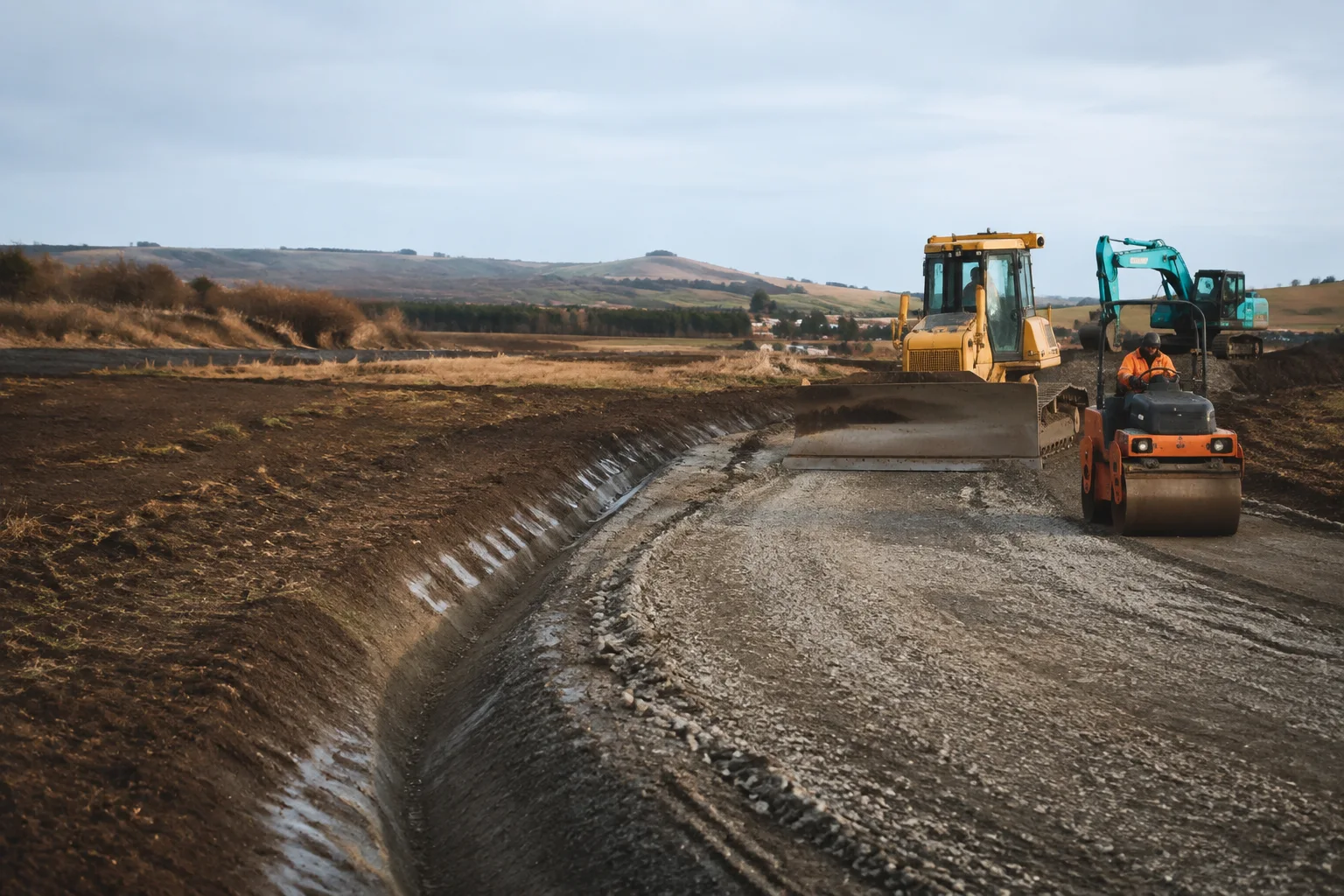
Formation, drainage and sub-base earthworks for private roads and access tracks on rural, lifestyle and small development sites.
View service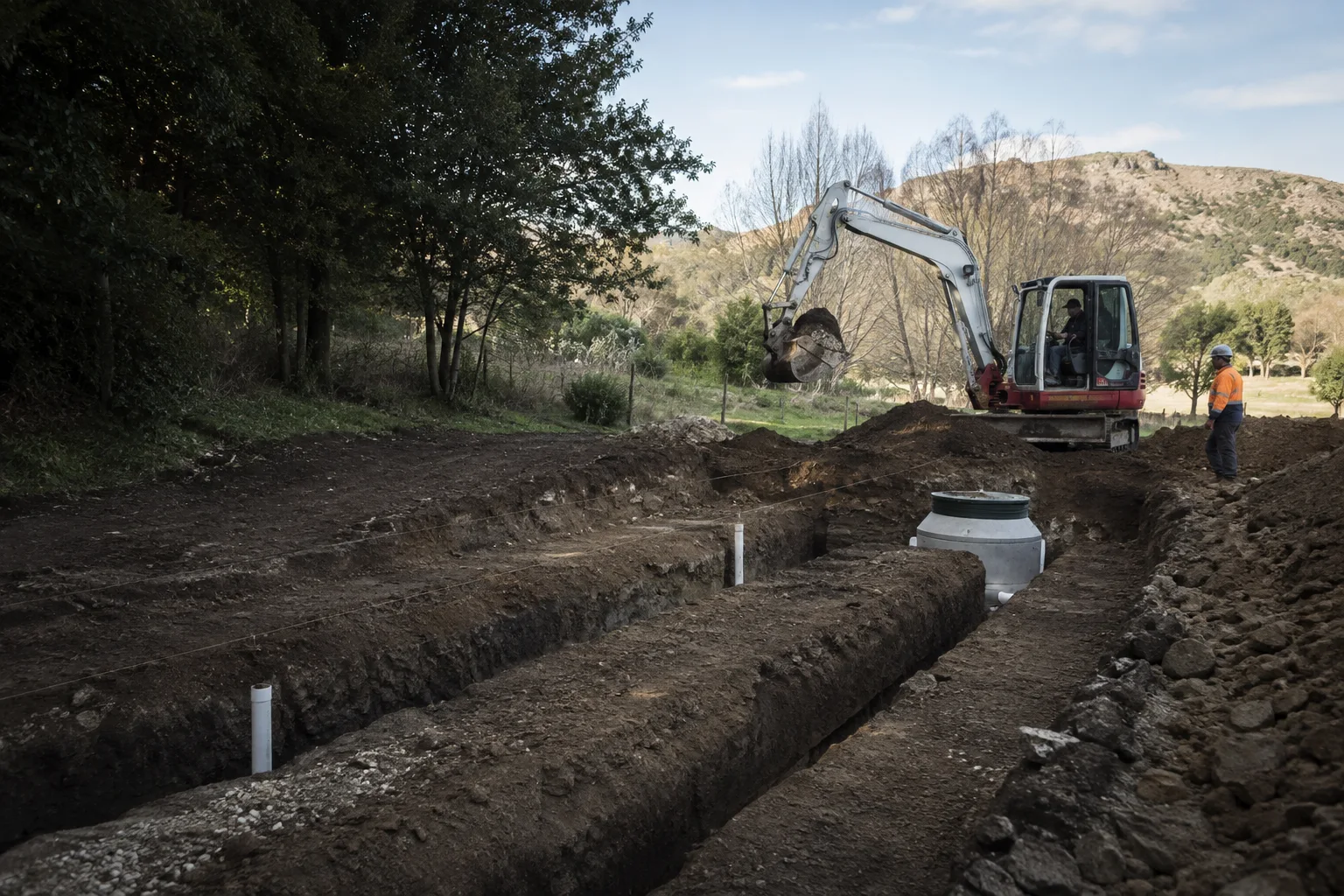
Excavation for septic tanks and effluent disposal fields, dug to the depths, clearances and layout set by your suitably qualified designer.
View service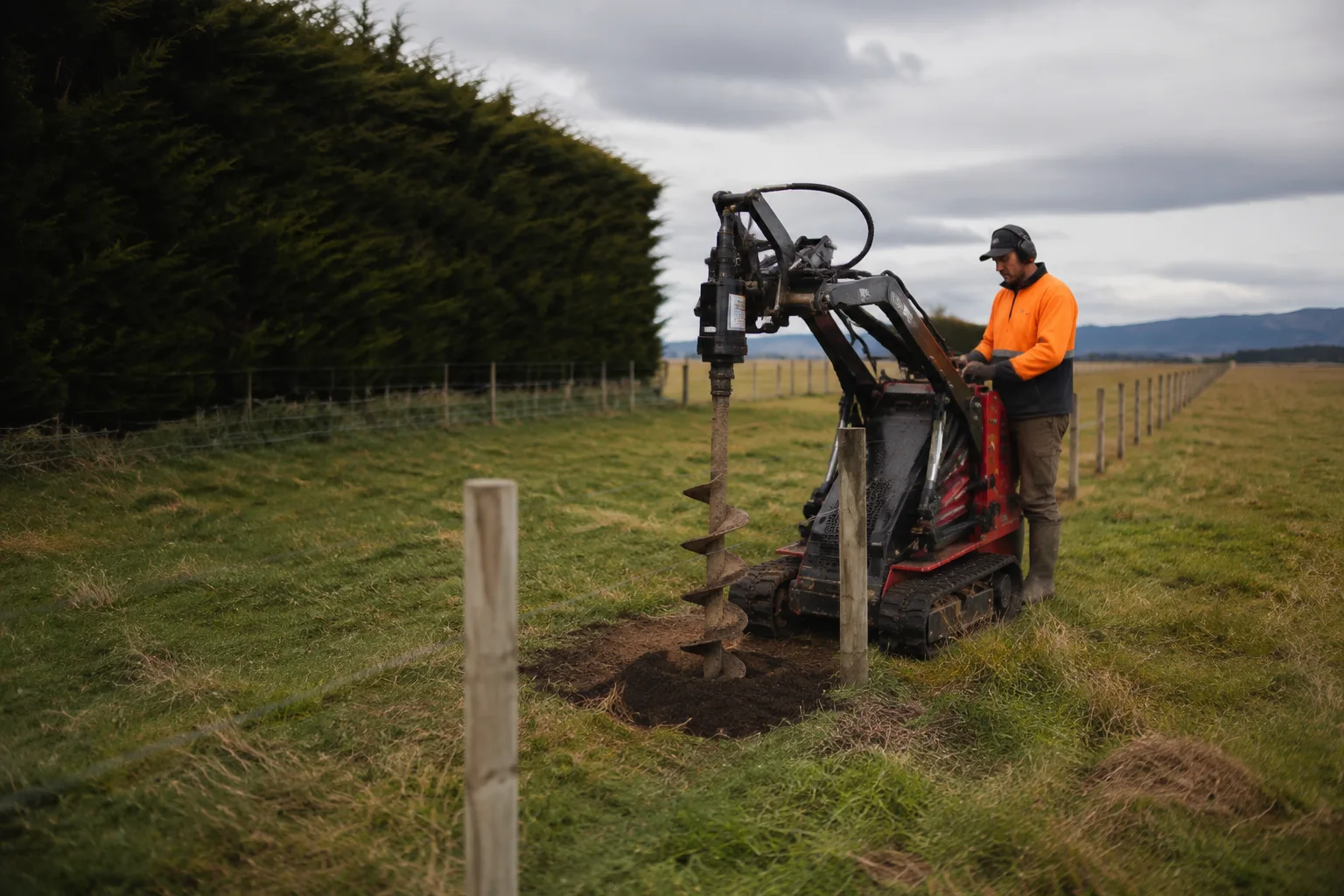
Mechanical post-hole boring and augering for fencing, decking and pergolas, plus long-run rural fence-line augering across Canterbury properties.
View service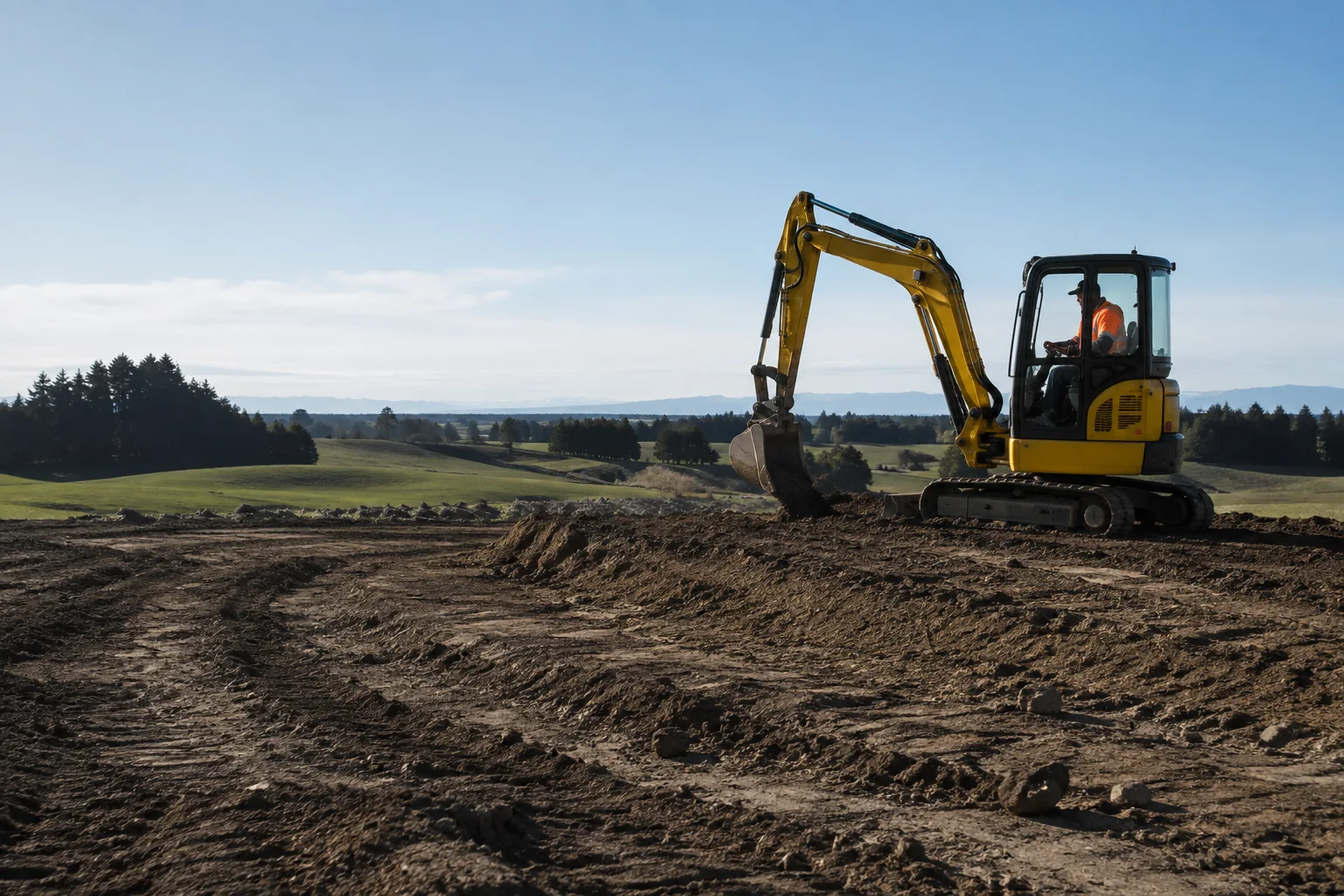
General earthworks for farms and lifestyle blocks, including access tracks, building pads, yard formation and paddock drainage shaping across rural Canterbury.
View serviceTell us about your project and we will come back with clear next steps — no pressure, no jargon.
YOUR SITE. THE NEXT CHAPTER.
Start with your suburb, a few site details and what you want to build.
Plan your project