

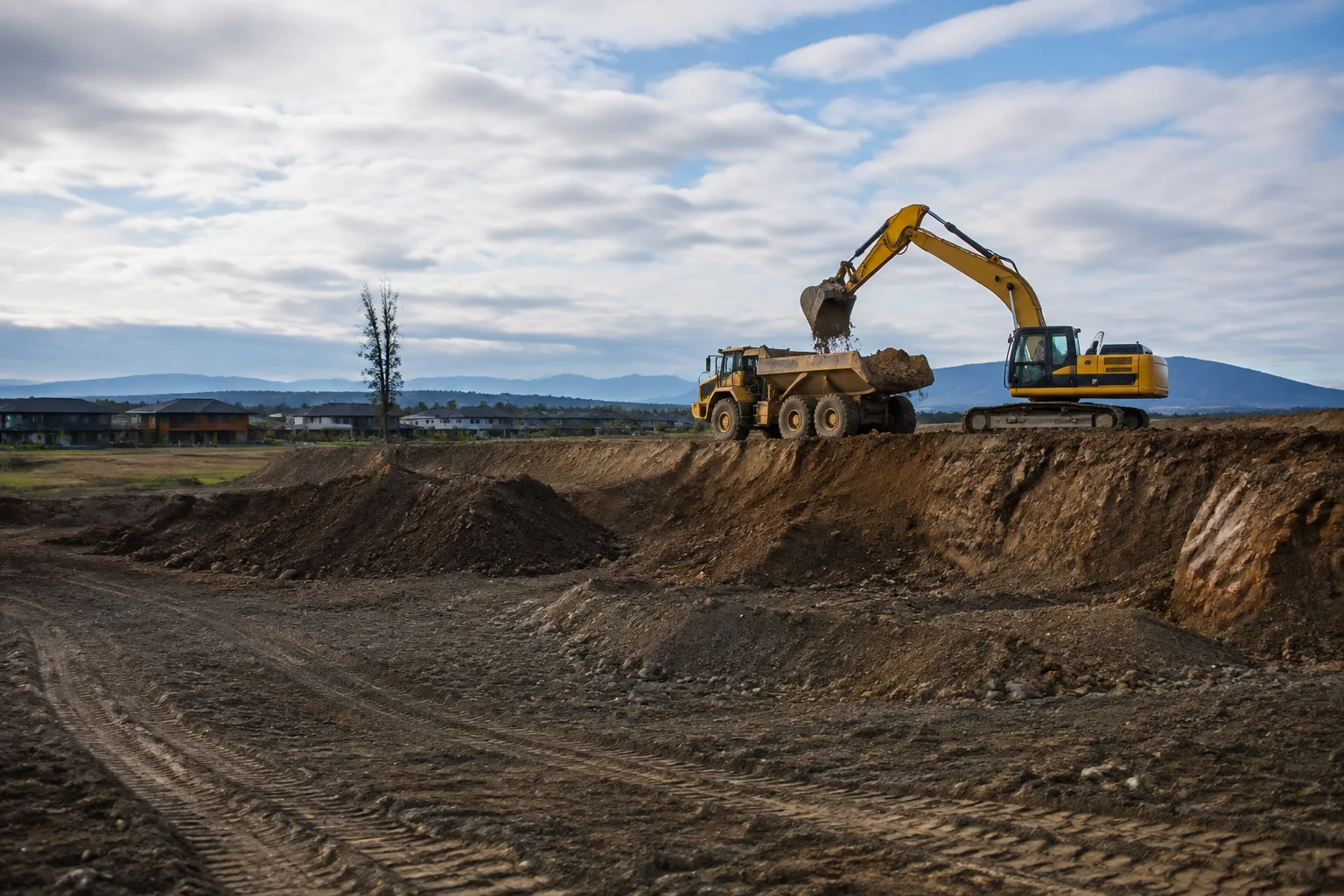
Bulk Earthworks & Site Cut-to-Fill
Cutting, filling and re-shaping land to bring a site to the levels your build or subdivision design calls for.
View serviceConsents & site checks
This is a general educational overview only - always confirm current EQC and Toka Tu Ake information directly, as processes and criteria can change.
EQC and Toka Tū Ake processes, criteria and contact details can change — confirm current information directly with Toka Tū Ake EQC before relying on it. We do not currently hold or claim EQC/Toka Tū Ake panel status; this guide is general background only.
Your site. A clear next step.
Christchurch EQC and Insurance-Related Groundworks: What Property Owners Should Know is a general educational overview only — always confirm current EQC and Toka Tū Ake information directly, since processes and criteria can change.
Tell us what you want to achieve, where your site is and when you would like to start. Include any plans, access constraints or measurements that will help us understand the work.
Consents & site checks
Updated 2026-09-06
Canterbury's history of seismic activity means many property owners across the region have encountered, or may at some point encounter, natural disaster damage affecting land or buildings. In general terms, natural disaster damage to land can include things like cracking, settlement or subsidence, while damage to a building can range from cosmetic to structural. Because land and building damage are often assessed and handled somewhat differently, it helps to understand at a high level how the broader system generally works, even though the fine detail of any individual case depends heavily on the specific circumstances involved.
Consents & site checks
Toka Tu Ake EQC provides a level of natural disaster cover for residential land and buildings, which generally sits alongside a homeowner's private insurance rather than replacing it entirely. What is covered, the thresholds that apply, and how land and building claims are handled are set out in legislation and policy that can and does change over time. Rather than restating specific criteria here, which risks becoming outdated, this guide simply flags that such cover generally exists and encourages every property owner to check the current detail directly with Toka Tu Ake EQC, since relying on secondhand or dated information about eligibility could lead to a wrong assumption about your own situation.
At a general level, a natural disaster damage claim typically follows a broad sequence: damage is identified and reported, an assessment is carried out by the insurer and, where relevant, Toka Tu Ake EQC representatives, a scope of any repair or remediation work is determined, and appropriately engaged contractors then carry out that scope. The exact steps, timeframes and documentation required can vary depending on the nature of the damage and current process, so this description is intentionally general. Anyone going through an actual claim should follow the specific guidance given by their insurer and by Toka Tu Ake EQC directly, rather than treating this overview as a step-by-step guide.
Consents & site checks
When a land damage assessment identifies an issue such as uneven settlement, damaged fill or drainage disruption, ground remediation work is sometimes needed before or alongside any building repair. This kind of remediation might involve releveling an area, replacing or recompacting settled fill, or correcting drainage that has been affected by ground movement. Importantly, the specific scope of any such remediation is defined by the engineer or assessor engaged on the claim, based on their assessment of the damage, rather than being something an excavation contractor would determine independently.
Once a scope of ground remediation work has been defined by the relevant assessor, engineer or insurer, an excavation contractor's role is to carry out the physical work specified, such as excavation, cut and fill, or site preparation. Christchurch Earthworks does not assess natural disaster claims, determine EQC or Toka Tu Ake eligibility, or certify insurance-related repairs - that responsibility sits with the insurer, Toka Tu Ake EQC and the engineers or assessors involved in a claim. Our part, where we're engaged on a project like this, is limited to the groundworks scope that others have specified.
Consents & site checks
Christchurch Earthworks does not currently hold or claim any Toka Tu Ake EQC panel status, and this page is not an offer of a current EQC-related service. Insurance and EQC-related groundworks is an area we may look to develop into further over time, subject to confirmation of what that would involve, and this guide is intended purely as general background information for property owners trying to understand how ground remediation can relate to a claim, rather than as a description of work we are currently contracted to perform in that capacity.
If you're dealing with actual land or building damage, the most useful first step is to confirm current information and your specific eligibility directly with Toka Tu Ake EQC, and to check with your private insurer about how your particular policy applies to your situation. Independent engineering advice is worth getting for any land damage assessment before committing to remediation groundworks, since the right remediation approach depends entirely on what a qualified assessment finds, not on general assumptions drawn from someone else's experience or from an older claim.
Keep these points in mind
This guide is general educational background only - always confirm current details directly with Toka Tu Ake EQC.
Toka Tu Ake EQC and private insurance can both play a role in natural disaster land or building damage, but specifics depend on your own circumstances and current policy or legislation.
Ground remediation sometimes follows an insurance or EQC claim, but its scope is set by the assessing engineer, not by an excavation contractor.
Christchurch Earthworks does not currently hold or claim EQC or Toka Tu Ake panel status.
This is an area we may develop into over time, subject to confirmation - it is not being offered as a current service through this page.
Get independent engineering and insurance advice before committing to any remediation groundworks.
Put the guide into practice
Cutting, filling and re-shaping land to bring a site to the levels your build or subdivision design calls for.
View service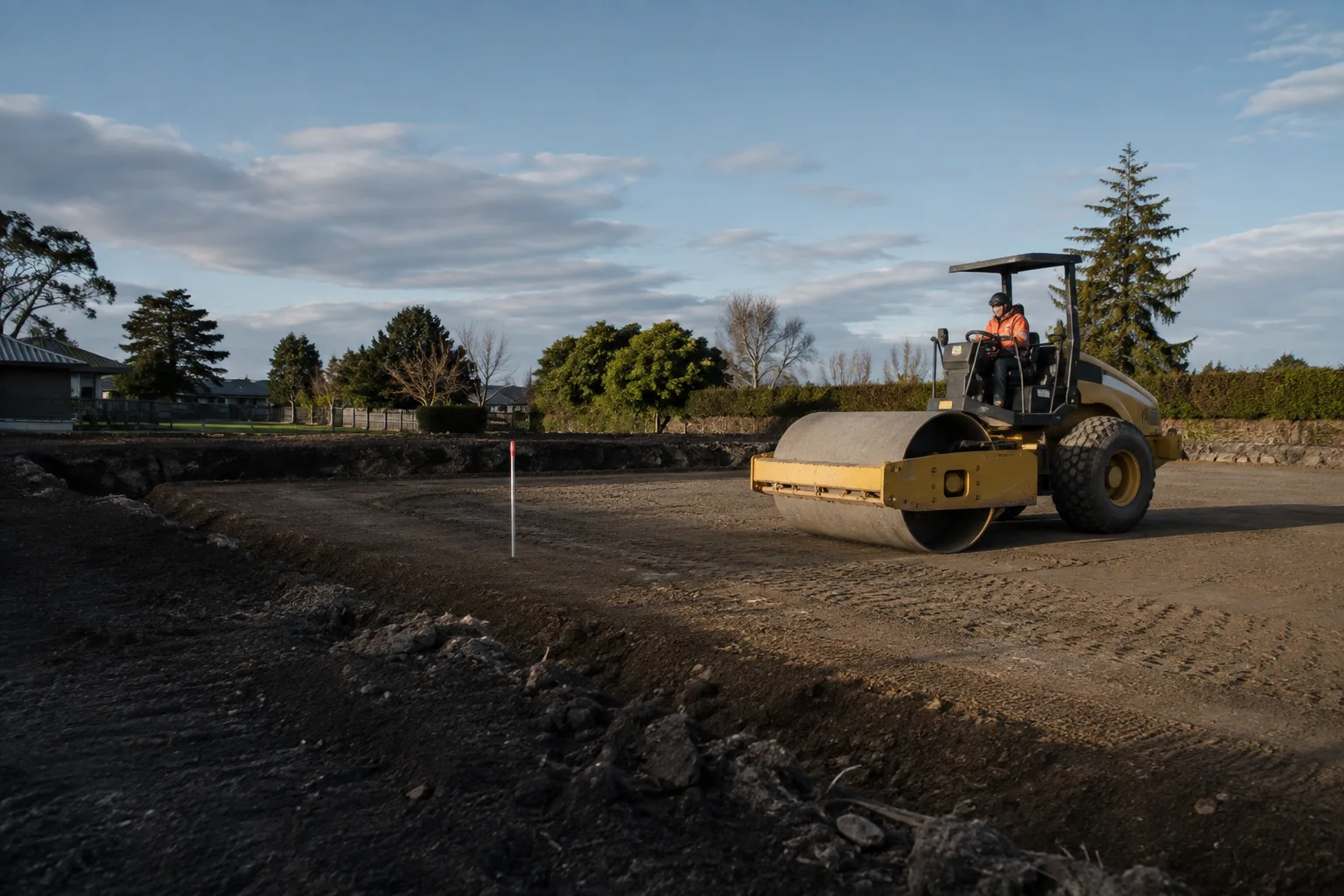
Excavating and compacting a level, engineered building platform ready for foundation work, to your designer's specification.
View service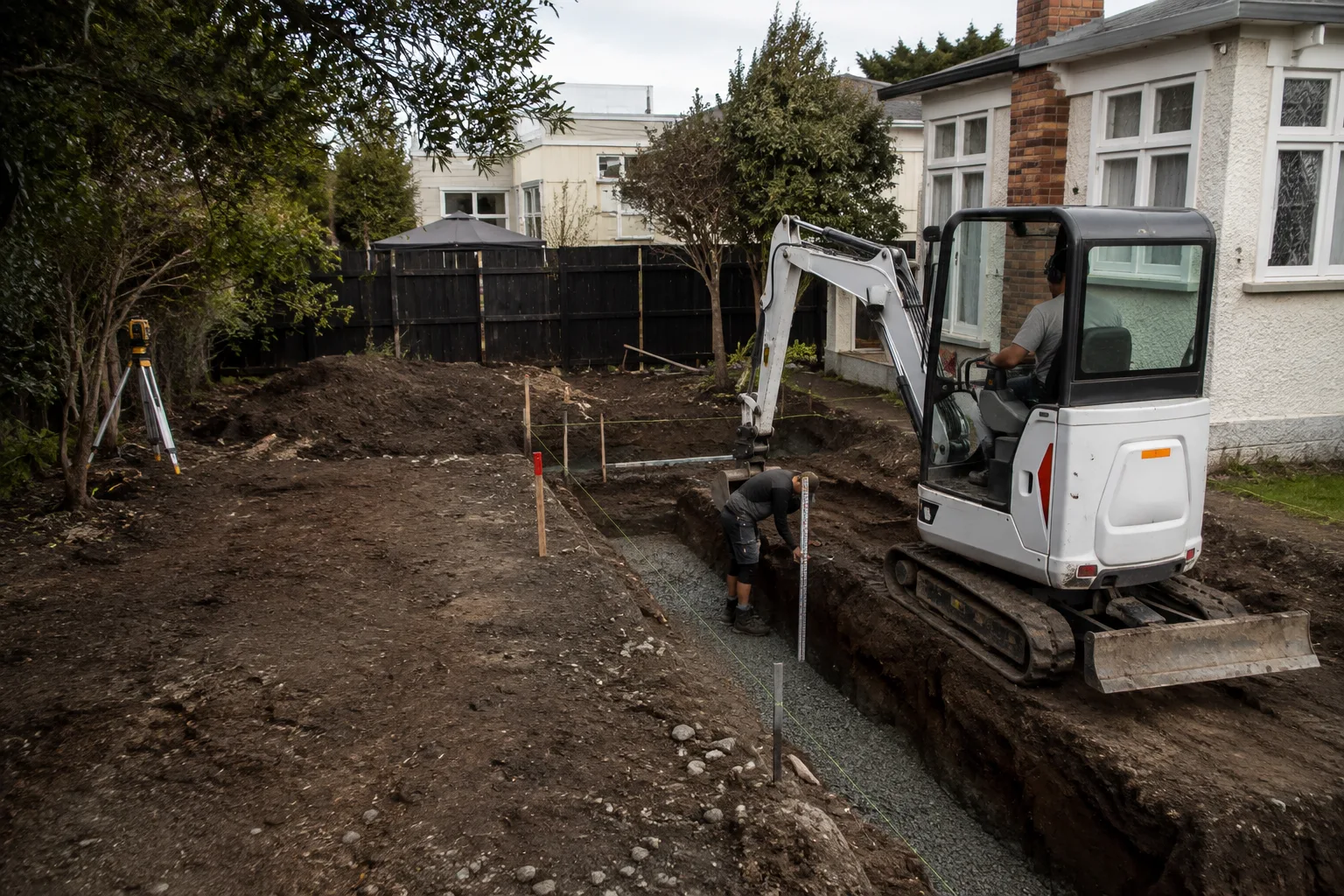
Precise excavation for foundations, footings and slabs to your engineer's drawings, with levels and depths checked before pour.
View service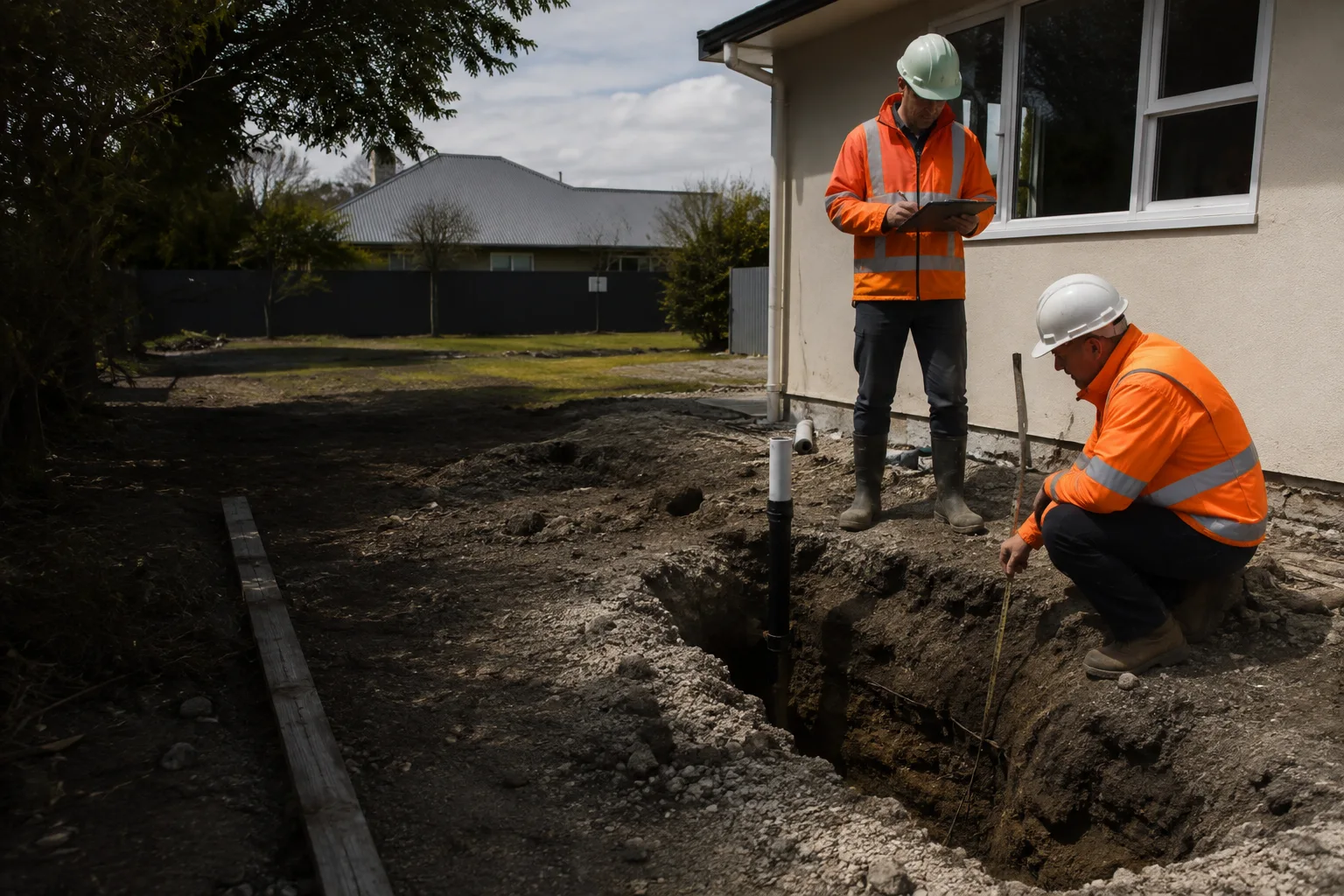
General information on the ground remediation groundworks sometimes required following EQC or insurance land-damage claims, an area of capability we are developing.
Subject to confirmationView serviceTell us about your project and we will come back with clear next steps — no pressure, no jargon.
YOUR SITE. THE NEXT CHAPTER.
Start with your suburb, a few site details and what you want to build.
Plan your project