

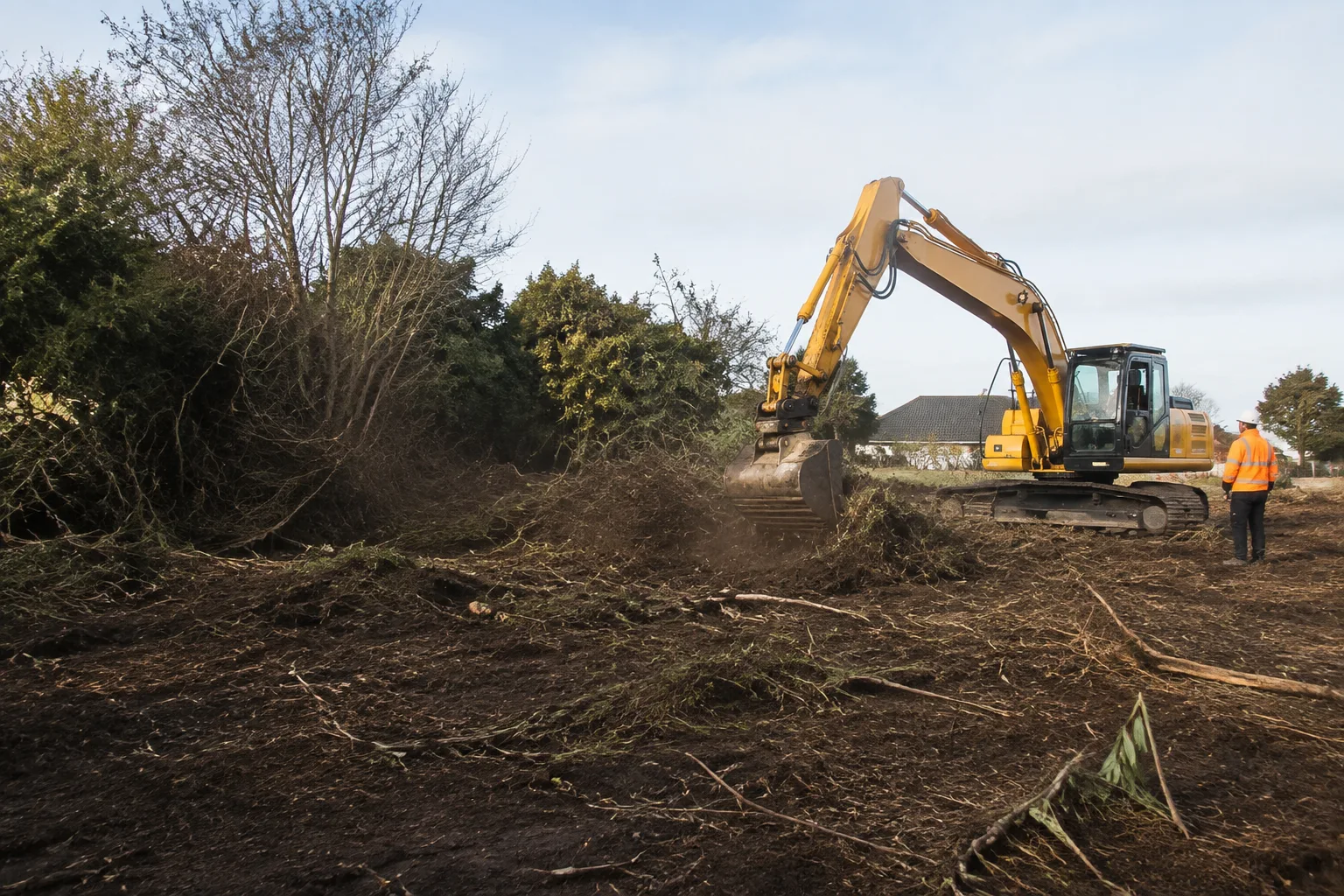
Section & Site Clearing
Clearing vegetation, scrub, topsoil and surface debris so a section is ready for design, survey or earthworks to begin.
View serviceGetting started
A practical, step-by-step checklist for getting a Canterbury section ready to build — from site plans and service locations to access, trees, consents and trade sequencing.
03 661 7200Your site. A clear next step.
Christchurch Site Preparation Checklist Before You Build in Canterbury walks through getting a section ready to build, step by step, from site plans and service locations to access, trees, consents and trade sequencing.
Tell us what you want to achieve, where your site is and when you would like to start. Include any plans, access constraints or measurements that will help us understand the work.
Getting started
Updated 2026-09-06
Before any machinery arrives, a current site plan is the single most useful document you can have. This should show boundaries, existing structures, levels or contours, the location of the proposed building platform, driveway and any retaining, and ideally a record of any recent survey pegs still in place. If you don't already have one from your architect, designer or surveyor, it's worth commissioning before you contact an earthworks contractor, because a plan lets a contractor calculate cut and fill volumes accurately rather than guessing from a site visit alone.
It also gives everyone involved — you, your builder, your earthworks contractor and council — a single reference point for levels and boundaries, which reduces the chance of a dispute or a costly mistake once digging starts. On a sloping site or anywhere near a boundary, an accurate plan becomes even more important.
Underground services — power, gas, telecommunications, water and wastewater — are not always exactly where old plans suggest, and striking one can cause anything from an inconvenient outage to a genuinely dangerous incident. Before earthworks begin, submit a request through beforeUdig to have utility owners mark or provide plans of what runs through or near your section. On older Canterbury properties, and especially where previous additions, sheds or landscaping have been added over the years, it's common for services to run in unexpected places or for old, disused lines to still be in the ground.
WorkSafe NZ's guidance on working near utilities sets out the precautions expected when digging near marked services, including hand-digging trial holes to confirm exact depth and position before a machine works nearby. Confirming services early avoids delays and protects everyone on site.
Getting started
Work out early how machinery and trucks will actually get onto the section, because access constraints discovered on the day work is due to start can cause real delays. Consider the width of any existing driveway or crossing, overhead lines or branches that might restrict a truck or digger arriving, and whether a temporary crossing or track will be needed to protect a kerb, footpath or neighbouring property. If council permission is needed to use or modify a vehicle crossing, or if a temporary traffic management plan is required for a busy road, this needs to be sorted with Christchurch City Council, Selwyn District Council or Waimakariri District Council well ahead of time, not discovered on the morning machinery is booked to arrive.
It's also worth agreeing with neighbours in advance if access will run close to a shared boundary or driveway, simply to avoid friction once trucks are moving regularly.
Decide early what's being cleared and what's being kept, because trees and vegetation can carry their own rules. Some trees are protected under a district plan or subject to resource consent conditions, particularly significant or notable trees, so it's worth checking with the relevant council before removing anything mature. If a tree, hedge or garden feature is being retained, mark it clearly on site and make sure protective fencing or exclusion zones are agreed with your earthworks contractor before machinery arrives, since root zones can be damaged by compaction or excavation even when the trunk itself isn't touched.
Where clearing does need to happen, decide in advance whether green waste, stumps and roots will be mulched, removed off site, or handled another way, as this affects both the programme and how the site is left ready for the next stage of work.
Getting started
Earthworks of a certain scale, on sloping land, near a waterway, or within specific zones can trigger resource consent or building consent requirements from your local council, and starting work before these are confirmed risks having to stop, remediate, or apply retrospectively. Christchurch City Council's earthworks rules set out volume and area thresholds, along with requirements around erosion and sediment control during the works. Selwyn District Council and Waimakariri District Council each have their own district plan provisions covering rural and residential earthworks, which can differ from the city rules in meaningful ways.
If your property is on a rural or lifestyle block, check whether farm-related earthworks exemptions genuinely apply to your situation, since they're often narrower than assumed. Confirming requirements with council before booking a contractor avoids the cost and frustration of a consent condition surfacing partway through the job.
If your section has a history of past land use — a former orchard, industrial site, service station, or older demolished dwelling — there's a chance of contaminated soil being present, and Christchurch City Council maintains records and requirements around contaminated land that should be checked before earthworks begin. Even without an obvious history, unexpected contamination, old fill, buried demolition material or rubbish can turn up once digging starts, especially on older sections that have been built on, altered or filled over many decades. Building this possibility into your planning — both in terms of budget and programme — means it's far less disruptive if it happens, and your earthworks contractor can manage testing and appropriate disposal rather than treating it as an emergency.
Raising the site's history with your contractor and, where relevant, council early on is far better than an unpleasant surprise mid-dig.
Getting started
Earthworks sit right at the start of a build programme, and getting the sequencing wrong can create expensive knock-on delays for everyone who follows. Talk to your builder, drainlayer and any other trades about the order and timing of work: foundations generally can't be poured until the platform is prepared and compacted to the required standard, drainage trenching often needs to happen at a specific point relative to the building platform, and services need to be roughed in before certain works are covered over. Weather is an added variable in Canterbury, where a wet week can push earthworks out and create a domino effect through the rest of the programme.
Building a realistic buffer into the schedule, and keeping open communication between everyone involved, reduces the chance that one delayed trade holds up the ones that come after it.
Before you contact an earthworks contractor, it helps to have worked through the essentials: a current site plan with levels and boundaries, beforeUdig service information in hand, a clear plan for site access, a decision on what trees or features are being retained, confirmation of any consent requirements from your council, an honest look at the site's history for contamination risk, and a rough sequence agreed with your builder and other trades. None of this needs to be perfect or final, but having thought through each item means your first conversation with a contractor is far more productive, your quote will be more accurate, and the job is less likely to run into a surprise that costs time or money partway through. Good preparation at this stage genuinely does make the rest of the build go more smoothly.
Keep these points in mind
A current site plan with levels and boundaries lets a contractor quote and work accurately from day one.
Always submit a beforeUdig request and confirm exact service locations before any digging starts.
Sort site access, crossings and any traffic management with council before machinery is booked.
Check whether trees on site are protected, and mark anything being retained before work begins.
Confirm consent requirements with your local council early — rules differ between Christchurch, Selwyn and Waimakariri.
Coordinate timing with your builder and other trades so earthworks don't create delays down the line.
Put the guide into practice
Clearing vegetation, scrub, topsoil and surface debris so a section is ready for design, survey or earthworks to begin.
View service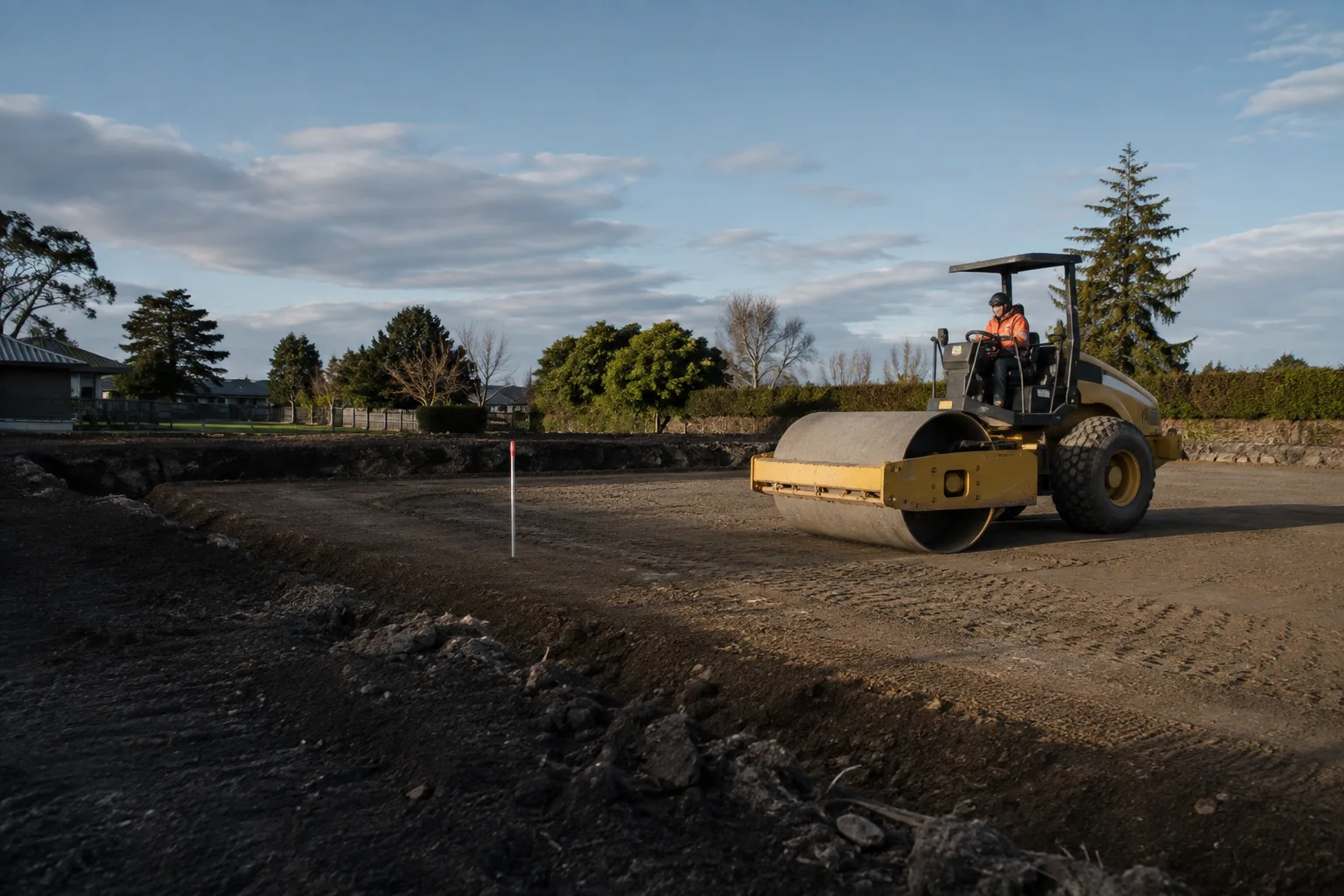
Excavating and compacting a level, engineered building platform ready for foundation work, to your designer's specification.
View service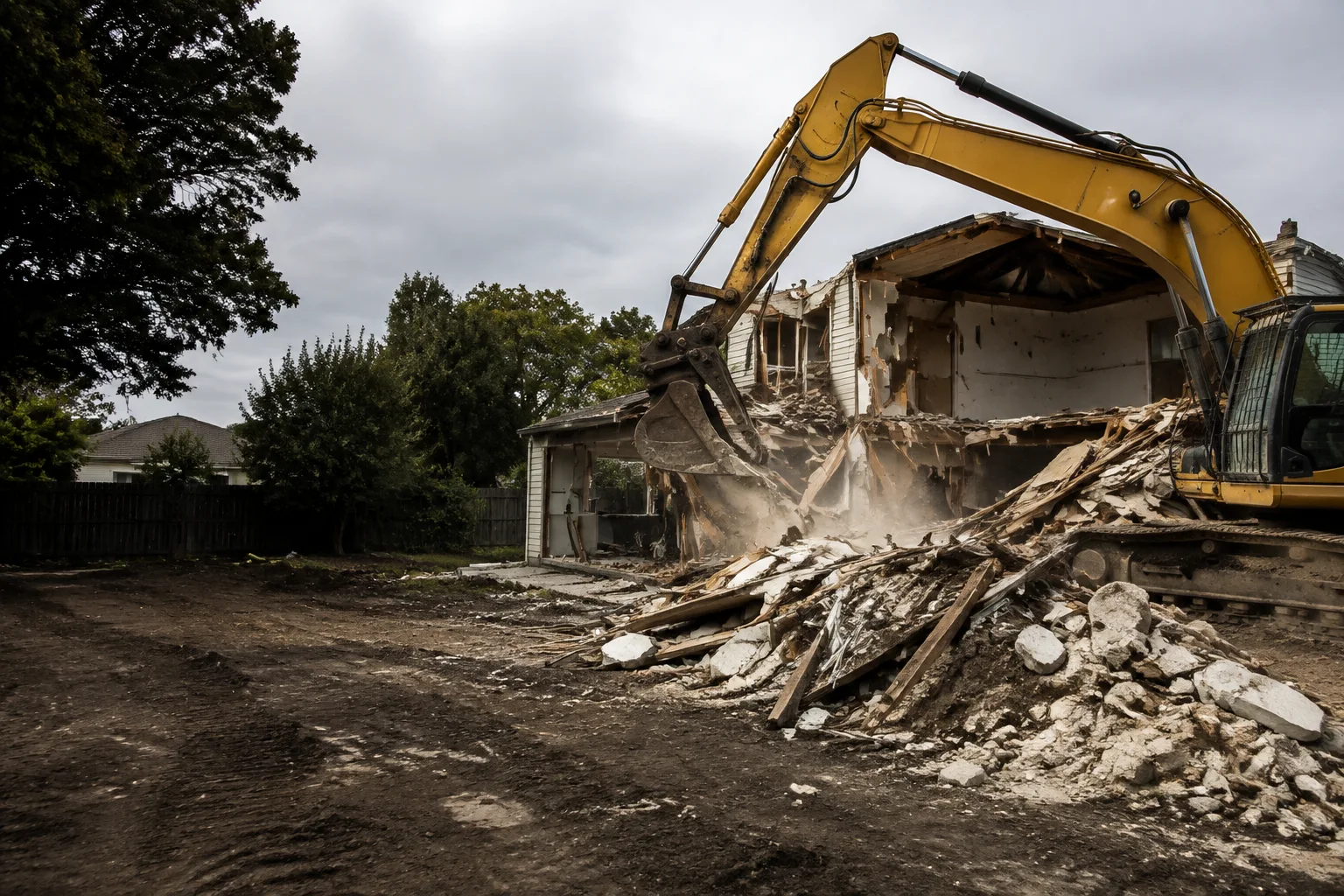
Demolishing structures and clearing the resulting debris so a site is safe and ready for the next stage of earthworks or building.
View service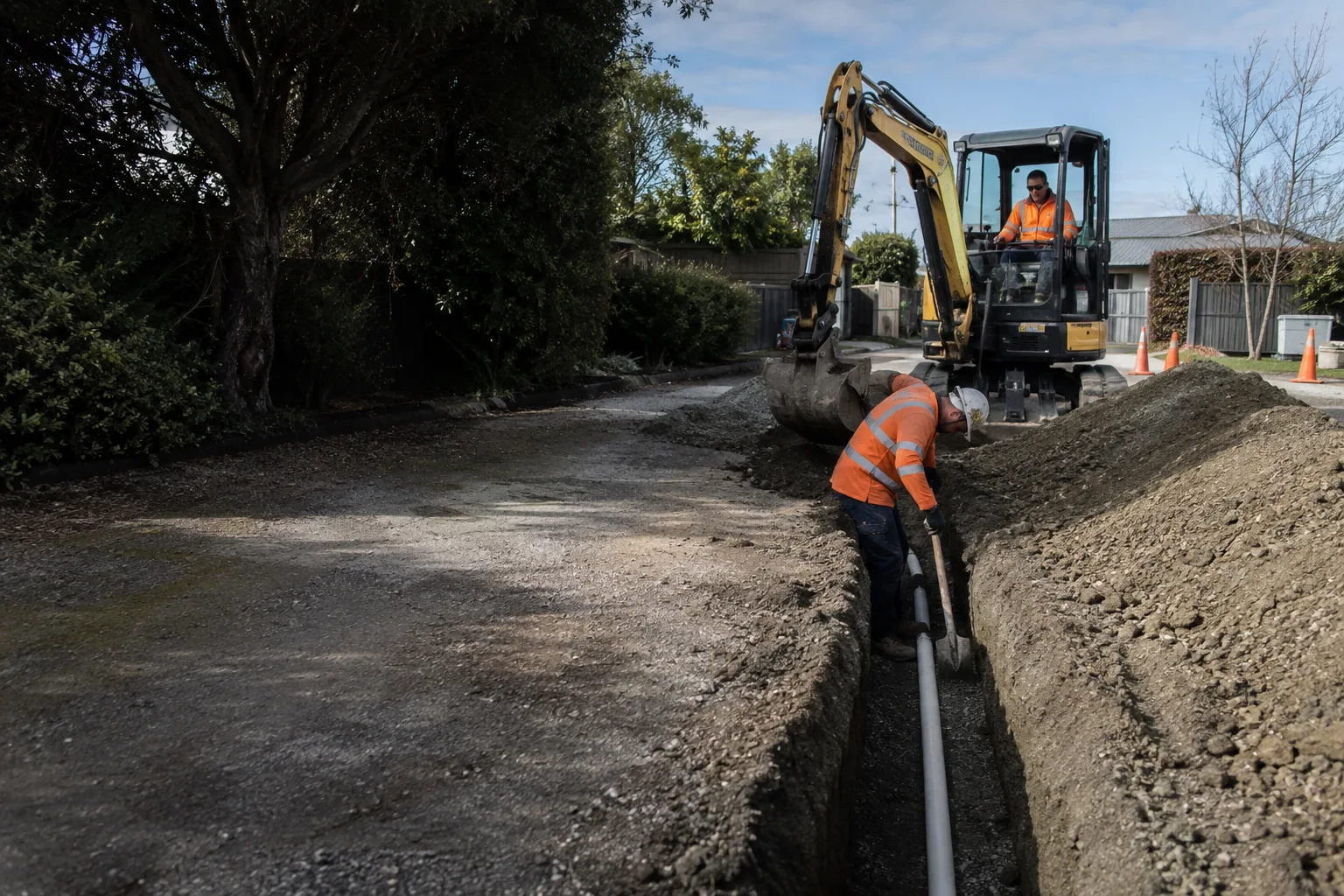
Trenching dug to depth and clearance requirements for power, water, gas or telecommunications connections, coordinated with your network provider.
View serviceTell us about your project and we will come back with clear next steps — no pressure, no jargon.
YOUR SITE. THE NEXT CHAPTER.
Start with your suburb, a few site details and what you want to build.
Plan your project