
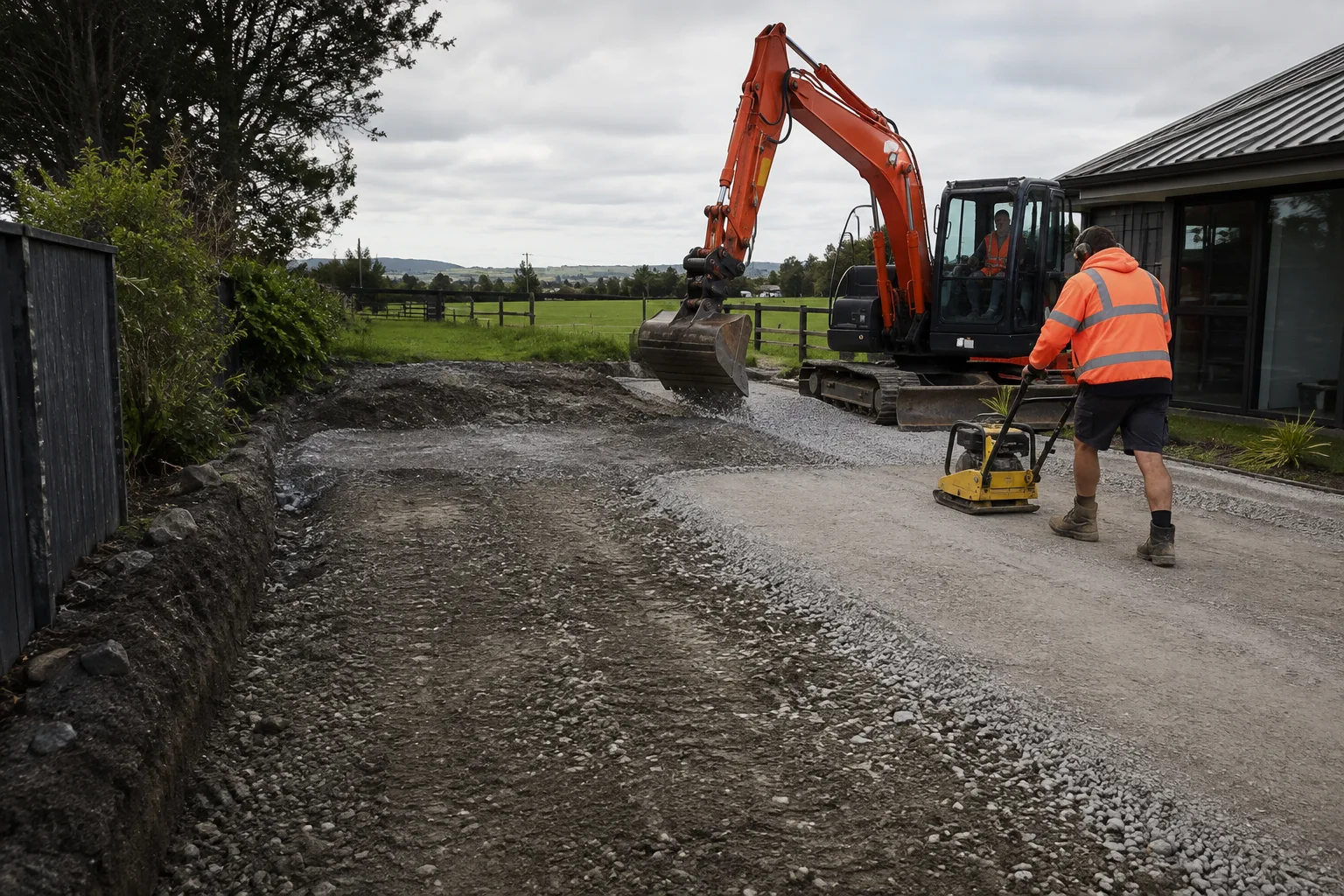
Driveway Excavation & Construction
Excavation and sub-base preparation for new or replacement driveways, shaped and compacted correctly before your concrete or asphalt contractor arrives.
View serviceDriveways, Access & Civil Groundworks
Excavation and pipe-laying for driveway culverts, keeping water moving under an access way instead of pooling or washing it out.
03 661 7200Your site. A clear next step.
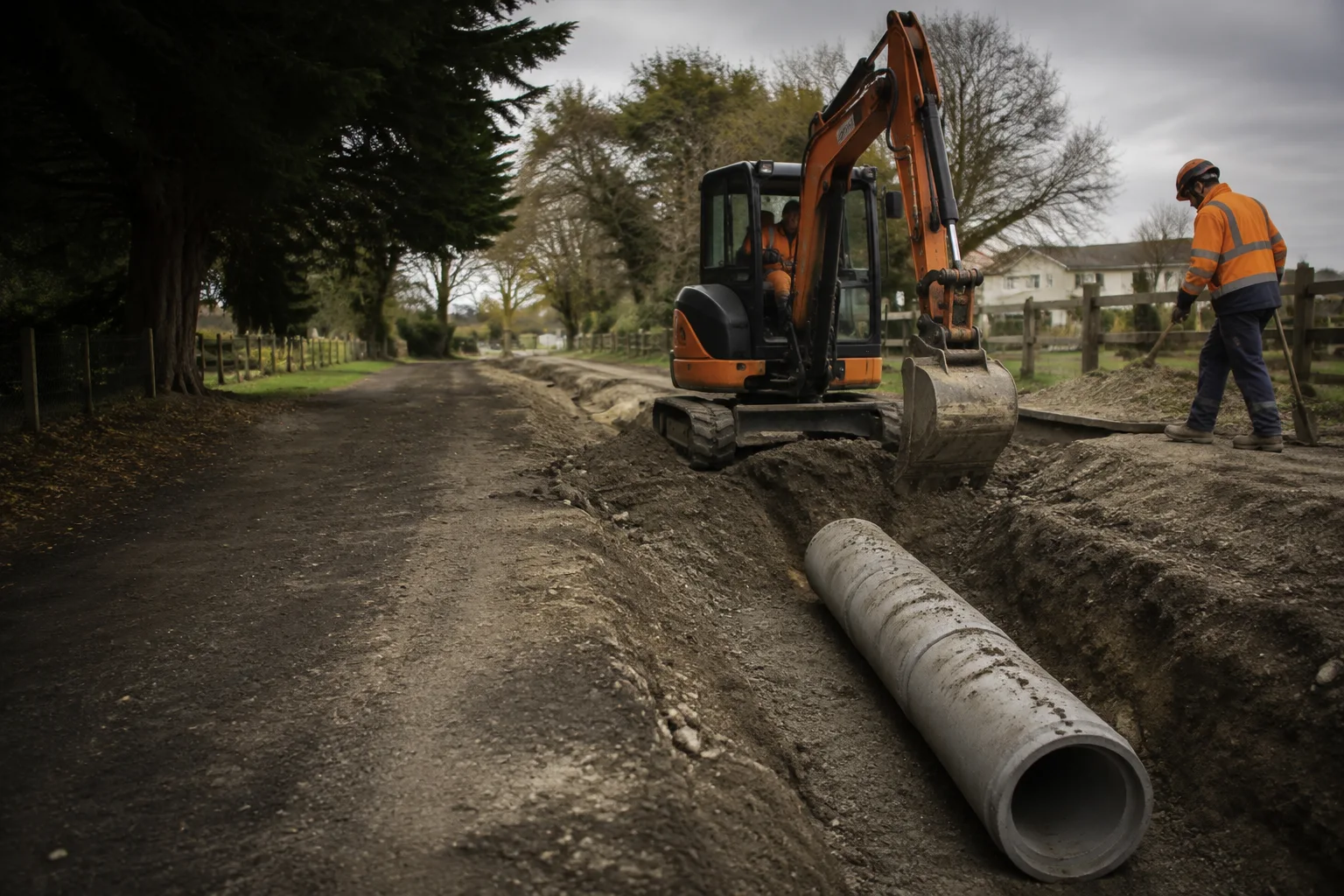
Christchurch Culvert Installation & Driveway Culverts means excavation and pipe-laying for driveway culverts, keeping water moving under an access way instead of pooling or washing it out.
Tell us what you want to achieve, where your site is and when you would like to start. Include any plans, access constraints or measurements that will help us understand the work.
Recognise your project
Define the work
Assessment of the existing flow path, catchment and pipe condition
Excavation of the trench for the new or replacement culvert
Correct bedding material under and around the pipe
Culvert pipe laid to the fall needed to keep water moving
Backfill and compaction over the pipe to support driveway loading
Headwall or outlet protection to reduce erosion at the pipe ends
Reinstatement of the driveway surface area for handover to a surfacing contractor
Coordination with council requirements where the culvert sits within road reserve
From site assessment to completion
We look at how water currently moves through the site, the size of the catchment feeding it, and the condition of any existing culvert.
Pipe diameter and grade are set based on expected water flow and, where the culvert sits under a road reserve, any council requirements that apply.
The trench is excavated to the depth and line needed for the new culvert.
The pipe is bedded on suitable material and laid to the correct fall so water flows freely through it.
Backfill is placed and compacted in layers over the pipe to spread vehicle loading and prevent future settlement.
The driveway surface area above the culvert is reinstated ready for final sealing or metalling.
Working conditions
Culvert work is typically carried out with a compact excavator suited to trench digging in confined driveway or roadside spaces, paired with compaction equipment for backfilling. Exact machinery depends on pipe size, trench depth and how the site can be accessed.
Driveway access is usually restricted for the duration of the dig and pipe-laying, which is often a short job unless the culvert is long or the ground is difficult. We avoid working during or immediately after heavy rain where possible, since high water flow in the drain makes the work harder and less safe. Some reinstatement time is needed before the driveway surface is fully usable again.
Get the detail right
An undersized pipe, wrong fall or poor bedding is a common reason culverts block, collapse or send water somewhere it shouldn't go. Getting the pipe size and grade right for the catchment, and compacting the backfill properly, is what keeps a driveway culvert working through heavy Canterbury rain rather than needing to be dug up again.
It depends on the catchment area feeding the drain and any council rules that apply to your road frontage. We assess the site and can advise on appropriate sizing rather than defaulting to a single standard pipe.
We can arrange pipe supply as part of the job or work with pipe you've already sourced, whichever suits your project.
A standard driveway culvert is usually a short job of a day or so, though this depends on pipe length, trench depth and ground conditions.
Yes, culvert installation is often carried out as one stage of a wider driveway excavation project so levels and drainage are coordinated together.
We can assess whether the pipe is undersized, poorly laid or simply blocked, and replace or re-lay it as needed.
Where the culvert sits within the road reserve or affects a public drain, council requirements may apply. We recommend confirming this before work starts, and can work in with what's required.
The next part of your project
Excavation and sub-base preparation for new or replacement driveways, shaped and compacted correctly before your concrete or asphalt contractor arrives.
View service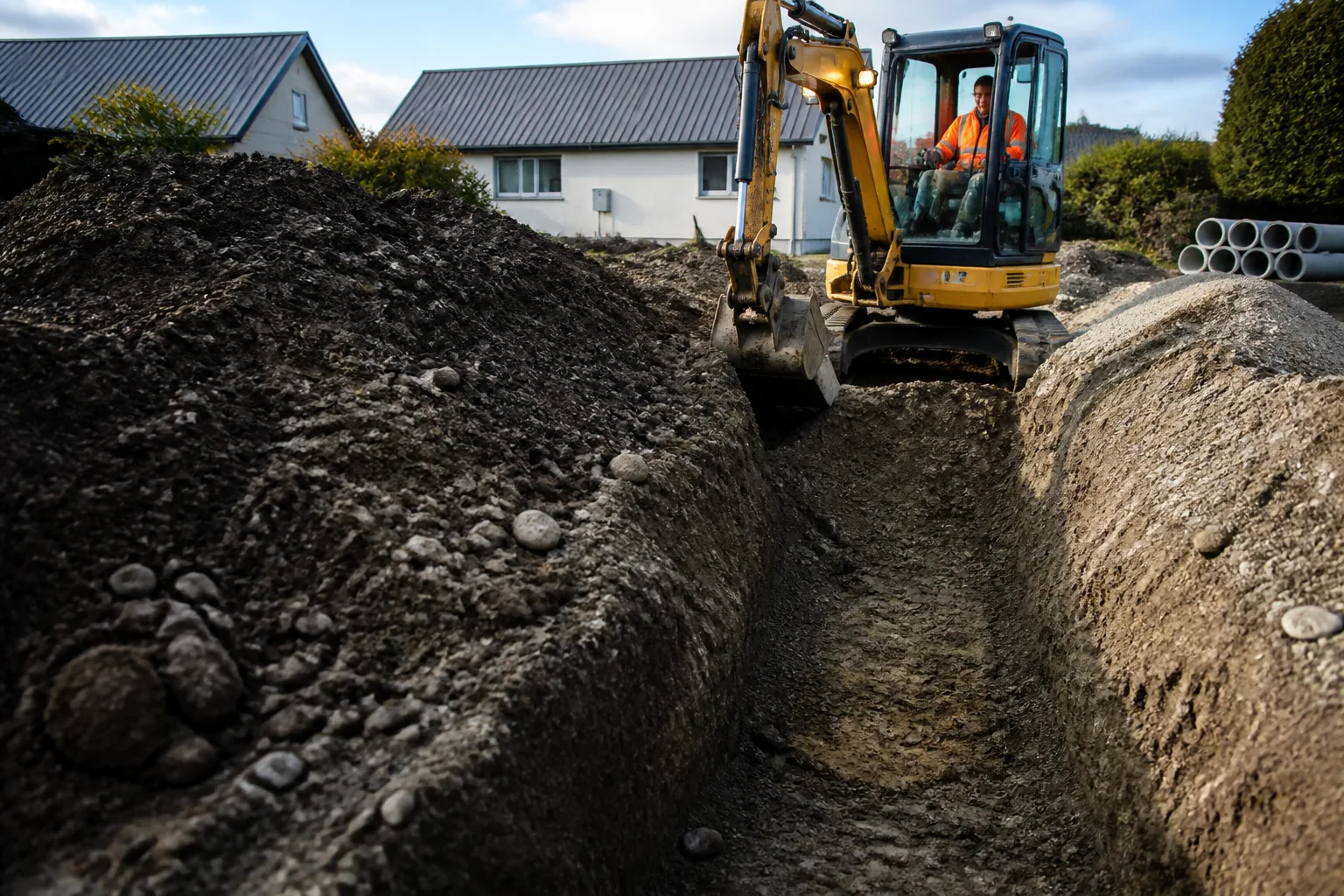
Excavation for wastewater and drainage runs, dug to the falls and depths your licensed drainlayer specifies before they lay and connect the pipework.
View service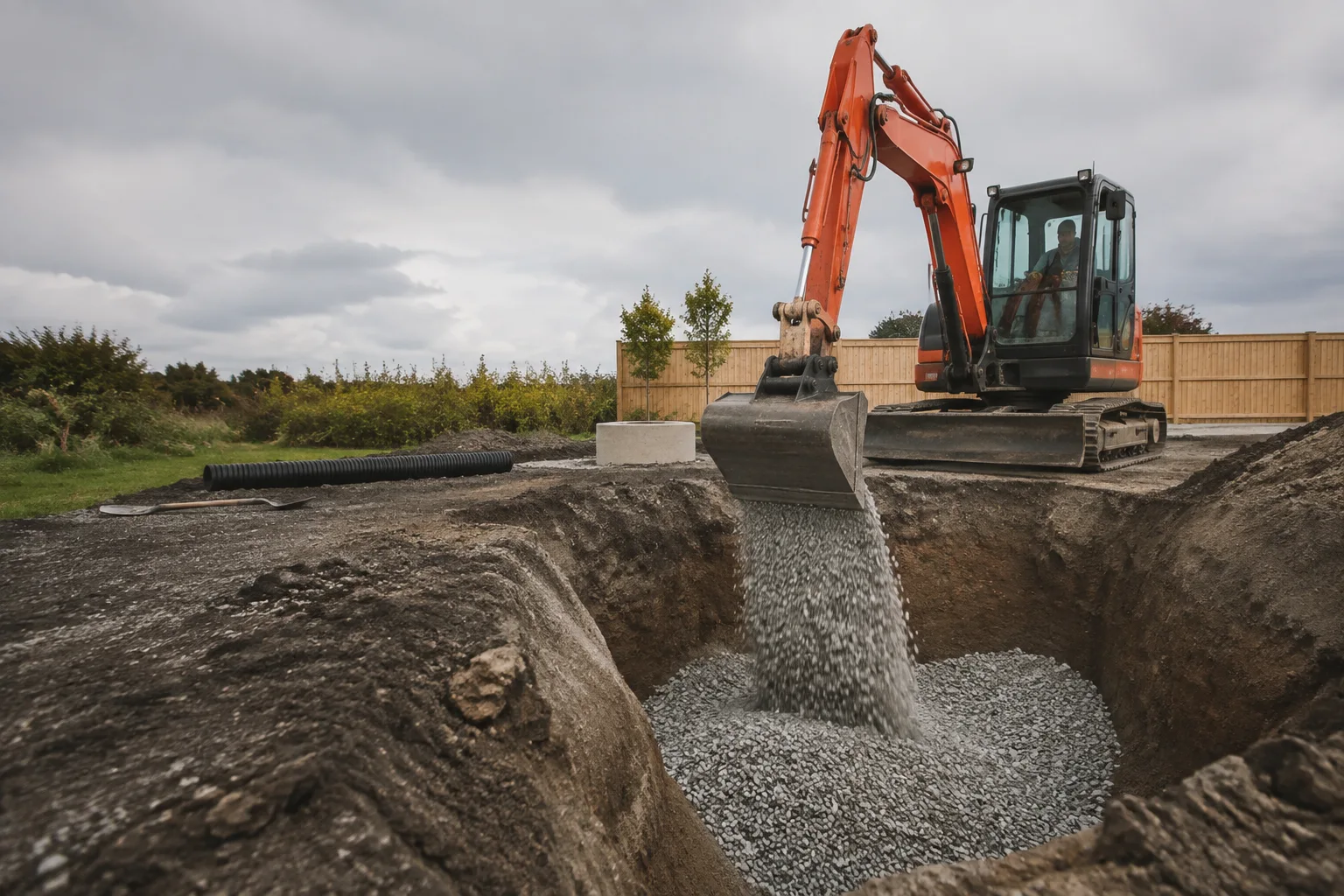
Excavation for soak pits, soakage trenches and stormwater disposal systems, dug to the dimensions your drainlayer or engineer specifies.
View service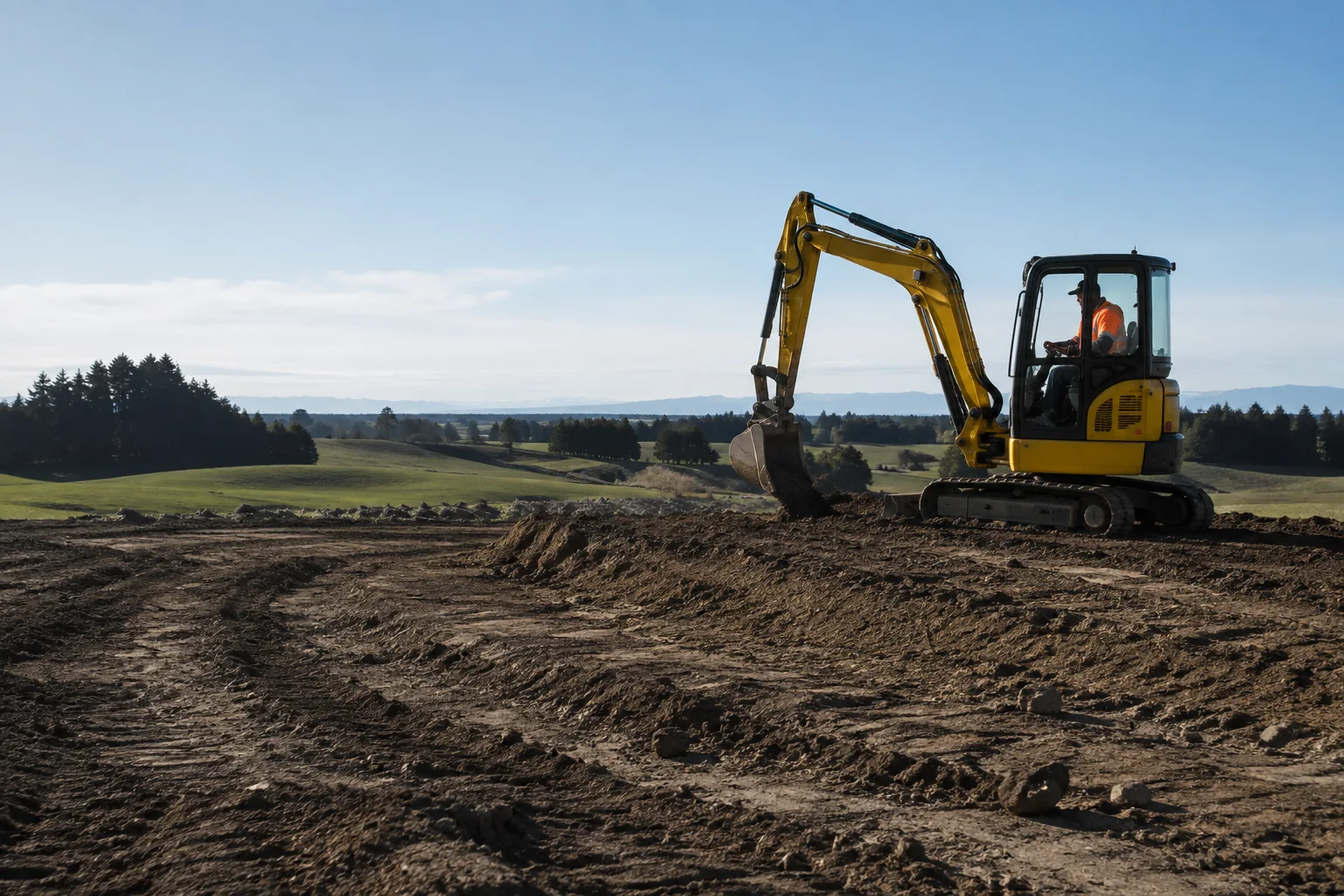
General earthworks for farms and lifestyle blocks, including access tracks, building pads, yard formation and paddock drainage shaping across rural Canterbury.
View serviceTell us about your project and we will come back with clear next steps — no pressure, no jargon.
YOUR SITE. THE NEXT CHAPTER.
Start with your suburb, a few site details and what you want to build.
Plan your project