
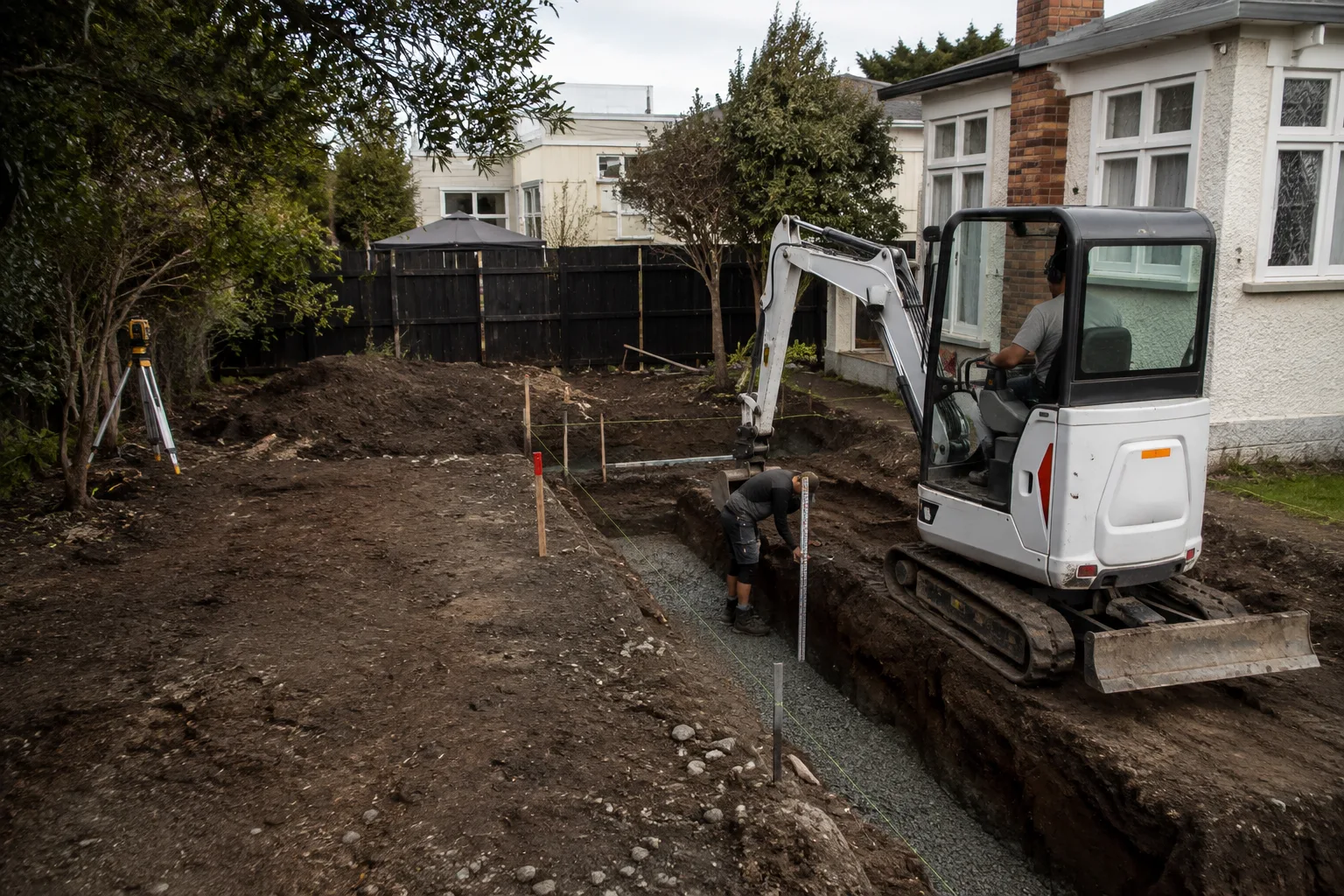
Foundation Excavation
Precise excavation for foundations, footings and slabs to your engineer's drawings, with levels and depths checked before pour.
View serviceDrainage-Adjacent & Trenching
Excavation for wastewater and drainage runs, dug to the falls and depths your licensed drainlayer specifies before they lay and connect the pipework.
03 661 7200Your site. A clear next step.
Christchurch Drainage-Ready Excavation means excavation for wastewater and drainage runs, dug to the falls and depths your licensed drainlayer specifies before they lay and connect the pipework.
Tell us what you want to achieve, where your site is and when you would like to start. Include any plans, access constraints or measurements that will help us understand the work.
Recognise your project
Define the work
Excavating drain lines to the falls, depths and widths shown on your drainlayer's or engineer's plan
Excavation for manholes, inspection points and gully traps to the specified locations and depths
A beforeUdig check and careful digging around existing pipework or services crossing the trench
Preparing a trench base and bedding area ready for pipe-laying by your licensed drainlayer
Trenching for new dwellings, additions or reconfigured drainage layouts
Backfilling and compaction once the drainlayer has laid, connected and signed off the pipework
Reinstatement of lawn, metal, paving or driveway surfaces disturbed by the trench
Excavation only — installing, connecting, jointing and certifying the drainage system is carried out by your licensed drainlayer, not by us
From site assessment to completion
We work from the falls, depths and pipe locations set out by your licensed drainlayer or engineer before quoting.
We confirm ground conditions and check for existing services or pipework along the planned trench route.
We dig the trench and any manhole or inspection point excavations to the levels specified, checking fall as we go.
Your licensed drainlayer lays, joints, connects and tests the pipework in the open trench.
Once your drainlayer confirms the installation is ready to cover, we backfill in layers and compact around the pipework.
We reinstate the lawn, metal or paved surface disturbed by the trench.
Working conditions
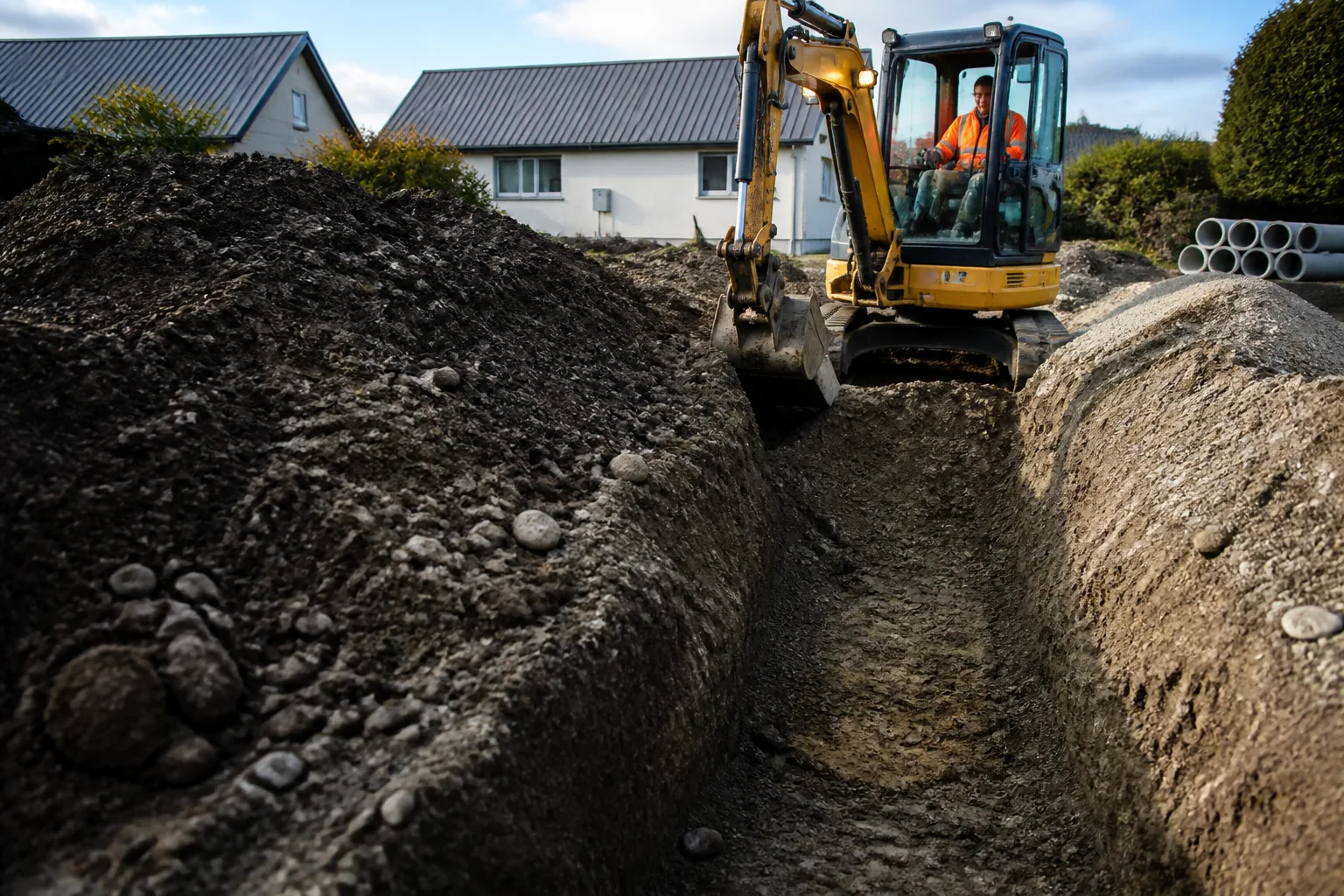
We generally use a mid-size excavator for drain trenching, sized to the trench width and depth your drainlayer specifies, with a smaller machine for tight access or shallow inspection points. The right machine depends on depth, soil type and how much room we have to work in, so we confirm equipment after seeing the site and the drainage plan.
An open trench will run across the affected part of the property until your drainlayer has laid and connected the pipework and we've backfilled behind them. We keep trenches safely covered or fenced where they're left open near driveways or walkways. Total disruption time depends heavily on when your drainlayer can be on site to install and test their work.
Get the detail right
Drainage only works if the fall is correct along the full length of the run, so the trench has to be dug to a consistent, accurate depth rather than roughly levelled. We follow your drainlayer's plan closely and flag anything on site, like unexpected rock, services or a change in ground level, that might affect the falls before it becomes a problem for the pipe-laying stage.
No. We excavate to the specification your licensed drainlayer or engineer provides. Laying, connecting, testing and certifying the drainage system is carried out by the drainlayer, not by us.
Generally yes, or at least have their plan and specified depths and falls, since we dig to their design rather than deciding pipe layout ourselves.
Yes, we regularly coordinate timing and site access with drainlayers so their pipe-laying follows straight after our excavation.
We stop and assess before continuing, and let you and your drainlayer know so the plan can be adjusted if needed.
Yes, once your drainlayer has laid, connected and signed off the pipework, we backfill and reinstate the surface.
Yes, we can excavate to expose a section of existing drain for your drainlayer to inspect or repair, working from their instructions on location and depth.
The next part of your project
Precise excavation for foundations, footings and slabs to your engineer's drawings, with levels and depths checked before pour.
View service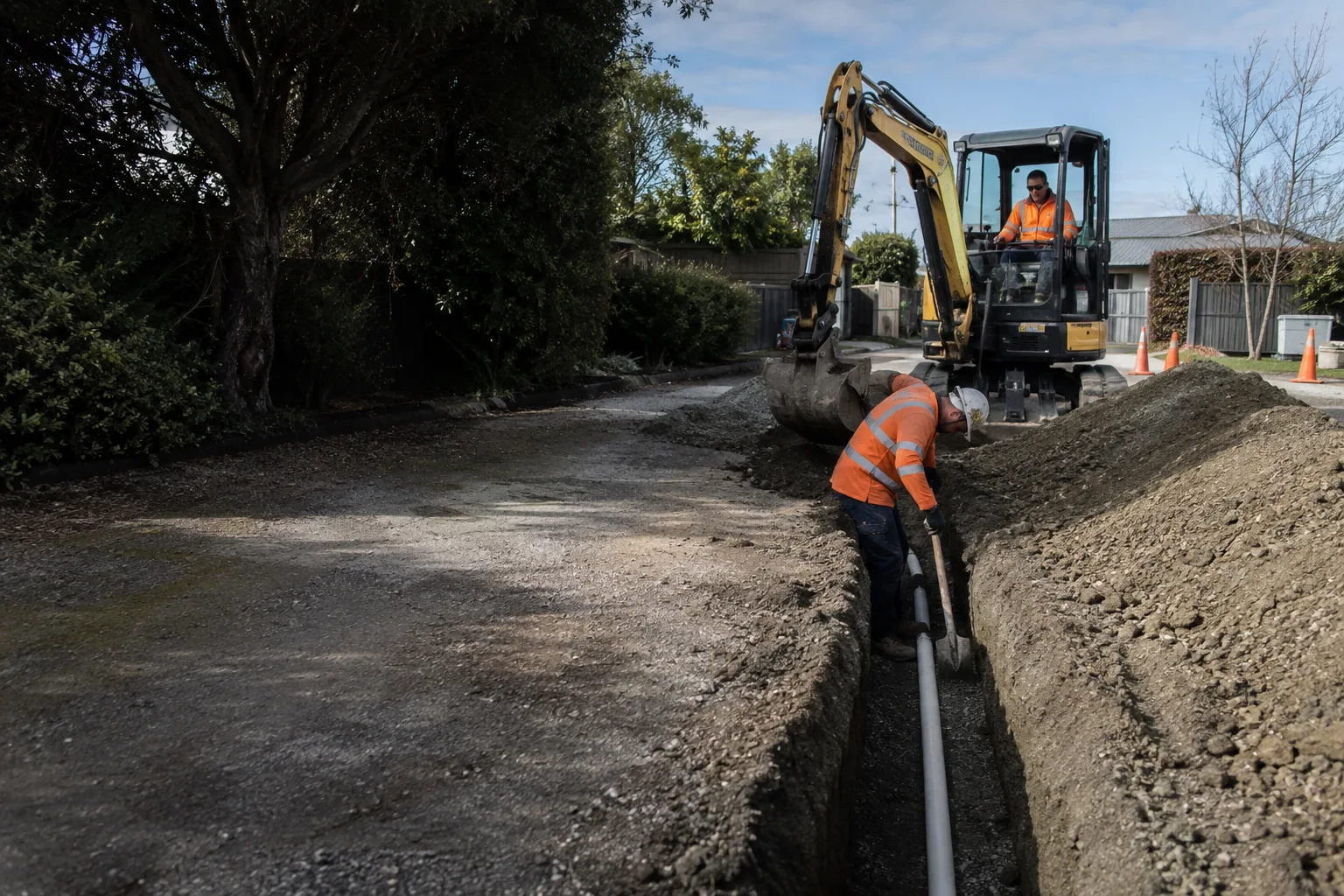
Trenching dug to depth and clearance requirements for power, water, gas or telecommunications connections, coordinated with your network provider.
View service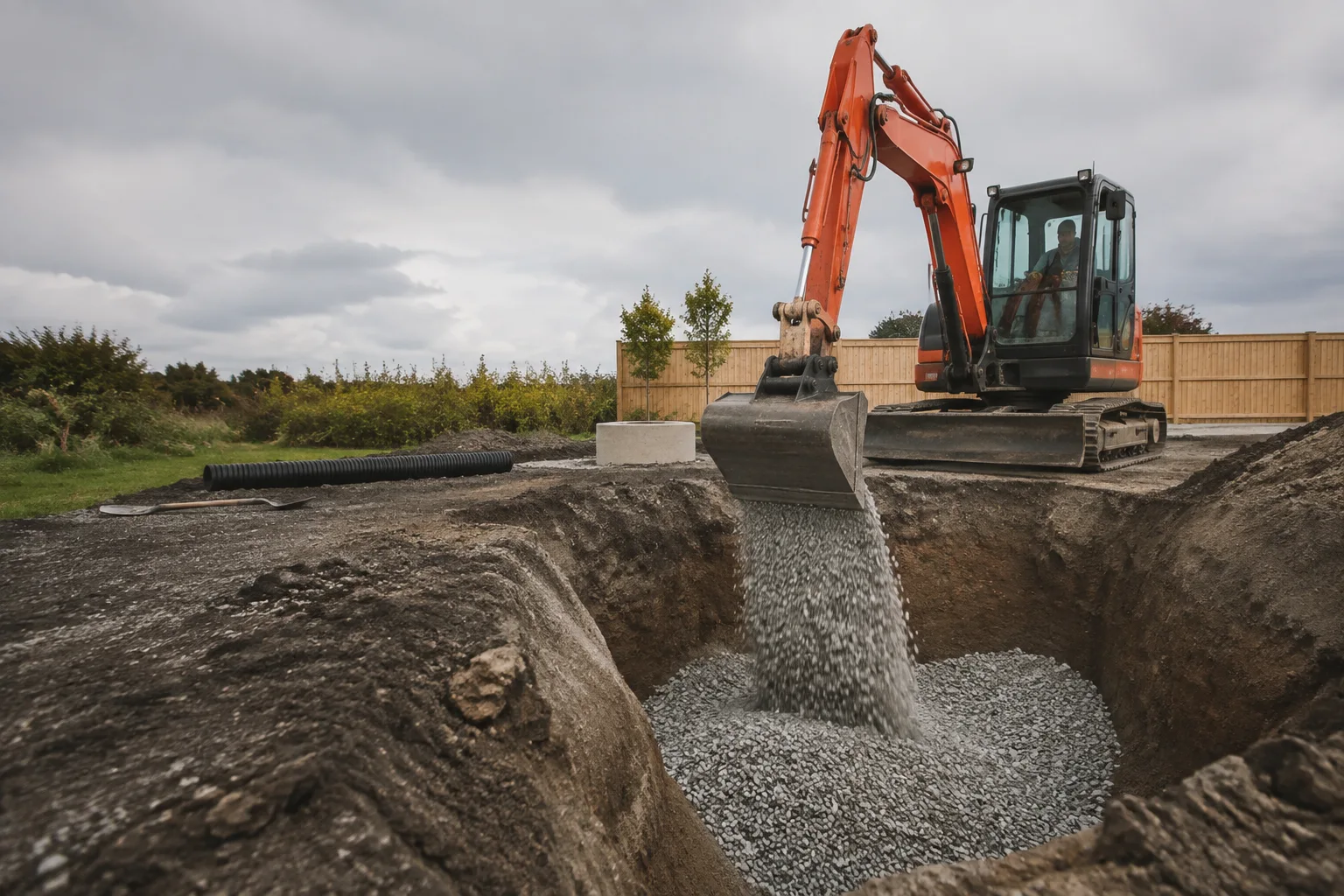
Excavation for soak pits, soakage trenches and stormwater disposal systems, dug to the dimensions your drainlayer or engineer specifies.
View service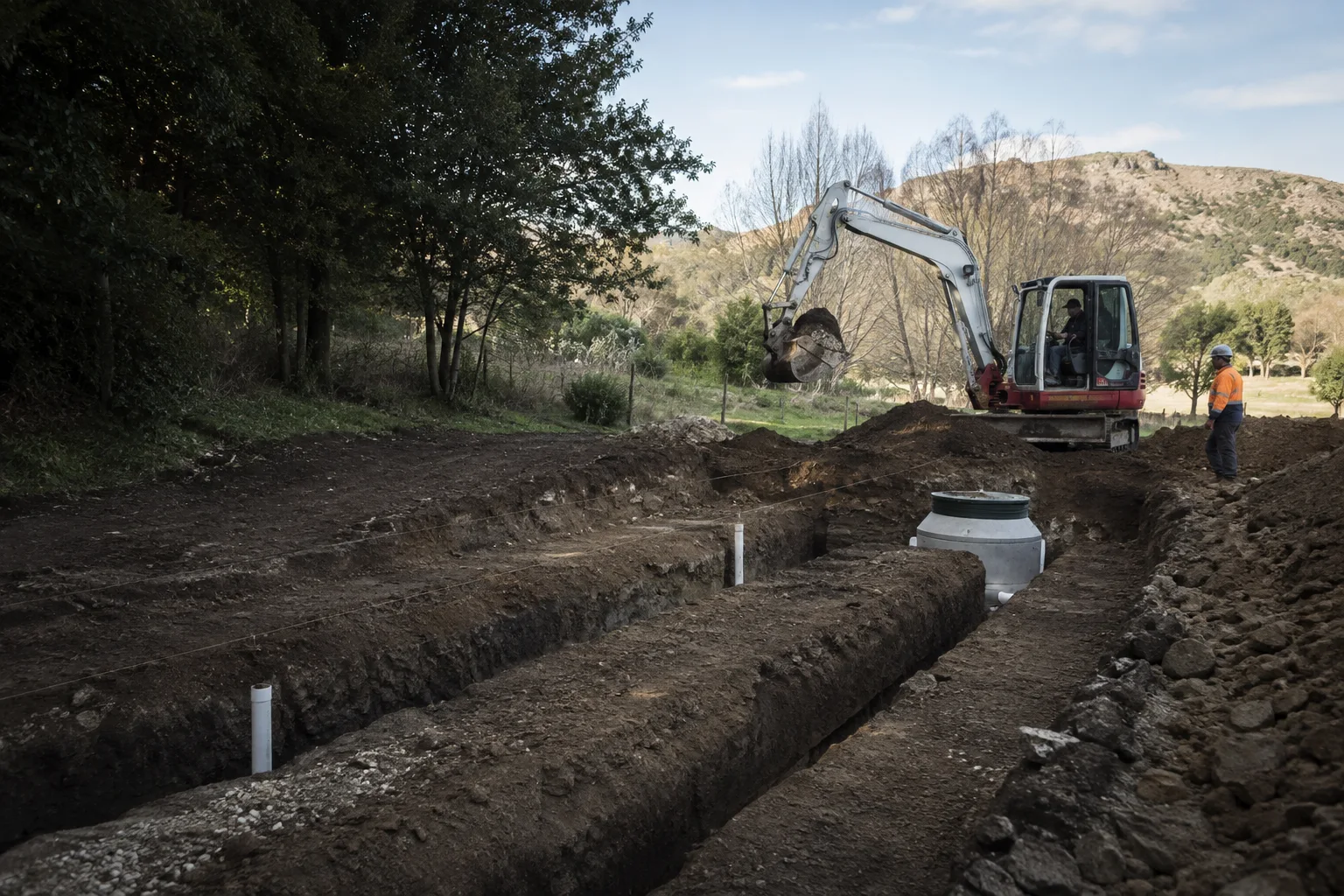
Excavation for septic tanks and effluent disposal fields, dug to the depths, clearances and layout set by your suitably qualified designer.
View serviceTell us about your project and we will come back with clear next steps — no pressure, no jargon.
YOUR SITE. THE NEXT CHAPTER.
Start with your suburb, a few site details and what you want to build.
Plan your project