
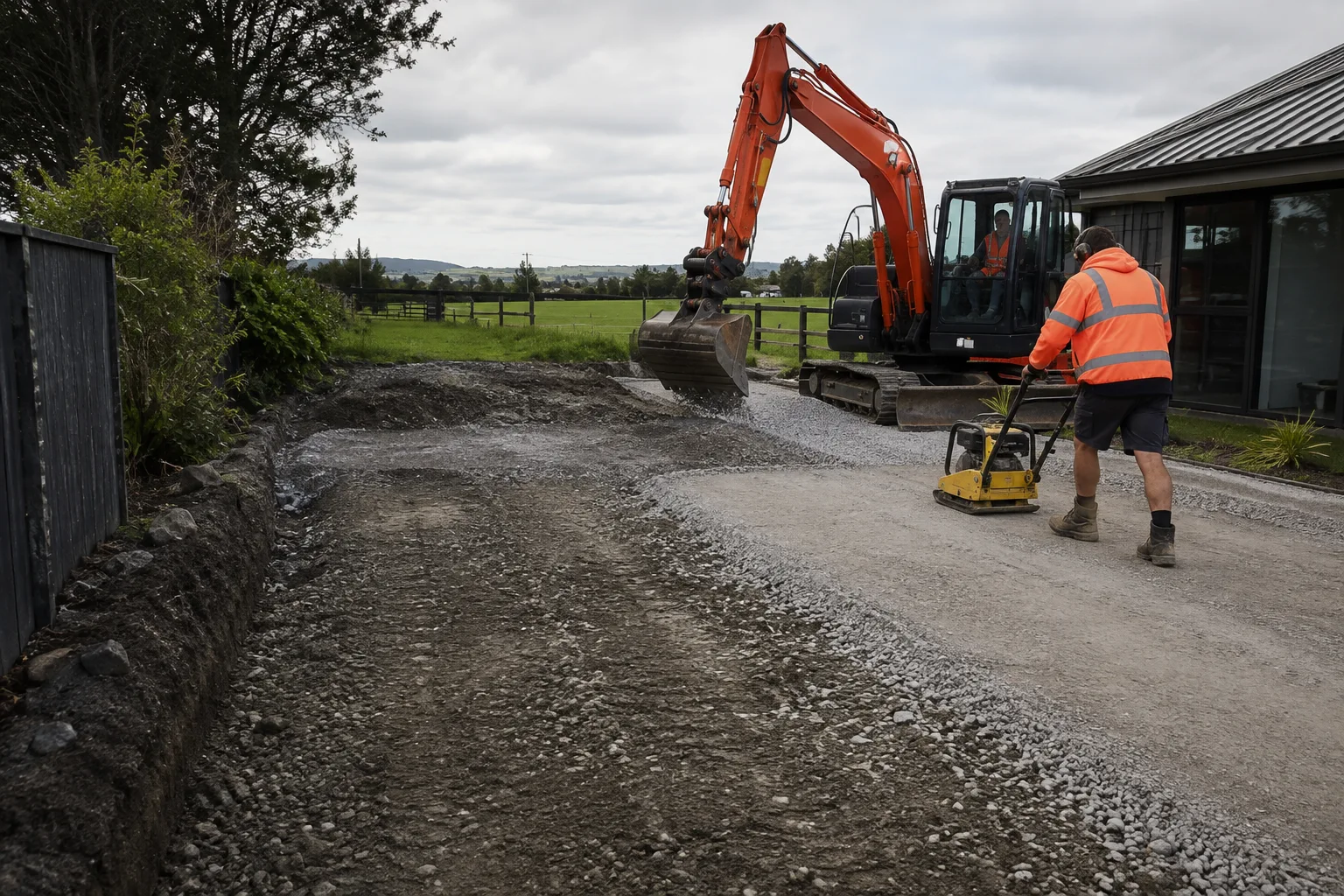
Driveway Excavation
Excavation and sub-base preparation for new or replacement driveways, shaped and compacted to the finished levels the surface needs — as a standalone job or as the first stage of a full install.
View serviceDriveways, Access & Civil Groundworks
Repairing cracked, sunken, potholed and ponding driveways across Christchurch, starting with why the surface failed rather than just patching the top.
03 661 7200Your site. A clear next step.
Christchurch Driveway Repair covers repairing cracked, sunken, potholed and ponding driveways, starting with why the surface failed rather than just patching the top.
Tell us what you want to achieve, where your site is and when you would like to start. Include any plans, access constraints or measurements that will help us understand the work.
Recognise your project
Define the work
We assess the surface, the base beneath it and the drainage around it, because the pattern of damage usually tells you which of the three has failed. That answer decides what the repair should be.
You get a plain explanation of what caused the failure rather than just a quote to make it look better. Knowing the cause is what tells you whether a repair will hold or fail again.
We tell you honestly whether repairing or replacing is the sounder spend for your driveway. Repeated patching of a driveway with a failed base usually costs more over a few years than replacing it once.
The failed area is saw-cut and broken out back to sound material. Cutting clean edges gives the reinstatement something solid to key into, and stops the repair lifting at the join.
The base beneath the failed area is corrected and properly compacted before anything goes back on top. A repair placed on the same weak base fails in the same spot within a season or two.
Where water was the underlying cause, falls are regraded over the affected section and the discharge point checked. Without that, the repair sits in the same puddle that caused the original failure.
The area is reinstated in concrete or asphalt to match the existing surface as closely as it allows. We are upfront that new work will not match weathered work exactly, so you can weigh the options.
Where crack sealing or an asphalt overlay is genuinely the right fix, that is what we recommend. Not every driveway needs breaking out, and we will say so rather than selling the larger job.
Why work with us
The pattern of cracking, settlement and ponding tells you whether the surface, the base or the drainage failed. That answer determines the repair, so it comes first.
Some driveways are worth repairing and some are past it. We will tell you when repeated patching costs more over a few years than replacing once, even though it is the smaller job.
Failed areas are saw-cut and broken out to solid ground rather than filled over. A patch placed on the same weak base fails in the same spot within a season or two.
Where the base caused the failure it is rebuilt and properly compacted before reinstatement. Resurfacing over a compromised base is the most common way to spend money twice.
If ponding or water tracking caused the failure, falls are regraded and the discharge point checked. Otherwise the repair sits in the same puddle that broke the original.
New concrete will not match weathered concrete and an asphalt patch reads differently until it ages. We say so up front so you can weigh a visible repair against resurfacing.
Working conditions
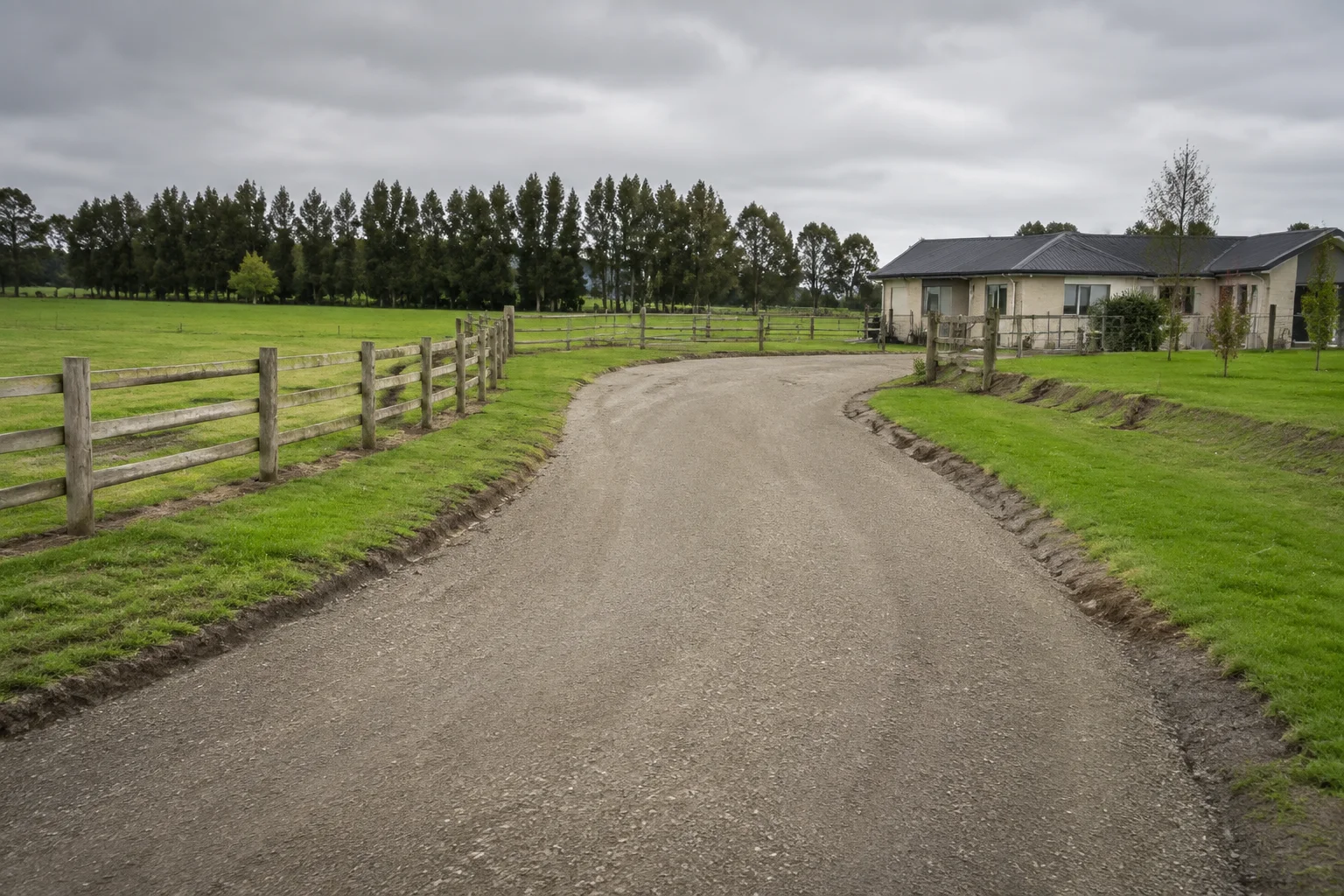
Repairs are usually confined work rather than open-site work, so they run saw-cutting gear to cut clean edges, a compact excavator or breaker to lift the failed area, and small compaction plant in the excavation. Matching an existing surface is part of the job: an asphalt overlay needs a roller, and a concrete patch needs the finish worked to sit alongside what is already there.
The driveway, or the affected part of it, will be out of use while the repair is done and through the cure or set period afterwards, so plan parking accordingly. Saw-cutting is noisy and dusty for the time it runs. Repairs occasionally open up worse conditions underneath than the surface suggested, and if that changes the scope we stop and talk to you rather than carry on.
Get the detail right
Patching the top of a driveway that failed from below is the most common way to spend money twice. Cracks that follow a line, a section that has dropped, and water sitting in one spot are all symptoms of the base or the drainage rather than the surface, and filling them leaves the cause in place. The useful thing a repair assessment buys you is the answer to a different question: is this a patch, a section rebuild, or a driveway at the end of its life. Knowing that before work starts is what stops good money going into a surface that will fail again.
It comes down to how much has failed and why. Isolated cracking or one sunken section over a sound base is usually a good repair. Widespread cracking, multiple settled areas, or a base that was never built deep enough tends to mean you are repairing repairs. We give you our read at the assessment and the reasoning behind it.
Almost always because something under it moves. Inadequate base depth, poor compaction, soft ground, a service trench backfilled loosely, or tree roots will all reappear through a new surface. That is why a repair that does not address the base is temporary.
Yes, to some degree. New concrete will not match weathered concrete in colour, and an asphalt patch will read differently until it has aged. We will tell you honestly how noticeable it is likely to be so you can weigh a visible repair against resurfacing a larger area.
Usually, but the fix is regrading rather than filling. Water sits because the fall is flat, reversed or interrupted, so the repair means correcting the levels over that section and confirming the water has somewhere legal to go at the low end.
Yes, and the right approach differs. Asphalt often suits an overlay or a cut-and-patch; concrete usually means saw-cutting and replacing the affected slab section, since patching concrete rarely holds at the joint. We match the method to the surface you have.
Sometimes, by rerouting or trimming roots where the tree can tolerate it and rebuilding the section over them. Whether that is safe for the tree is an arborist's call, not ours, and some trees are protected in the district plan. We will say when you need that advice before we dig.
The next part of your project
Excavation and sub-base preparation for new or replacement driveways, shaped and compacted to the finished levels the surface needs — as a standalone job or as the first stage of a full install.
View serviceNew driveways built end to end across Christchurch, from excavation and base through to the finished concrete or asphalt surface, drainage and edges.
View serviceAsphalt driveways laid across Christchurch on a base built to carry them, plus resurfacing and overlays where the existing driveway is still sound underneath.
View service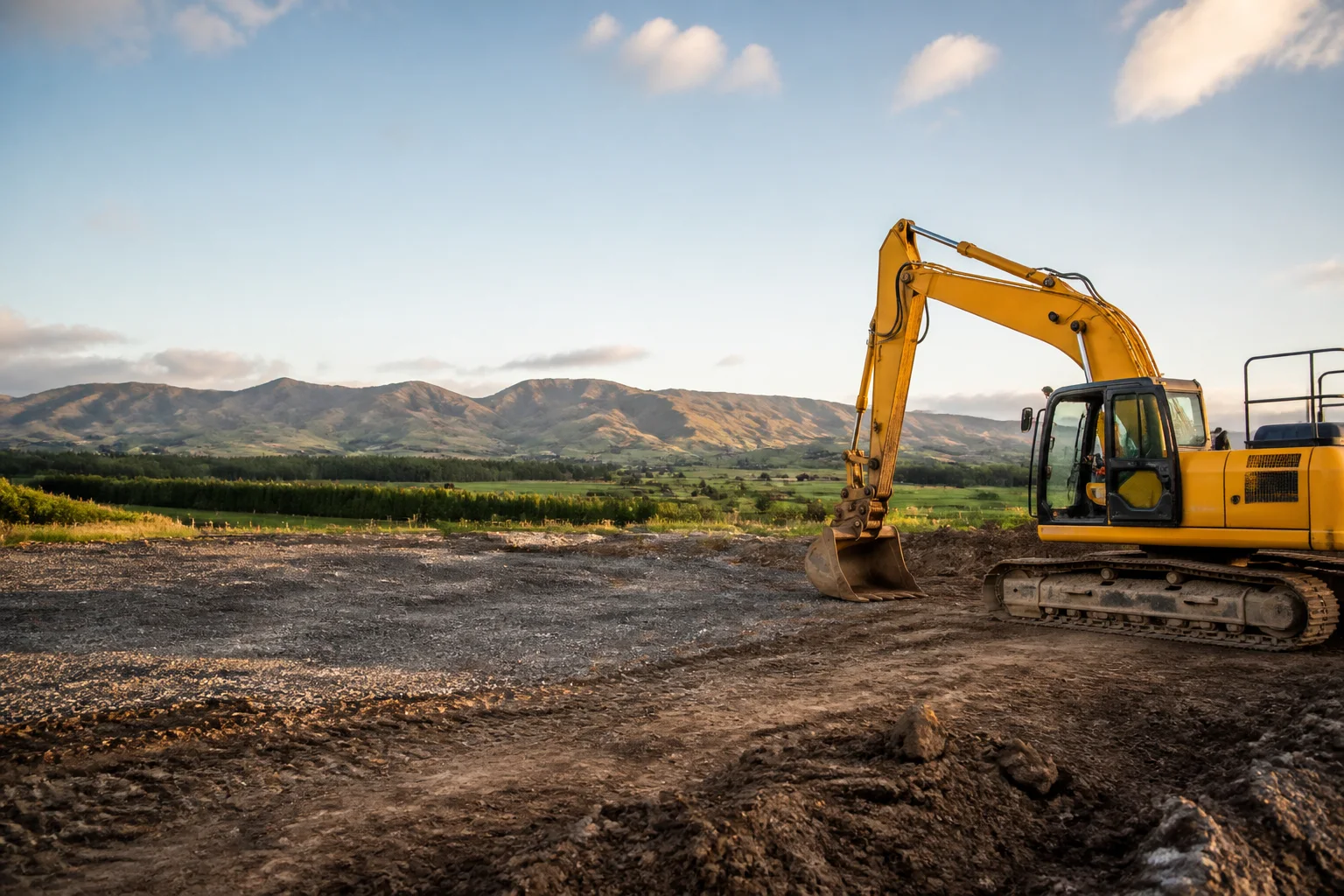
Excavation, set-out and base preparation for concrete channels — dish channels beside a kerb, spoon drains across a driveway, and channels alongside paths and yards.
View serviceTell us about your project and we will come back with clear next steps — no pressure, no jargon.
YOUR SITE. THE NEXT CHAPTER.
Start with your suburb, a few site details and what you want to build.
Plan your project