
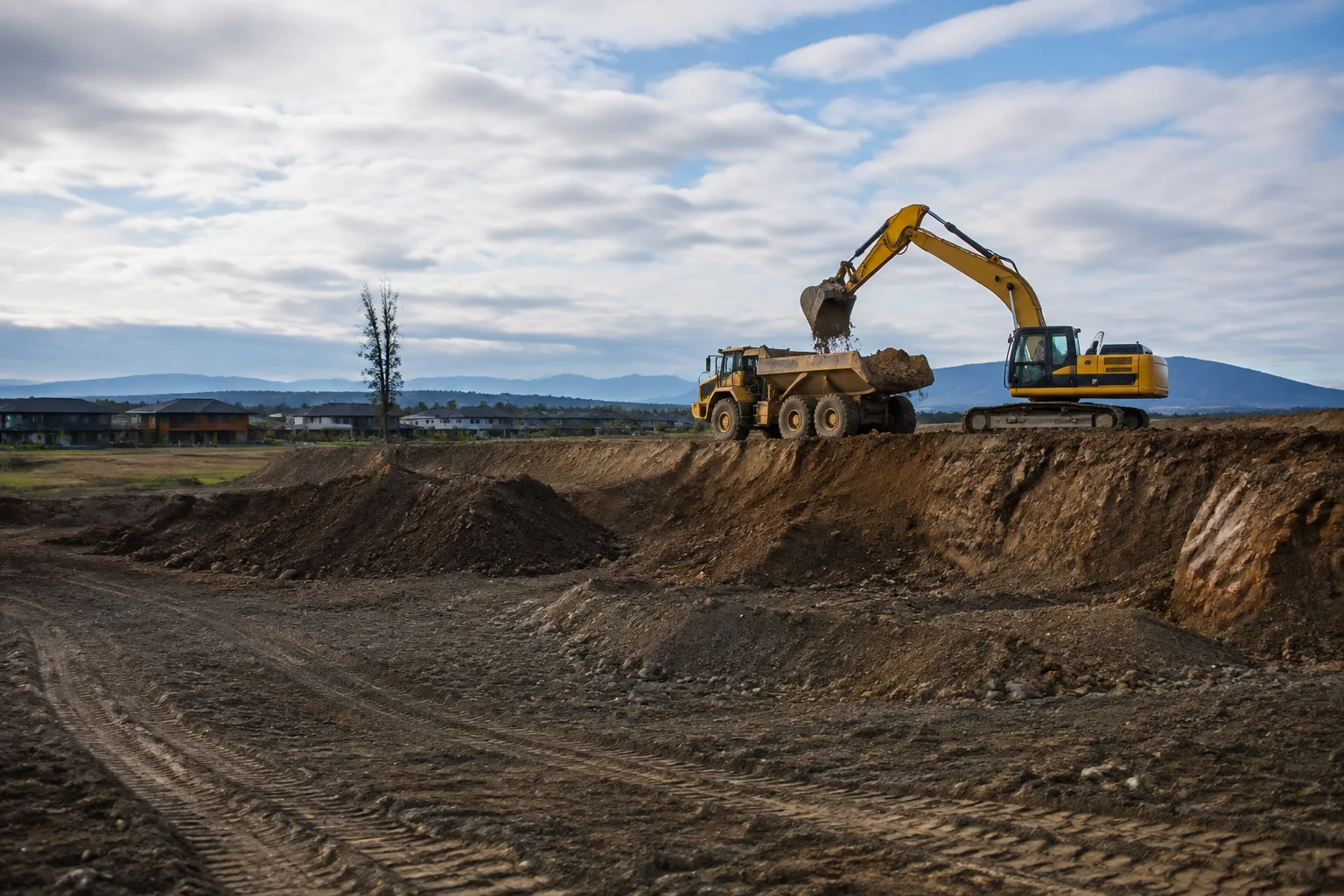
Bulk Earthworks & Site Cut-to-Fill
Cutting, filling and re-shaping land to bring a site to the levels your build or subdivision design calls for.
View serviceDriveways, Access & Civil Groundworks
Formation, drainage and sub-base earthworks for private roads and access tracks on rural, lifestyle and small development sites.
03 661 7200Your site. A clear next step.
Christchurch Roading Earthworks covers formation, drainage and sub-base earthworks for private roads and access tracks on rural, lifestyle and small development sites.
Tell us what you want to achieve, where your site is and when you would like to start. Include any plans, access constraints or measurements that will help us understand the work.
Recognise your project
Define the work
Route assessment and formation earthworks along the track alignment
Cut and fill to establish a consistent, driveable grade
Sub-base placement and compaction suited to expected vehicle loads
Cross-fall and side drain shaping for surface water control
Culvert crossings installed where the track meets a drain or gully
Cutting of batters to suit the ground type and slope
Geotextile fabric use in soft or wet ground sections
General advice on ongoing track maintenance once complete
From site assessment to completion
We walk the proposed or existing track line to assess ground conditions, grade changes and drainage needs.
The track is cut and filled to establish a consistent, usable grade along its length.
Side drains and any necessary culvert crossings are formed so water is carried away from the running surface.
Aggregate sub-base is placed and built up in layers suited to the vehicle loads the track needs to carry.
Each layer is compacted and the final surface shaped with cross-fall so water sheds off rather than sitting on the track.
The finished track is checked over and any maintenance points, like ongoing drain clearing, are discussed with you.
Working conditions
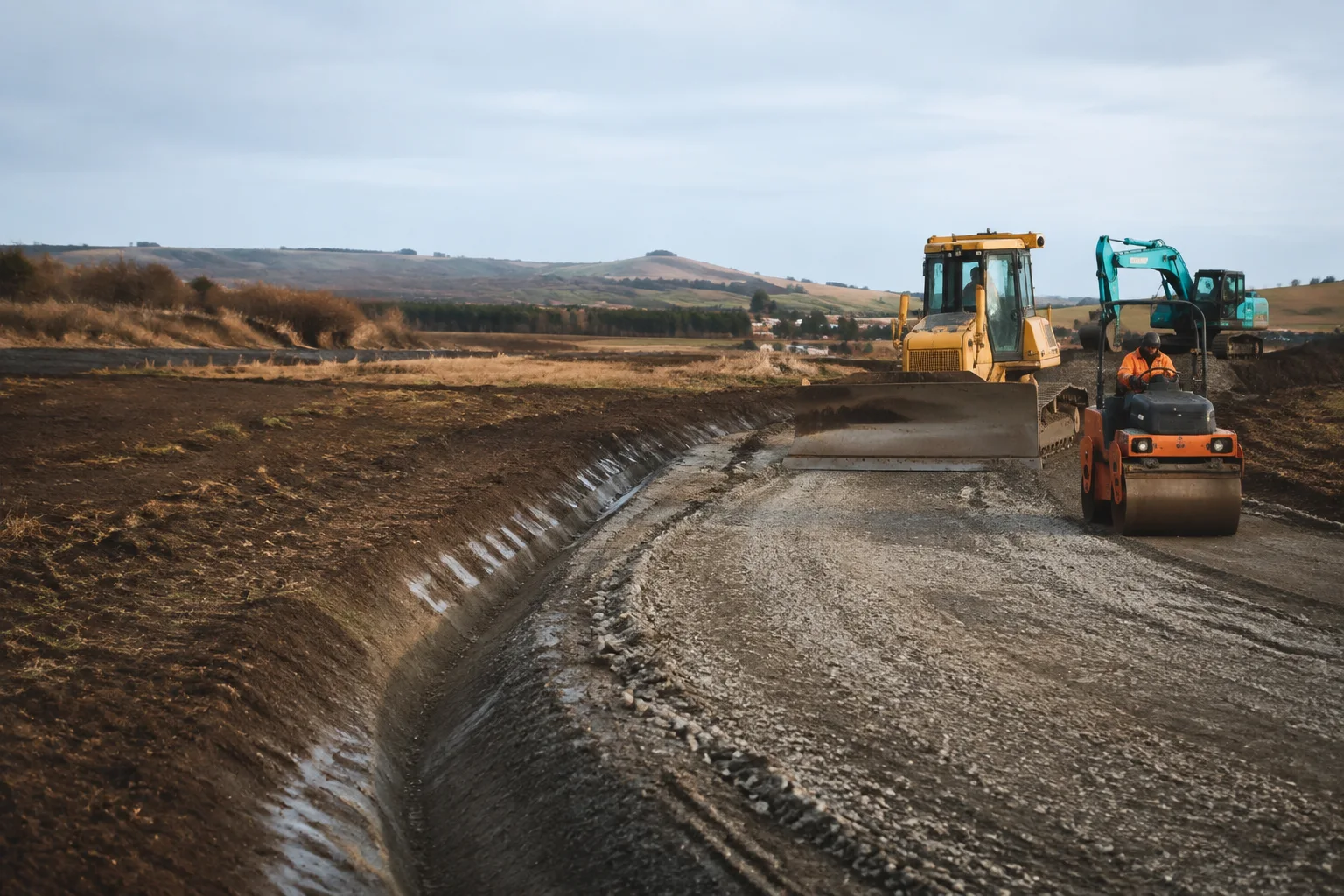
We select excavators, dozers and compaction equipment to suit the length, grade and access of each track, from a short farm access to a longer shared right-of-way. Rural sites often mean working with variable ground conditions, so machinery choice is confirmed once we've seen the route.
Access track work can mean the track itself is out of use for periods during construction, so we plan around alternative access where needed. Rural sites are often more remote, which factors into scheduling and travel time. Wet ground significantly affects both the quality of the finished track and how safely machinery can work, so timing is planned around the weather where possible.
Get the detail right
A track that looks fine when it's dry can fail completely in a wet Canterbury winter if the drainage, cross-fall and base depth aren't right. Getting the formation and compaction correct from the start is what keeps a private road or access track usable year-round instead of needing constant patching.
We don't take on public road corridor construction as principal contractor, but we can be engaged as a subcontractor by a principal contractor on that type of project. Our main focus is private roads and access tracks.
Driveway excavation covers the shorter run into a garage or house, while this service covers longer private roads or tracks, often over varied terrain with more significant drainage and grading needs.
Yes, culvert crossings are often part of a track project wherever the route crosses a drain, gully or low point that needs water to pass underneath.
We assess ground conditions along the route and can use geotextile fabric and additional sub-base depth in soft sections to support the track long-term.
A newly formed track needs time to settle and compact fully, and we'd generally recommend some care in the first period of heavy rain while it beds in.
Yes, we can work with an existing alignment and improve grade, drainage and base where it's underperforming, rather than necessarily rebuilding the whole route.
The next part of your project
Cutting, filling and re-shaping land to bring a site to the levels your build or subdivision design calls for.
View service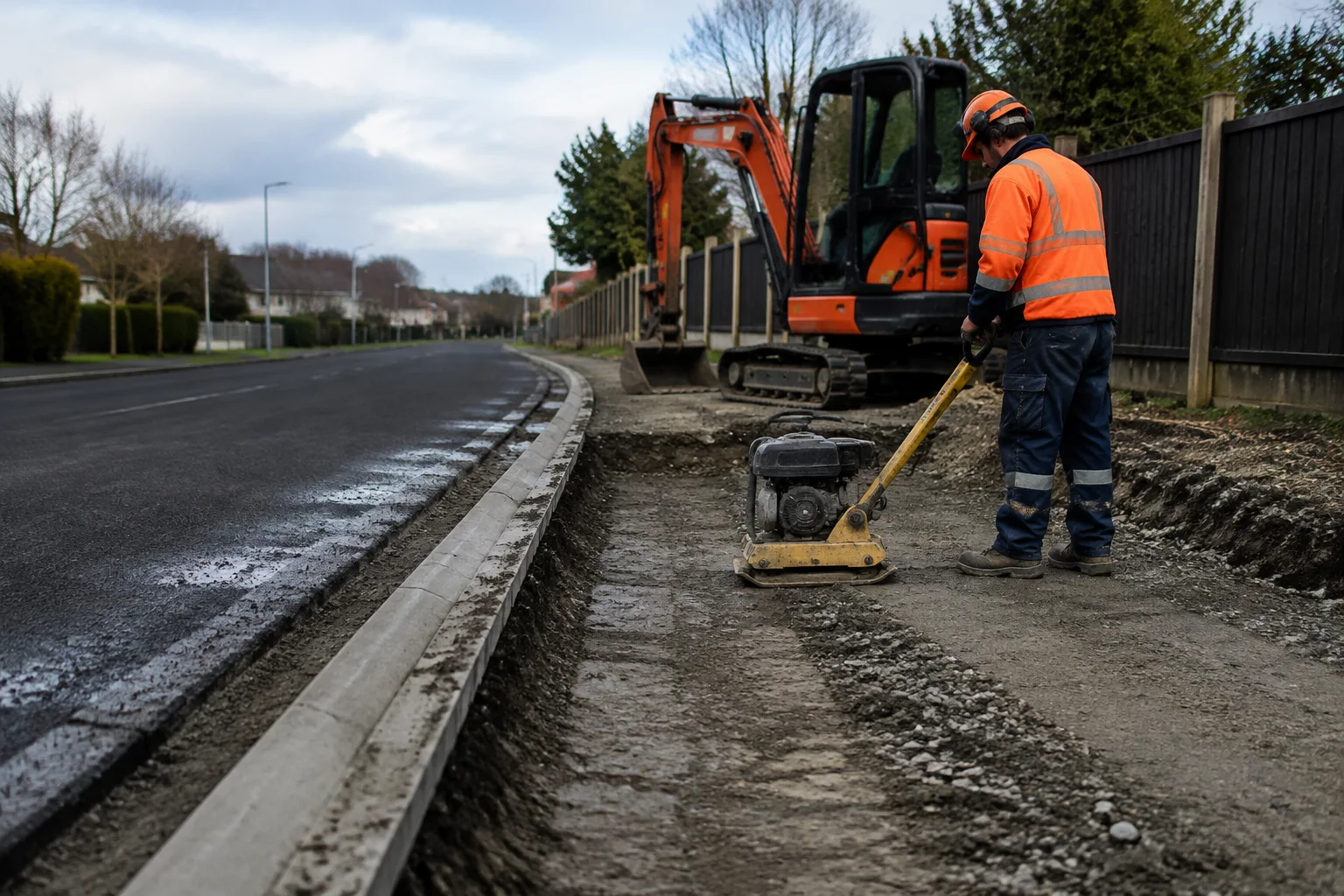
Ground preparation for kerb and channel work and vehicle crossings, excavated and graded to match road levels ahead of concrete placement.
View service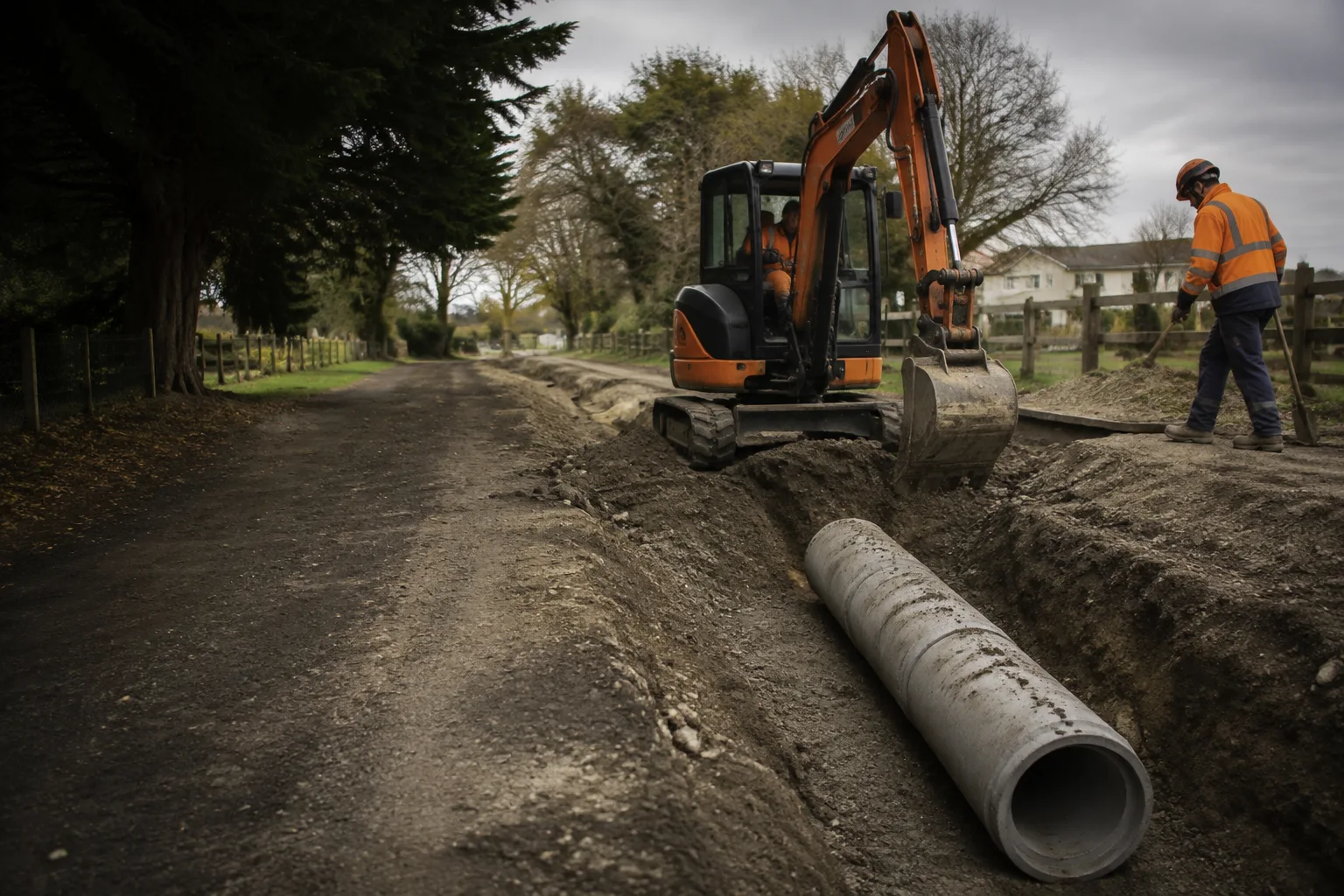
Excavation and pipe-laying for driveway culverts, keeping water moving under an access way instead of pooling or washing it out.
View service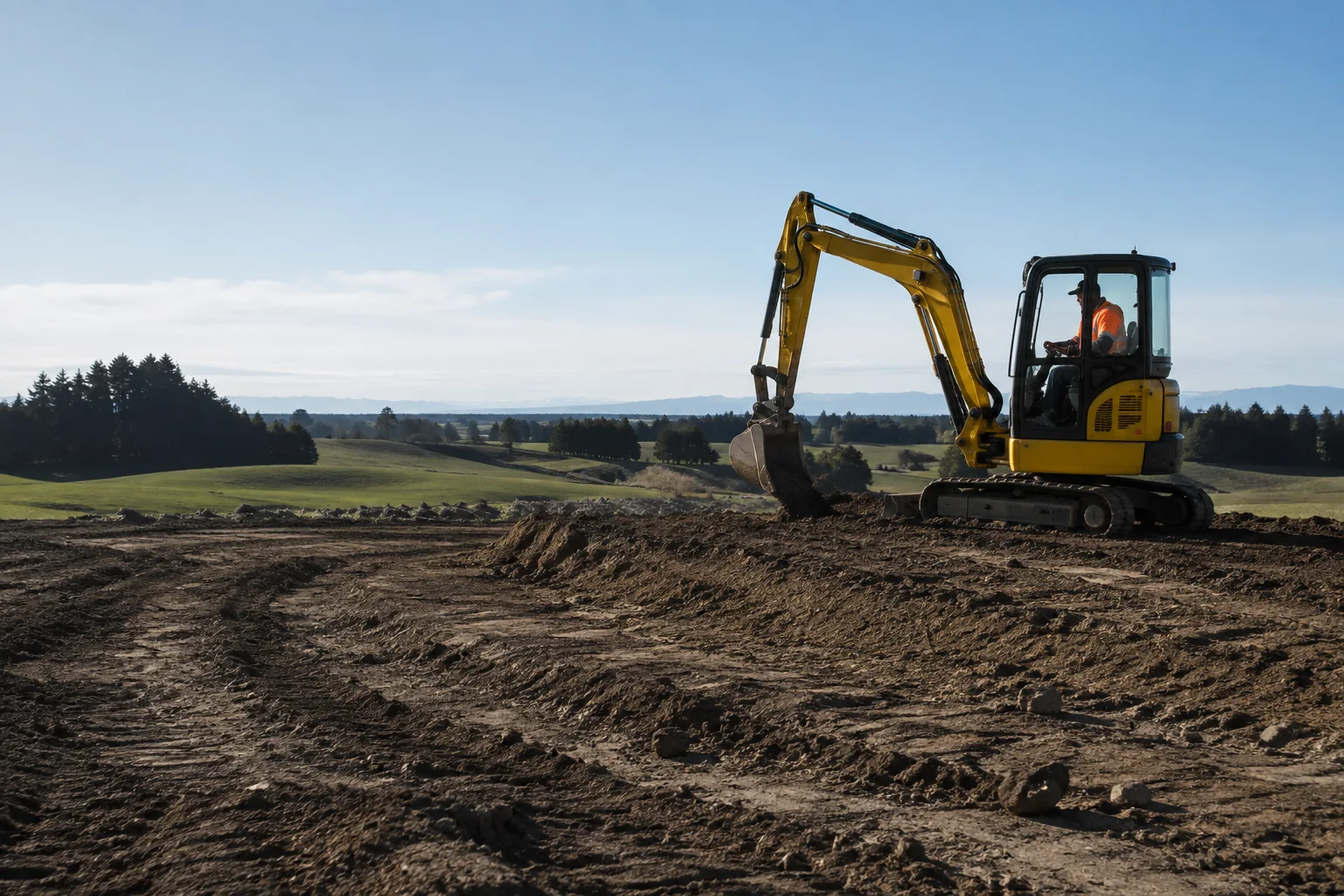
General earthworks for farms and lifestyle blocks, including access tracks, building pads, yard formation and paddock drainage shaping across rural Canterbury.
View serviceTell us about your project and we will come back with clear next steps — no pressure, no jargon.
YOUR SITE. THE NEXT CHAPTER.
Start with your suburb, a few site details and what you want to build.
Plan your project