
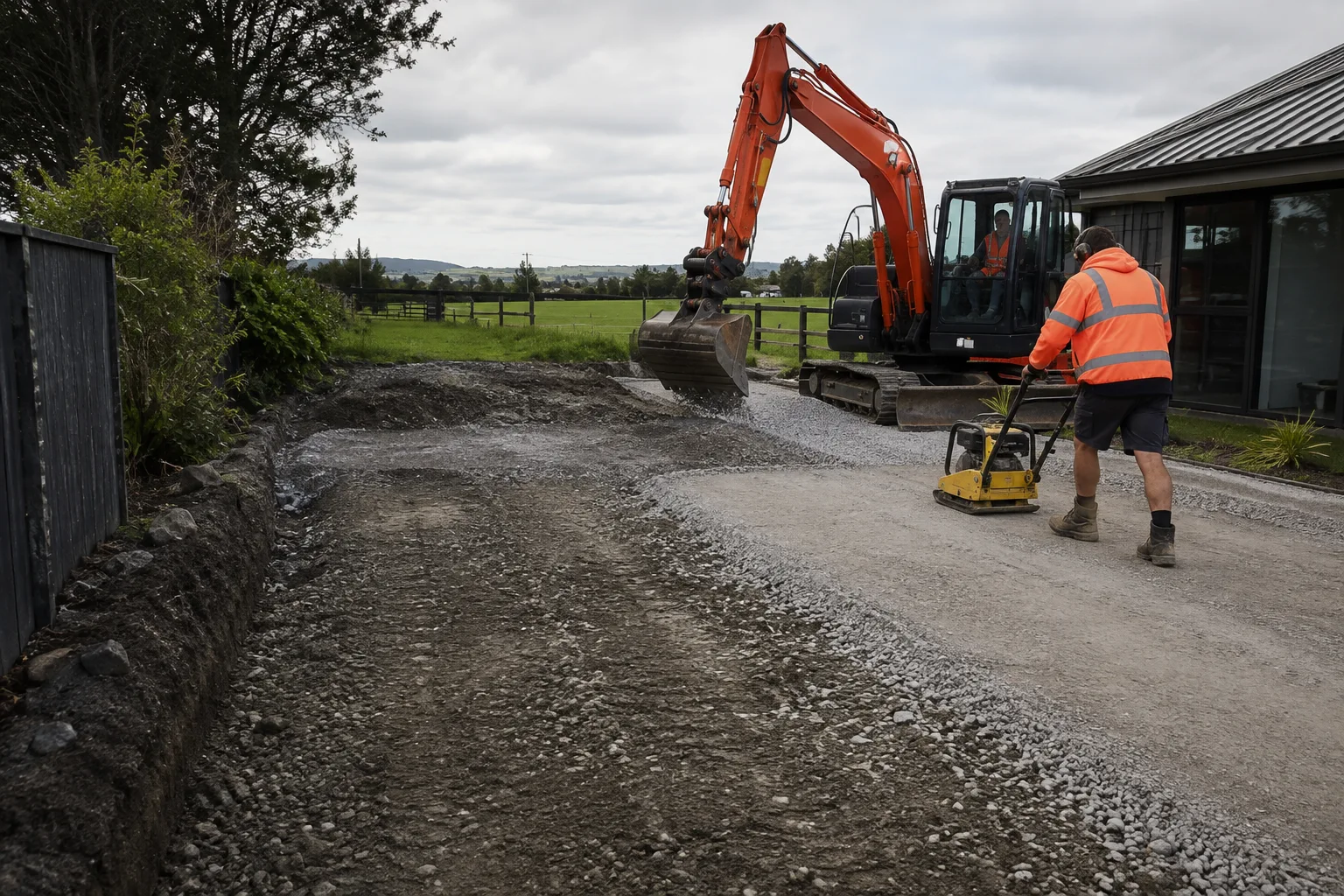
Driveway Excavation
Excavation and sub-base preparation for new or replacement driveways, shaped and compacted to the finished levels the surface needs — as a standalone job or as the first stage of a full install.
View serviceDriveways, Access & Civil Groundworks
Excavation, set-out and base preparation for concrete channels — dish channels beside a kerb, spoon drains across a driveway, and channels alongside paths and yards.
03 661 7200Your site. A clear next step.
Christchurch Channel Preparation covers excavation, set-out and base preparation for concrete channels — dish channels beside a kerb, spoon drains across a driveway, and channels alongside paths and yards.
Tell us what you want to achieve, where your site is and when you would like to start. Include any plans, access constraints or measurements that will help us understand the work.
Recognise your project
Define the work
We check where surface water runs now and where it needs to end up, including whether the discharge point can actually take it. A channel falling to somewhere unsuitable just relocates the problem.
The channel line is set out and invert levels marked to a consistent fall from the high end to the outlet. Inconsistent fall is the single most common reason a finished channel holds water.
Existing channel, seal or hardstand along the line is saw-cut and removed where the new work replaces or crosses it. Clean cuts give the new concrete a defined edge to finish against.
The ground is excavated along the line to the formation level the channel profile and base thickness require. Narrow, level-critical excavation like this is slower work than open-area digging.
Aggregate base is placed and compacted beneath the channel line. A channel that settles unevenly loses the fall it was built with, and once the fall is gone the concrete finish cannot compensate.
The formation is trimmed to the invert levels the concrete profile needs, by hand where accuracy demands it. Millimetres matter along a channel in a way they do not across an open platform.
The low end is tied in to the sump, kerb, outlet or soakage point that will take the water. Confirming that connection before the pour avoids a finished channel that discharges nowhere.
The prepared line is handed to the concrete contractor at the correct level, ready to pour. Agreeing the handover level in advance means they are not left adjusting our work before they start.
Why work with us
A channel that is flat or reversed anywhere along its length holds water regardless of how well the concrete is finished. Invert levels are set and checked along the full run.
We check the sump, kerb or soakage point at the low end can actually take the water. A channel falling to somewhere unsuitable has only relocated the problem.
An unevenly settling channel loses the fall it was built with, and once the fall is gone the finish cannot compensate. Base is compacted along the line for that reason.
Invert levels along a channel are far less forgiving than levels across an open platform, so the formation is trimmed by hand where the accuracy requires it.
The line is handed over at the level their profile needs, agreed beforehand. Both trades working to one set of levels means they are not adjusting our work before pouring.
Plenty of channel work has no kerb at all, from spoon drains across a yard to channels beside a path. We do the road-corridor version and the domestic version.
Working conditions
Channel work is narrow and level-critical rather than high-volume, so it usually runs a compact excavator along the line with a plate compactor or small roller on the base, and hand trimming where the invert has to be exact. A laser or level is used along the run rather than eyeballing the fall. Saw-cutting gear is needed where the channel cuts through existing seal or concrete.
Because a channel follows a line rather than an area, disruption is usually a narrow strip that crosses access at some point — expect a driveway, path or yard entrance to be unusable while the line is open and during the concrete cure. Saw-cutting is noisy and dusty for the period it runs. Where the channel sits in the road corridor, a traffic management plan or council permit may be needed before a start date is set.
Get the detail right
A channel only works if it falls consistently to a point that can take the water. Sections that are close to flat, or that dip and rise along the run, hold water regardless of how well the concrete is finished, and the fix means breaking out and re-forming rather than patching. Getting the invert levels and the base compaction right is the whole job, and both are done before the concrete arrives, which is why the preparation decides the outcome rather than the pour.
Kerbing is the raised kerb line and vehicle crossings, usually against the road. Channel preparation is the dished section that carries water — cast against a kerb, or on its own across a driveway, yard or beside a path. On road works the two are often poured together, and we prepare both; these are separate pages because plenty of channel jobs have no kerb involved at all.
No, this is the groundworks: set-out, excavation, base and trimming to the invert levels. The channel itself is poured and finished by a concrete contractor, and we hand the line over at the correct level ready for them.
It depends on the length of the run, the surface feeding it and what the design or council specification calls for, so it is set from the drawings rather than a rule of thumb. What matters as much as the number is that the fall stays consistent along the whole run, because a flat or reversed section will hold water.
Yes, that is one of the more common versions of this work — a shallow dished channel across a driveway or yard entrance to catch water before it reaches a garage, house or road. We prepare the line and base; the concrete crew forms the dish.
Into a sump, an existing kerb and channel, or a soakage point, depending on the site and what the council rules allow. We confirm the discharge point before setting the levels, because a channel that falls to somewhere that cannot take the water has just moved the problem.
A short channel within your own property usually does not, but work in the road corridor generally needs a council permit, and anything that changes where stormwater discharges can have rules attached. Christchurch City, Selwyn and Waimakariri each set their own, so confirm before work starts. We will flag what we think applies.
The next part of your project
Excavation and sub-base preparation for new or replacement driveways, shaped and compacted to the finished levels the surface needs — as a standalone job or as the first stage of a full install.
View service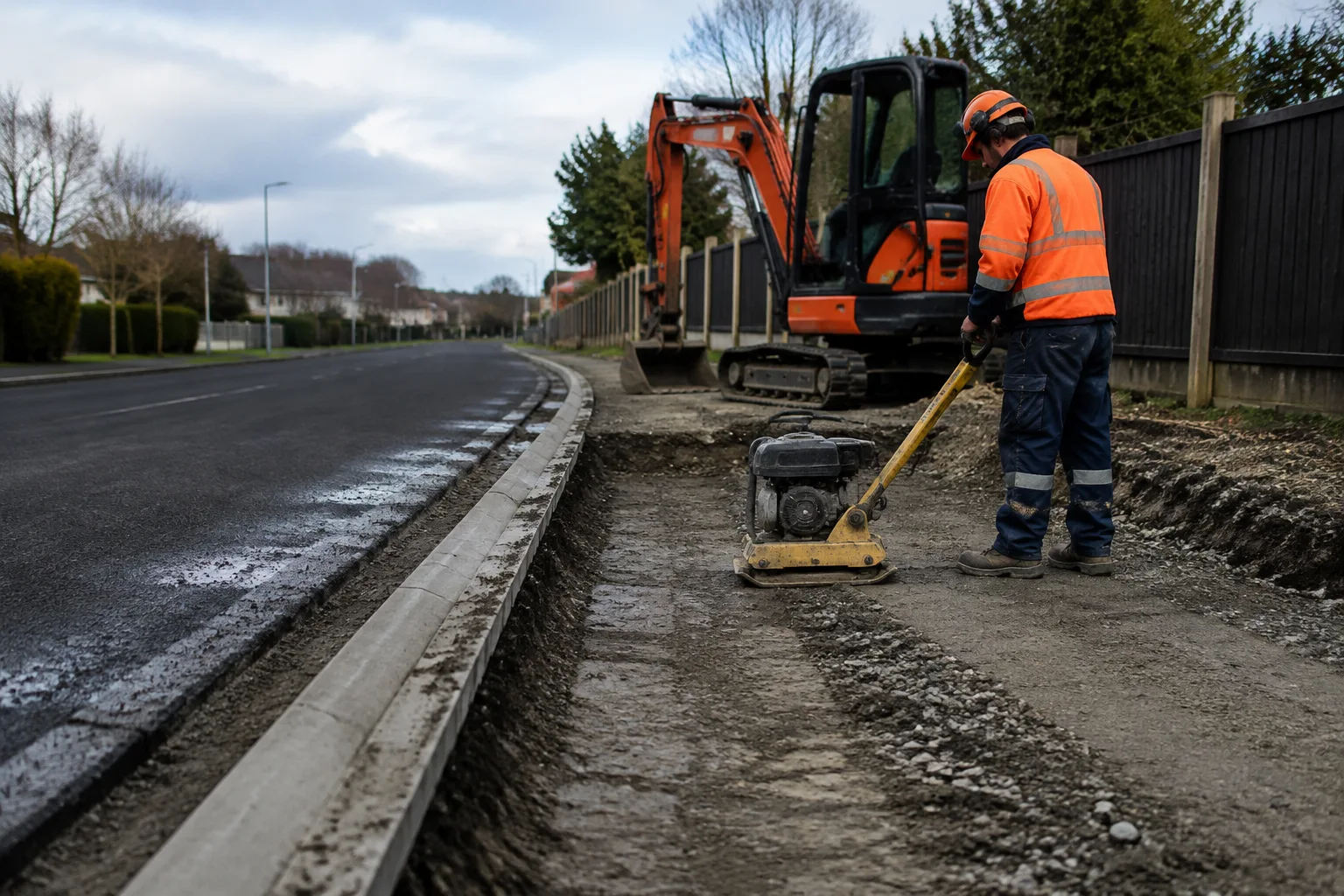
Ground preparation for kerb lines and vehicle crossings across Christchurch, excavated and graded to match road levels ahead of concrete placement.
View service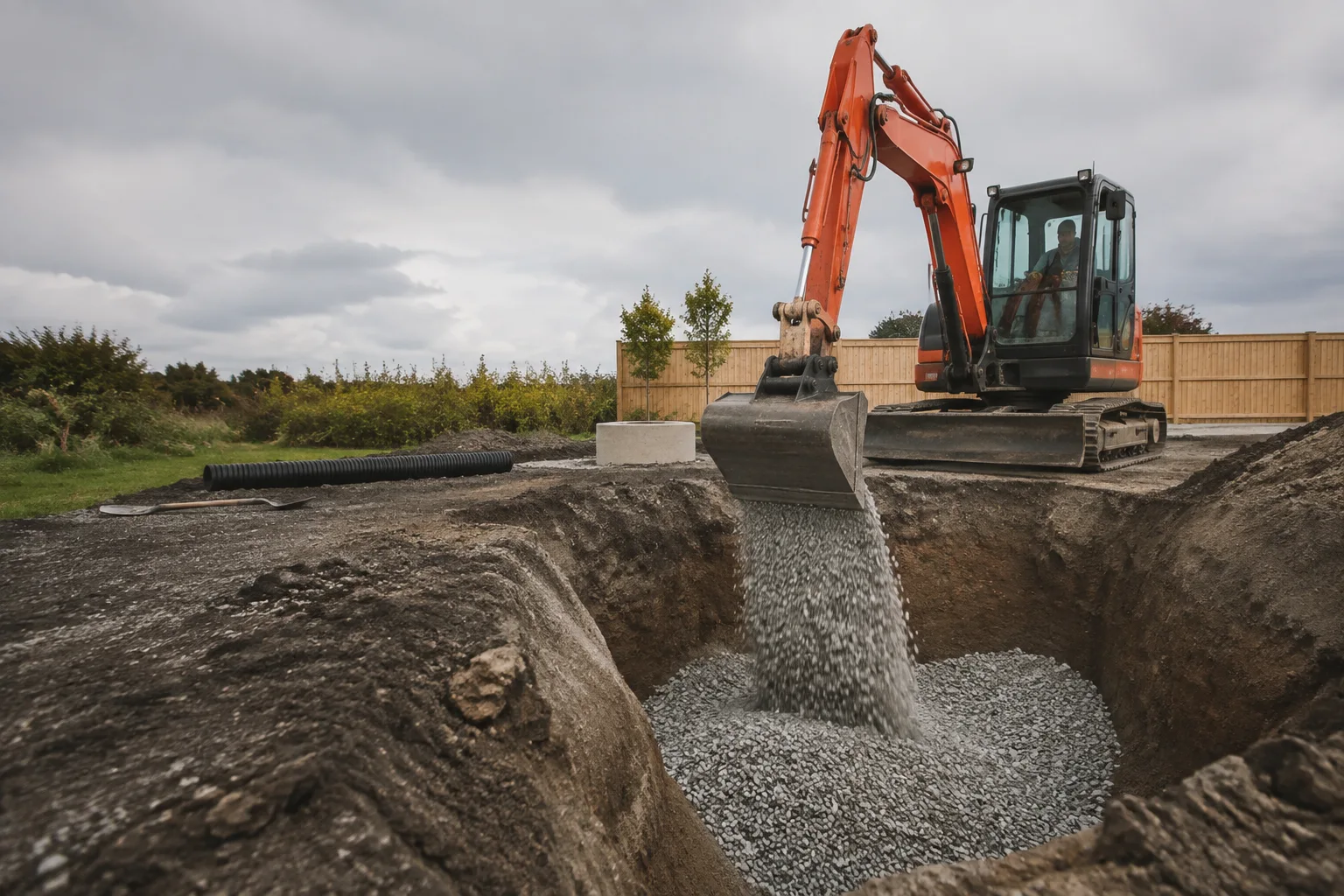
Excavation for soak pits, soakage trenches and stormwater disposal systems, dug to the dimensions your drainlayer or engineer specifies.
View service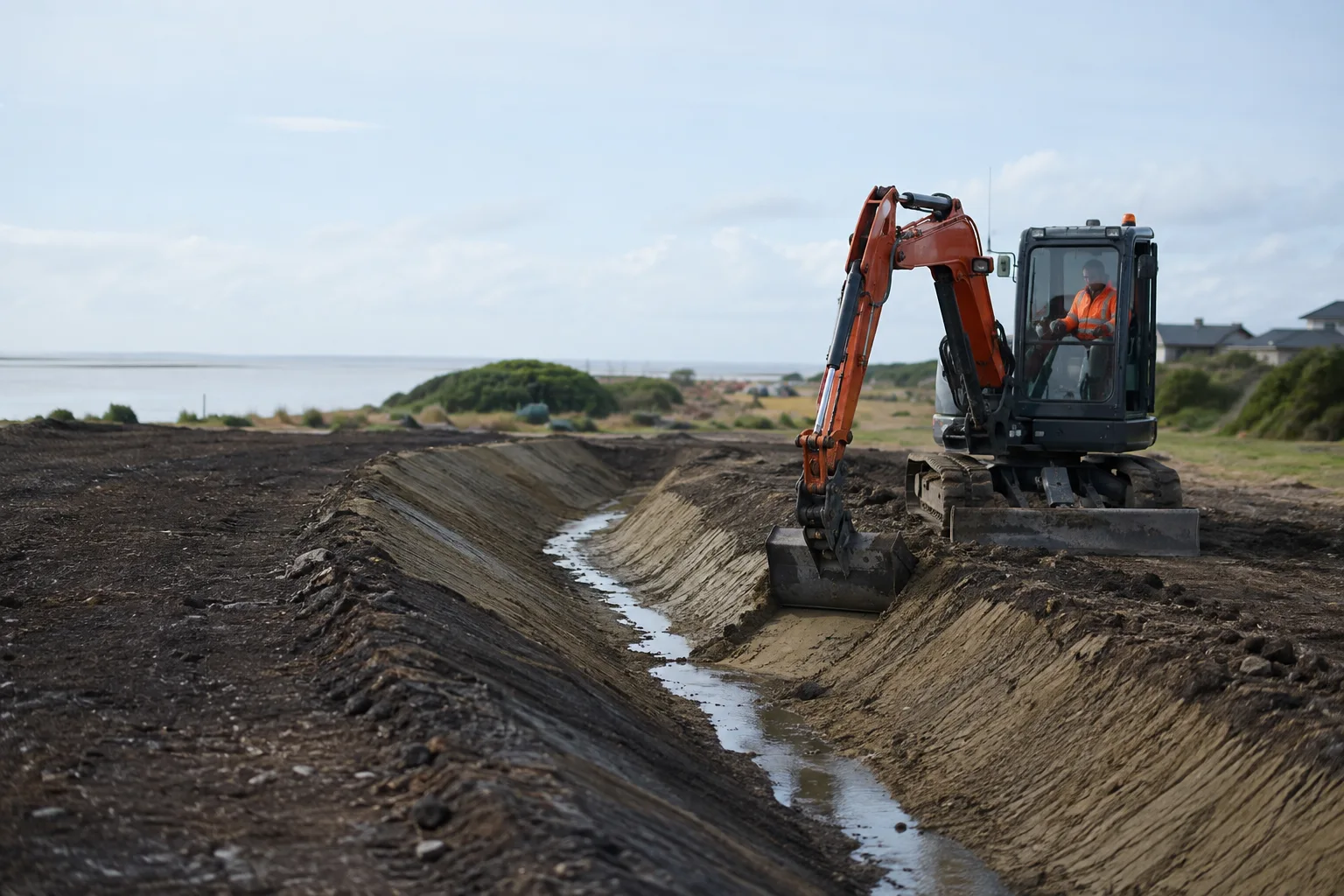
Grading and shaping work that supports erosion and sediment control on coastal and low-lying Christchurch sites, redirecting surface water and stabilising exposed ground.
View serviceTell us about your project and we will come back with clear next steps — no pressure, no jargon.
YOUR SITE. THE NEXT CHAPTER.
Start with your suburb, a few site details and what you want to build.
Plan your project