
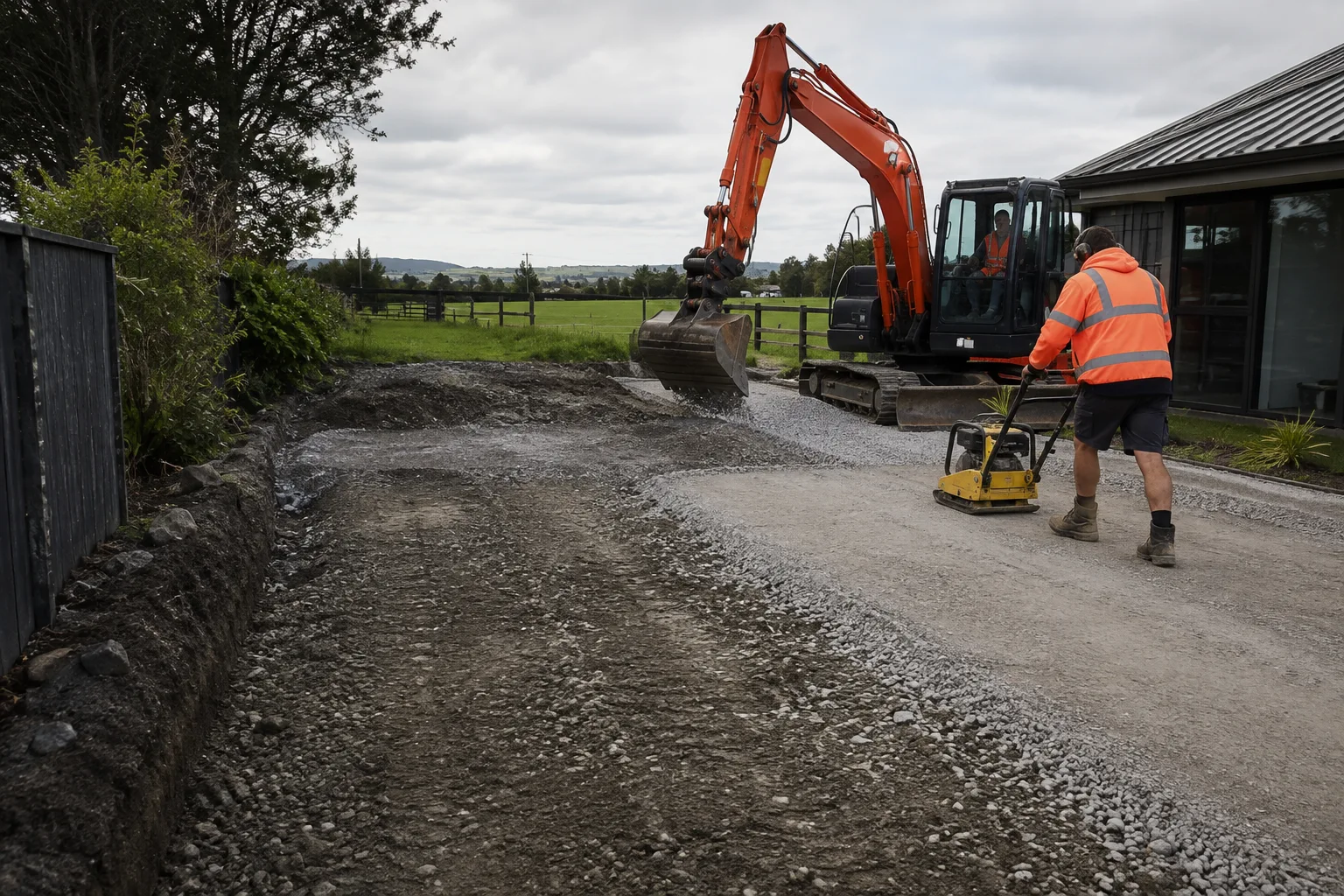
Driveway Excavation
Excavation and sub-base preparation for new or replacement driveways, shaped and compacted to the finished levels the surface needs — as a standalone job or as the first stage of a full install.
View serviceDriveways, Access & Civil Groundworks
New driveways built end to end across Christchurch, from excavation and base through to the finished concrete or asphalt surface, drainage and edges.
03 661 7200Your site. A clear next step.
Christchurch Driveway Installation covers new driveways built end to end, from excavation and base through to the finished concrete or asphalt surface, drainage and edges.
Tell us what you want to achieve, where your site is and when you would like to start. Include any plans, access constraints or measurements that will help us understand the work.
Recognise your project
Define the work
We assess the vehicles the driveway must carry, the access available, the ground conditions and where water needs to go. Those four things decide the base depth, the surface and the price.
We give you a straight recommendation on concrete or asphalt for your site, use and budget, including where one is clearly the wrong call. Slope and vehicle type usually settle it rather than preference.
Any existing driveway is broken out and carted away where it is being replaced. Removing the old surface also lets us see the state of the base underneath before deciding what the new one needs.
The driveway line is excavated to formation level, with geotextile laid over soft or variable ground. Canterbury ground varies block by block, so the fabric decision is made on site rather than in advance.
Aggregate sub-base is supplied, placed and compacted in layers to the depth the loading requires. Almost every driveway that cracks or sinks early does so because this stage was thinner than it needed to be.
Cross-falls and longitudinal grade are set so water drains to a legal discharge point rather than toward a building. Where the water is allowed to go is confirmed before the levels are fixed.
Edges are prepared and any culvert or channel crossing the driveway is formed before the surface goes down. Both are far cheaper to do now than to retrofit through a finished driveway.
The driveway is finished in concrete or asphalt, left for the cure or cooling period that surface needs, and the surrounding ground reinstated. You get dates for when it is usable before we start.
Why work with us
The excavation, base, falls, edges and finished surface are all ours, so there is no gap between trades where levels get argued over and no one owns the outcome.
We tell you which surface suits your slope, vehicles and budget, including when the cheaper option is the wrong one. The recommendation follows your site rather than our preference.
Base depth, geotextile and compaction decide whether a driveway lasts, and they are all buried by the time you see it. This is where most early driveway failures originate.
Falls are set to a legal discharge point rather than toward a building or boundary. Where the water is permitted to go is confirmed before the levels are fixed.
Where the driveway forms or changes a vehicle crossing, we work to the relevant council's requirements for gradient, width and materials, and flag permits before a date is set.
Concrete needs a cure period and asphalt needs to cool, so the driveway is out of use past the last day on site. You get those dates up front to arrange parking.
Working conditions
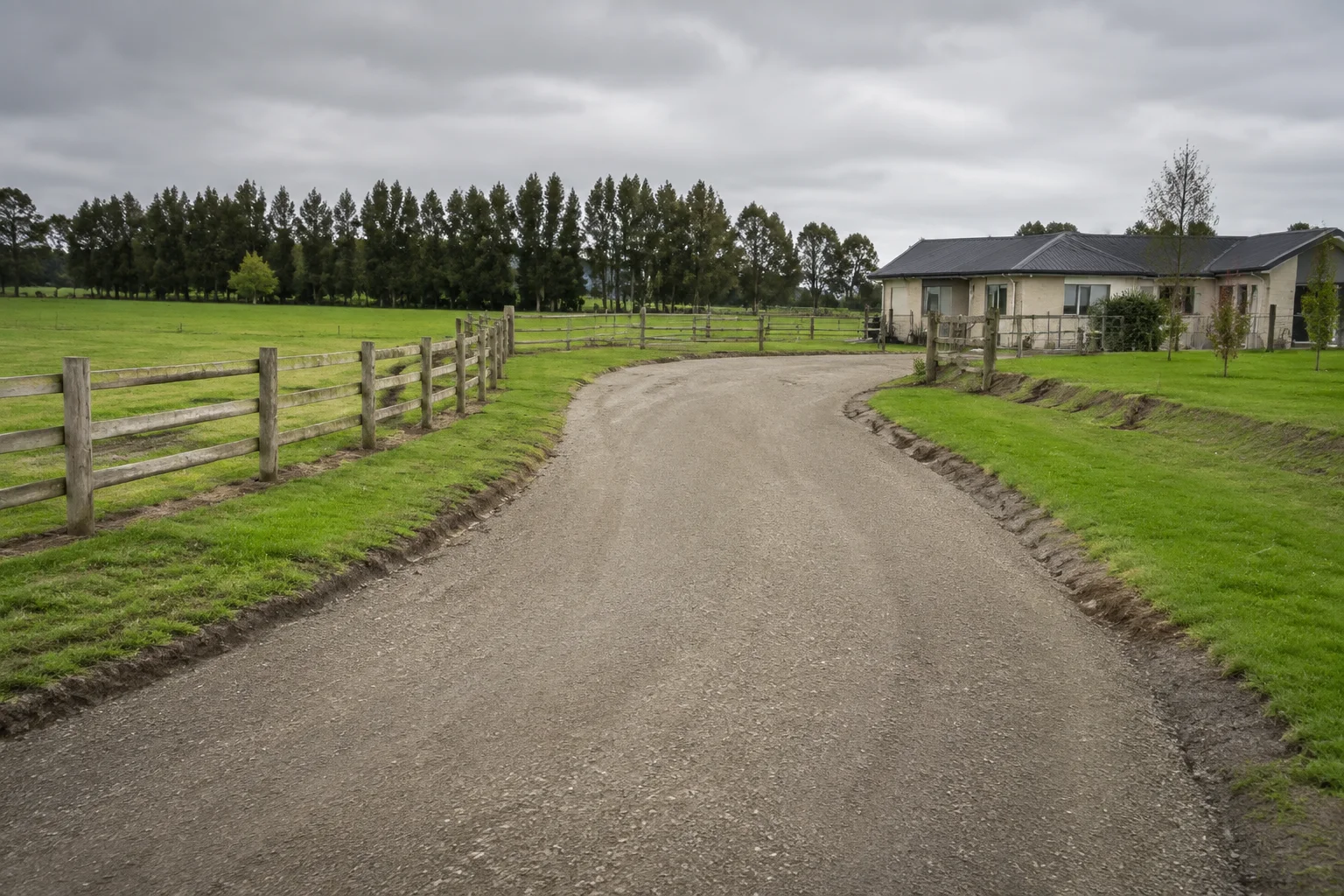
A full install runs excavation and compaction plant for the base stage, then the gear the chosen surface needs — concrete placing and finishing tools, or a paver and roller for asphalt. Access decides a lot: a driveway reached only through a narrow gateway is built with smaller machines and more hand work, which affects both the programme and the price. We scope this at the site visit rather than assuming.
You will not be able to use the driveway for the duration of the build, and you should plan alternative parking from the day excavation starts. Concrete needs a cure period before vehicles go on it and asphalt needs to cool and set, so the unusable window runs past the last day on site. Expect machinery, material deliveries and truck movements, and noise while an existing surface is broken out.
Get the detail right
Most driveways that fail do so from below. Insufficient sub-base depth, no fabric over soft ground, or poor compaction will show up as cracking, sinking and ponding within a few years no matter how good the surface looked on the day. The other common fault is falls: a driveway that sheds water toward a garage or a boundary rather than to a legal discharge point becomes someone's problem every time it rains. Both are decided before the surface goes down, which is the argument for one crew carrying the job from the dig through to the finish.
Concrete lasts longer and handles heavy or turning vehicles better, and gives you finishes like broom or exposed aggregate. Asphalt is usually cheaper to lay, quicker to be usable and copes better with slight ground movement, but wants resealing over its life. Slope, the vehicles involved and budget usually settle it. We will give you a straight recommendation for your site rather than a preference.
Driveway excavation is the groundworks on their own — the dig, base and falls, handed over at the correct level. That suits builders and anyone who already has a surfacing contractor. Driveway installation is the whole job including the finished surface, from one crew.
Asphalt is generally usable within a day or so once it has cooled and set. Concrete needs longer: light foot traffic fairly soon, but vehicles should stay off for the cure period we give you on the day, which depends on the mix and the weather. We tell you the dates before we start so you can arrange parking.
If the driveway forms a new vehicle crossing onto the road, or changes an existing one, the council generally needs to approve it, and work in the road corridor can need a permit and traffic management. Christchurch City, Selwyn and Waimakariri each set their own requirements, so confirm before committing to a date. We will flag what we think applies to your site.
It depends on the ground conditions and what the driveway has to carry, from one car to farm vehicles or delivery trucks. Soft or variable Canterbury ground often wants geotextile under the aggregate as well. We assess this on site, because guessing the base depth is the single most expensive corner to cut.
Often yes, and it can be a sensible middle ground where the existing surface is sound. Tying new work into an old surface leaves a joint, and the two will weather differently, so we will be honest about how it will look before you decide.
The next part of your project
Excavation and sub-base preparation for new or replacement driveways, shaped and compacted to the finished levels the surface needs — as a standalone job or as the first stage of a full install.
View serviceRepairing cracked, sunken, potholed and ponding driveways across Christchurch, starting with why the surface failed rather than just patching the top.
View serviceAsphalt driveways laid across Christchurch on a base built to carry them, plus resurfacing and overlays where the existing driveway is still sound underneath.
View service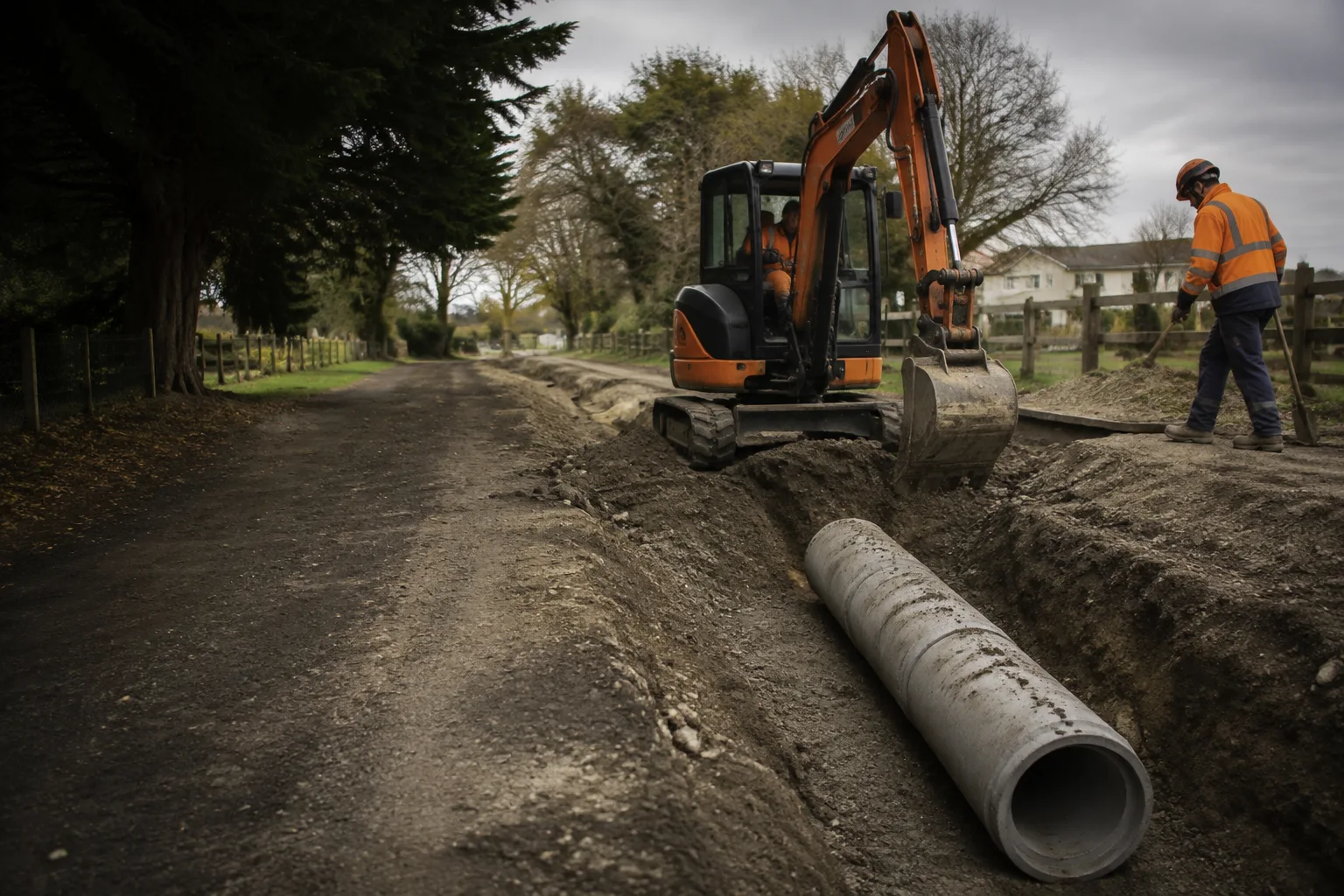
Excavation and pipe-laying for driveway culverts, keeping water moving under an access way instead of pooling or washing it out.
View serviceTell us about your project and we will come back with clear next steps — no pressure, no jargon.
YOUR SITE. THE NEXT CHAPTER.
Start with your suburb, a few site details and what you want to build.
Plan your project