
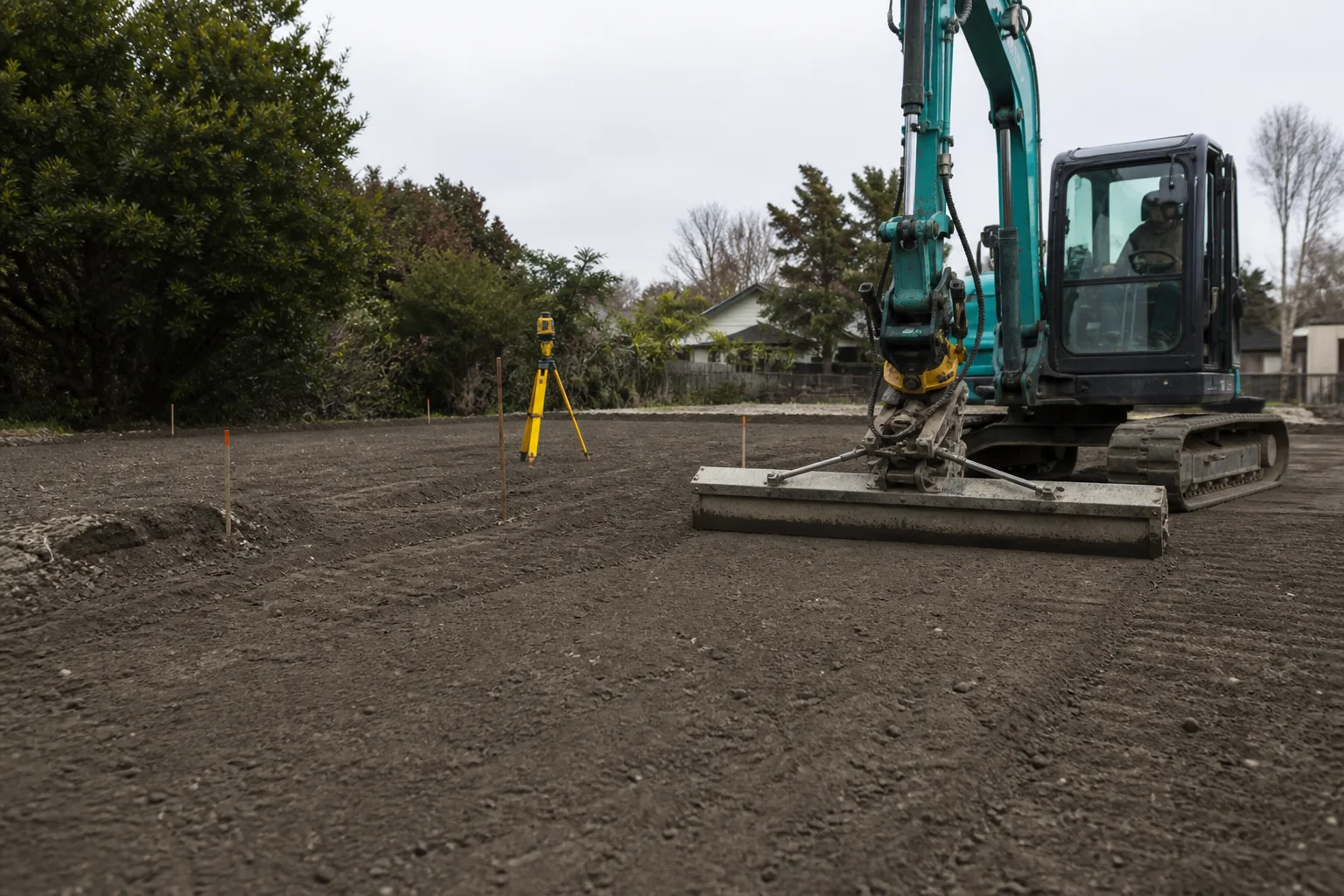
Laser-Level Grading & Final Trim
Laser-guided fine grading and final trim work across Christchurch, setting accurate levels and falls before paving, turf or a slab pour.
View serviceRetaining, Landscaping & Grading
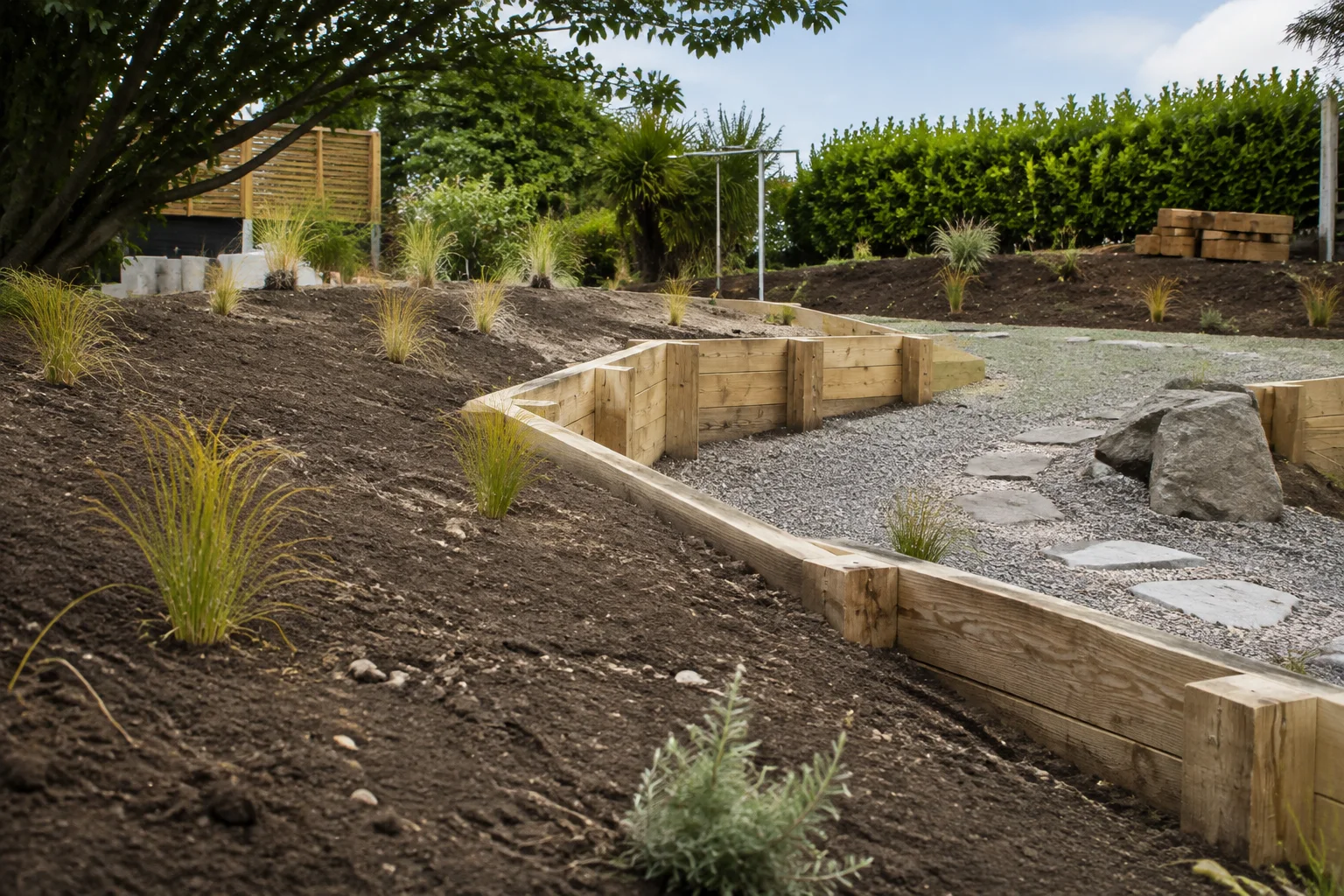
Cut, fill and contour grading for gardens, lawns and grounds across Christchurch, reshaping bare or uneven land ready for planting or turf.
03 661 7200Your site. A clear next step.
Christchurch Landscaping Earthworks means cut, fill and contour grading for gardens, lawns and grounds across Christchurch, reshaping bare or uneven land ready for planting or turf.
Tell us what you want to achieve, where your site is and when you would like to start. Include any plans, access constraints or measurements that will help us understand the work.
Start with the ground
Earthworks are the foundation of any successful landscaping project, involving the reshaping and preparation of land before further construction or planting begins. This includes cutting, filling, grading, and compacting soil to create stable, level, or contoured surfaces suited to the intended design. Whether preparing a site for a new lawn, retaining wall, driveway, or garden feature, earthworks ensure the ground is structurally sound and properly drained before any finishing touches are applied.
Recognise your project
Define the work
On-site discussion of the contours and levels you want
Stripping and stockpiling of existing topsoil
Cut and fill regrading to reshape the land
Fine grading to establish correct surface water fall
Removal of surplus spoil, rubble or old fill
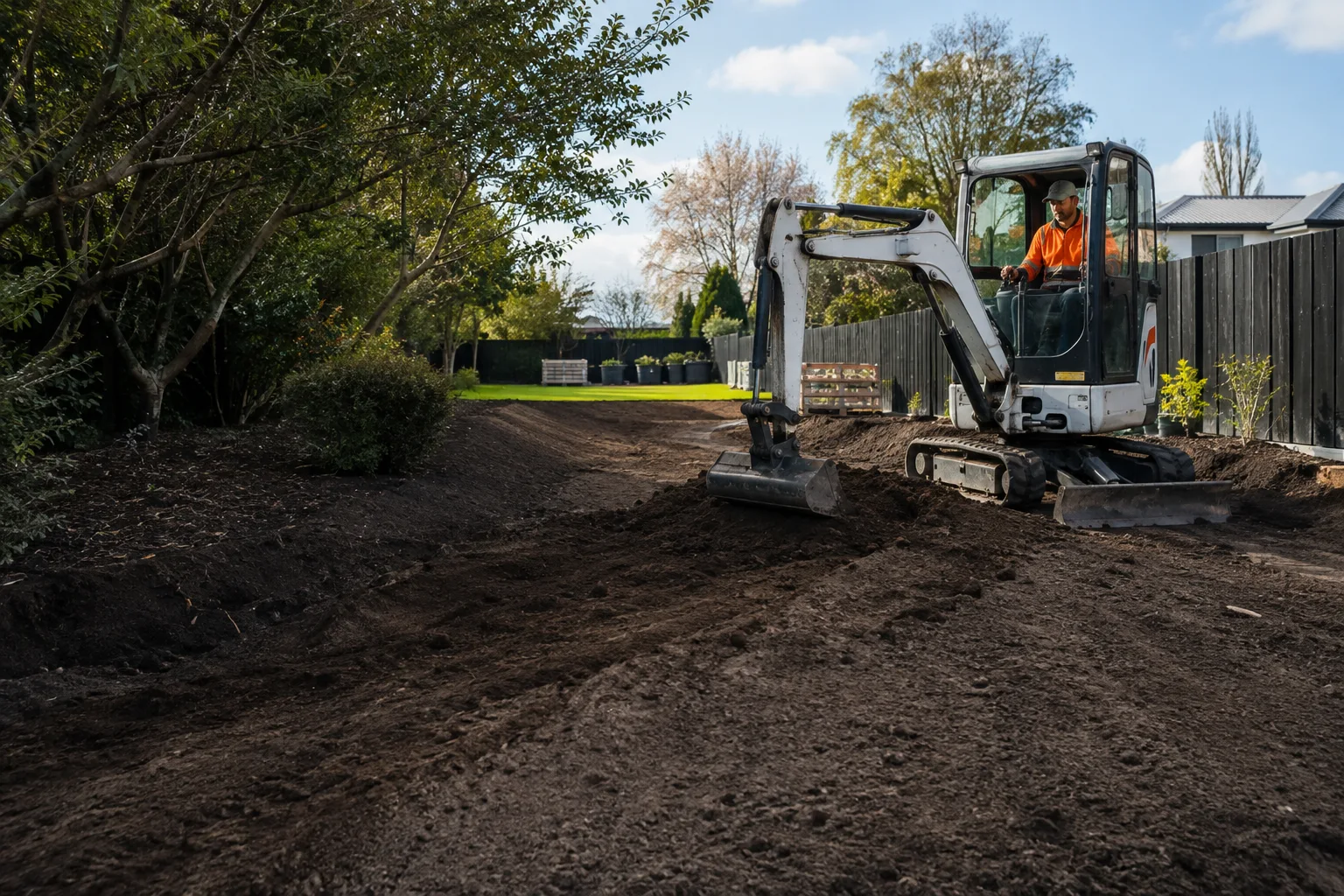
Respreading of stockpiled or supplied topsoil
Minor batter shaping around garden beds or borders
Site left graded and ready for turf or planting
Stage by stage
Site clearing involves removing vegetation, trees, stumps, rocks, debris, and any existing structures from the property. This creates a clean, workable surface for machinery and crews, eliminates obstacles that could interfere with excavation, and allows accurate assessment of the natural terrain and soil conditions beneath.
Excavation removes soil to reach the depths and contours specified in the design plan. Operators account for underground utilities, rock formations, and water tables while digging. This process shapes the land's foundation, removing unsuitable material and creating space for foundations, drainage systems, retaining walls, or other structural elements.
Grading and levelling shape the land into correct slopes and elevations, ensuring proper water runoff and a usable surface. This step corrects natural irregularities, establishes even bases for lawns, patios, or driveways, and prevents pooling, erosion, or drainage problems that could damage structures or landscaping later.
Filling and backfilling involve adding soil, sand, or aggregate to raise low areas, fill excavated trenches, or build up specific sections to design height. This restores structural support around foundations and pipes, corrects uneven ground, and prepares the site for compaction and final surface treatments.
Soil compaction uses plate compactors or rollers to compress loose earth into a dense, stable base. This prevents future settling, shifting, or subsidence beneath driveways, patios, and retaining walls. Proper compaction ensures long-term structural integrity, reducing the risk of cracking, uneven surfaces, or costly repairs later.
Drainage installation incorporates swales, French drains, piping, and retaining structures to manage water runoff effectively. This protects the site from erosion, pooling, and water damage by directing moisture away from structures and toward appropriate outlets, preserving both the landscaping and any nearby foundations or hardscaping.
From site assessment to completion
We walk the site with you to understand the contours, drainage and finished look you're after.
Existing topsoil is stripped and stockpiled separately so it can be reused once regrading is finished.
Ground is cut and filled to reshape the contours, moving material within the site or carting excess away.
We fine-grade the reshaped subgrade to set the falls that carry surface water away from buildings and paths.
Stockpiled or supplied topsoil is spread back over the graded area to a consistent depth.
We check levels and falls before handover so the area is ready for turf, planting or the next trade.
Working conditions
Garden and grounds grading is usually done with smaller excavators or skid steers that can work through gates and around existing landscaping without unnecessary damage. Tip trucks are brought in as needed for spoil removal or topsoil delivery, sized to suit site access.
Your garden or lawn area will be out of use while regrading is under way, and access paths may be temporarily blocked for machinery. We aim to keep disruption to the working area only, and truck movements for material in or out are scheduled around the job.
Get the detail right
Getting the fall right is what stops water pooling against a house or running the wrong way across a lawn, and that's easy to get wrong without levelling equipment and experience reading the site. Proper compaction as we build up fill also matters, since poorly compacted ground settles unevenly later and undoes the finished grading.
Yes, we work from a landscape designer's plan where one exists, grading to the levels and contours it specifies. If there's no formal plan, we're happy to work from a simpler brief on site.
We can arrange topsoil supply alongside grading work, or work with topsoil you've already sourced. Reusing your own stripped topsoil is often the more practical option where volumes allow.
We can excavate and remove stumps, rubble or old fill uncovered during grading. Let us know beforehand if you're aware of anything buried in the area so we can plan for it.
It depends heavily on area size, how much material needs moving, and ground conditions on the day. We can give you a realistic timeframe once we've seen the site.
No, we prepare the graded ground ready for turf-laying, seeding or planting. Those jobs are carried out by a landscaper or the seeding contractor of your choice.
Why it pays to get it right
Earthworks form the foundation of every successful landscaping project, and getting them wrong can lead to costly problems down the line. Hiring experienced contractors ensures the job is done right the first time.
Ultimately, professional earthworks contractors protect your investment, ensuring a stable, functional site ready for the landscaping vision you have in mind.
The next part of your project
Laser-guided fine grading and final trim work across Christchurch, setting accurate levels and falls before paving, turf or a slab pour.
View service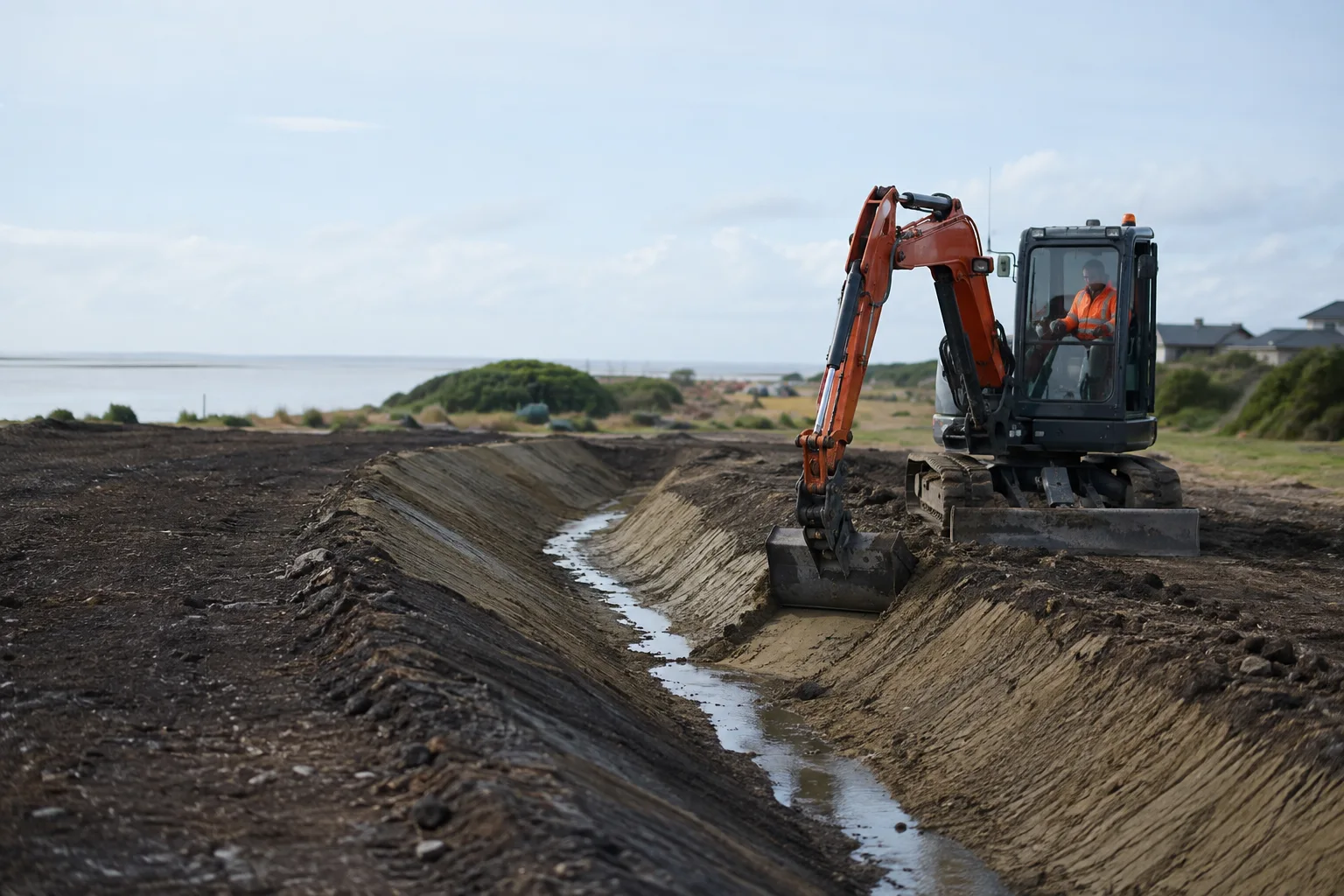
Grading and shaping work that supports erosion and sediment control on coastal and low-lying Christchurch sites, redirecting surface water and stabilising exposed ground.
View service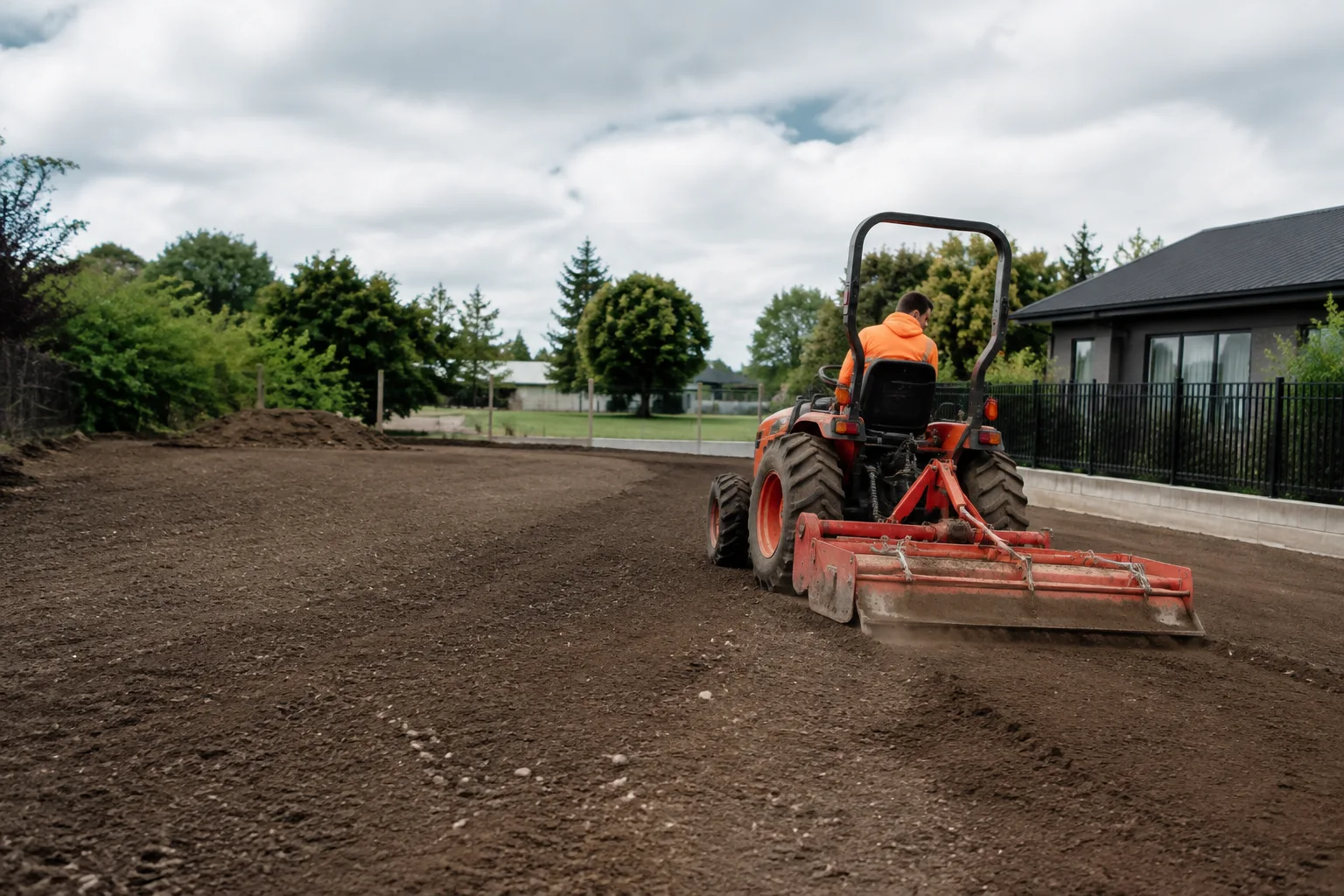
Ground and soil preparation for hydroseeding or DIY lawn seeding across Christchurch, grading and conditioning bare land ready for a seeding contractor.
View service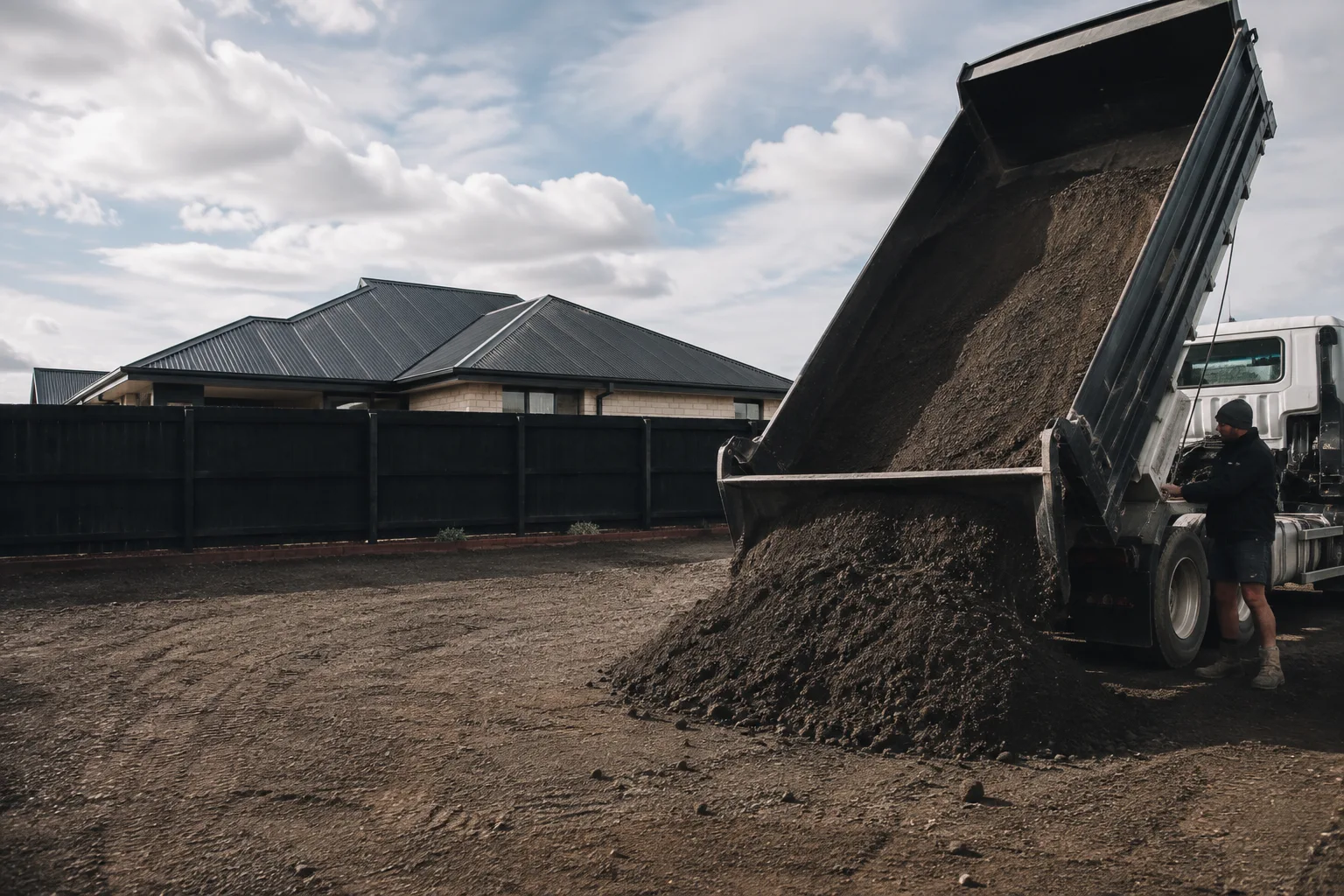
Topsoil supplied, delivered and spread ready for lawns, gardens or landscaping across Canterbury properties.
View serviceTell us about your project and we will come back with clear next steps — no pressure, no jargon.
YOUR SITE. THE NEXT CHAPTER.
Start with your suburb, a few site details and what you want to build.
Plan your project